
Zubair Irshad (On leave)
Education
- Ph.D. in Mechanical Engineering (AI & Deep Learning), Georgia Institute of Technology, USA (2019–2023) — Thesis: Learning 3D Robotics Perception using Inductive Priors
- M.S. in Mechanical Engineering (Robotics), Georgia Institute of Technology, USA (2019–2023)
- B.S. in Mechanical Engineering, GIK Institute of Engineering Sciences and Technology, Pakistan (2011–2015) — Magna Cum Laude, Dean’s Honor Roll (8 semesters)
Research Interests
- 3D robotics perception
- Robot learning and foundation models
- Multimodal AI
- Neural scene representations
- Multi-task policy learning for generalist robot manipulation
Biography
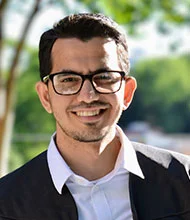
Dr. Zubair Irshad is an AI and robotics researcher whose work spans academia and industry, with expertise in 3D perception, robot learning, foundation models, and multimodal AI. He joined Habib University as Assistant Professor of Computer Science in August 2025 and is currently on leave.
Note on source discrepancy: the CV on file states his Toyota Research Institute Research Scientist role ran January 2024–June 2025, ending as he joined Habib in August 2025, while the live website describes the Toyota role as “2024–Present.” Given his “On Leave” status, it’s possible he has since returned to or extended his position at Toyota Research Institute; we’d recommend confirming his current employment status directly before finalizing this profile.
At Toyota Research Institute, Dr. Irshad was a core contributor and co-lead on multi-task policy learning and post-training for the company’s foundational Large Behavior Model (LBM) for robotics, managing collaborations with UC Berkeley, CMU, and other institutions. He previously interned twice at Toyota Research Institute (2021–2022), developing single-shot 3D reconstruction and pose estimation methods, and at SRI International (2020), designing a vision-language navigation model. He completed his Ph.D. at Georgia Tech (2019–2023) as a Graduate Research Assistant, leading projects in multimodal AI, robot perception, and 6D pose estimation.
Dr. Irshad has published over 20 peer-reviewed papers at leading venues including CVPR, ICCV, ECCV, ICRA, and IROS, filed multiple U.S. patent applications, and actively reviews for NeurIPS, ICLR, RSS, and RA-L. He has co-organized workshops at CVPR 2025 (Robo3D-VLMs) and ICRA 2024 (RoboNeRF), and has given invited talks at Stanford, Facebook AI Research, and GIKI.
Selected Publications
- “A Careful Examination of Large Behavior Models for Multitask Dexterous Manipulation.” arXiv, 2025.
- “Zero-Shot Novel View and Depth Synthesis with Multi-View Geometric Diffusion.” CVPR, 2025.
- “NeRF-MAE: Self-Supervised 3D Representation Learning for Neural Radiance Fields.” ECCV, 2024.
- “DROID: A Large-Scale In-The-Wild Robot Manipulation Dataset.” RSS, 2024.
- “NeO 360: Neural Fields for Sparse View Synthesis of Outdoor Scenes.” ICCV, 2023.
- “ShAPO: Implicit Representations for Multi-Object Shape, Appearance, and Pose Optimization.” ECCV, 2022.
Full publication list: Google Scholar


Explore More DSSE Faculty Profiles
A
Program Director, and Assistant Professor, Integrated Sciences and Mathematics
BS Integrated Sciences and Mathematics
B
F
H
Faculty Director, Dean's Fellowship Program and Assistant Professor
BS Integrated Sciences and Mathematics
I
Associate Dean Academic Systems and Registrar and Associate Professor
BS Computer Engineering, BS Electrical Engineering
J
M
Interim Vice President Academic Affairs and Professor
BS Computer Engineering, BS Electrical Engineering
Faculty Director, Academic Planning and Governance and Associate Professor
BS Computer Science
Director, Industrial Engagement and Applied Learning (IEAL) and Assistant Professor
BS Computer Engineering
N
Program Director, and Associate Professor, Electrical and Computer Engineering
BS Computer Engineering, BS Electrical Engineering
R
S
Professor, Electrical and Computer Engineering
BS Computer Engineering, BS Electrical Engineering