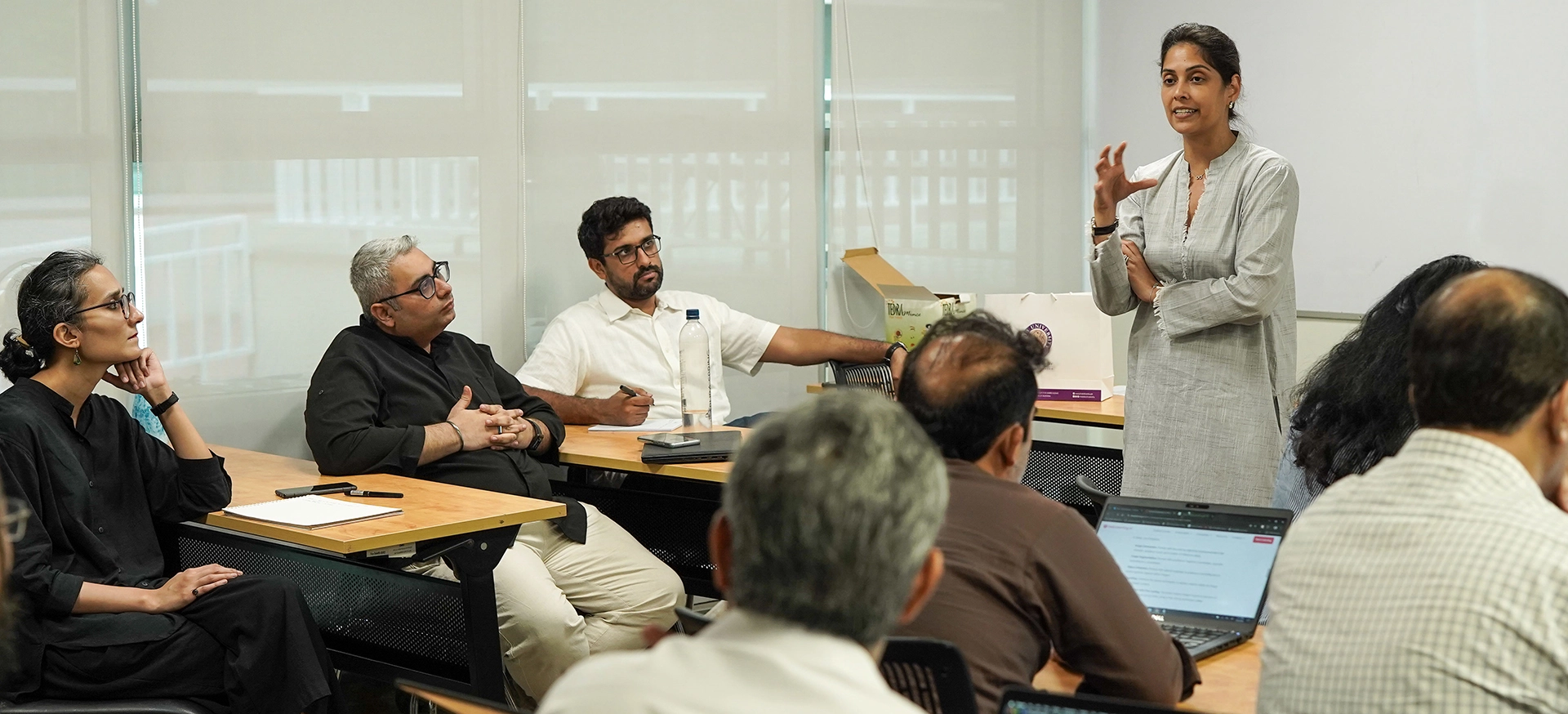
South Asian “classical” music is often imagined as a static, timeless tradition, refined by Mughal patrons and accessible only to a cultural elite. This course questions that view. It traces how such perceptions took shape through the politicized readings of history and through the Orientalist contrast with Western classical music, and it asks what “classical” actually means in the South Asian context.
Over the semester, students examine the aesthetic principles that shaped this music, its early practitioners, and the courtly settings in which it gained prestige. We consider the milieus in which it thrived, from temples and courts to salons, and how it reflects the social and historical contexts around it. We also look at the present: how modern nationalism, the colonial legacy, and postcolonial cultural politics continue to frame the way this music is discussed, taught, and valued.
The course combines close listening, critical reading of historical and ethnomusicological scholarship, and seminar-style discussion. Students are encouraged to question inherited narratives, trace their origins, and weigh competing interpretations. No prior training in music is required, only curiosity and a willingness to rethink familiar assumptions.