
Office of Academic Affairs
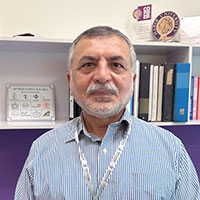
DR. Shahid Shaikh
Vice president Academic Affairs (Interim)
Office Of Academic Affairs
vpaa@habib.edu.pk
Deans
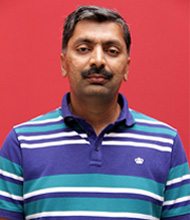
DR. Shah Jamal Alam
Associate Dean,
Undergraduate Education (UGE) and,
Professor,
Computer Science,
Dhanani School Of Science & Engineering
sj.alam@sse.habib.edu.pk
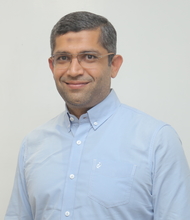
DR. Ishtiyaq A. Makda
Associate Dean,
Academic Systems & University Registrar and,
Associate Professor,
Electrical And Computer Engineering
ishtiyaq.makda@sse.habib.edu.pk
Program Directors
School of Arts, Humanities & Social Sciences
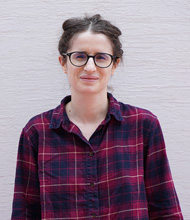
Coline Ferrant
Program Director,
Assistant Professor,
Social Development and Policy
coline.ferrant@ahss.habib.edu.pk
Elham Golpushnezhad
Program Director,
Assistant Professor,
Communication and Design
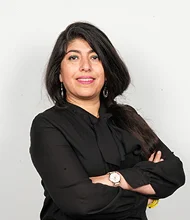
elham.golpush@ahss.habib.edu.pk
Susanne Kathrin Beiweis
Program Director,
Assistant Professor,
Comparative Humanities
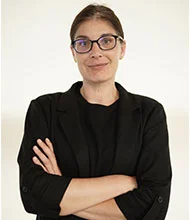
susanne.beiweis@ahss.habib.edu.pk
Dhanani School of Science and Engineering
Naveed Razzaq Butt
Program Director,
Associate Professor,
Electrical and Computer Engineering
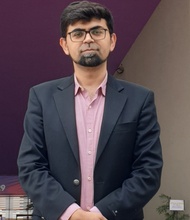
naveed.butt@sse.habib.edu.pk
Syeda Saleha Raza
Program Director,
Associate Professor,
Computer Science
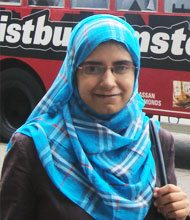
saleha.raza@sse.habib.edu.pk
Ali Imran
Program Director,
Assistant Professor,
Integrated Sciences and Mathematics
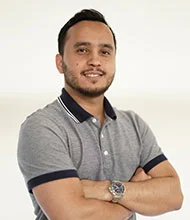
ali.imran@sse.habib.edu.pk
Faculty Directors
Dr. Hadiqa Maqsood
Faculty Director,
Dean’s Fellowship Program and
Assistant Professor,
Integrated Sciences & Mathematics

hadiqa.maqsood@sse.habib.edu.pk
Dr. Waseem Hassan
Faculty Director
Research and,
Assistant Professor,
Electrical and Computer Engineering
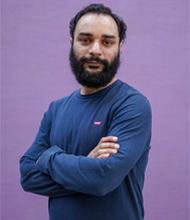
waseem.hassan@sse.habib.edu.pk
Dr. Qasim Pasta
Faculty Director,
Academic Planning & Governance and
Associate Professor,
Computer Science
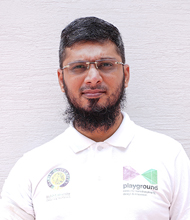
qasim.pasta@sse.habib.edu.pk
Ms. Anum Naseer
Faculty Director (Interim),
Graduate School Curation Program and
Assistant Professor,
Communication & Design
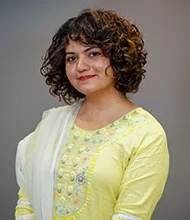
anum.naseer@ahss.habib.edu.pk
Dr. Farhan Khan
Faculty Director (Interim),
Quality Enhancement Cell and,
Assistant Professor,
Electrical and Computer Engineering
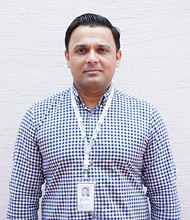
farhan.khan@sse.habib.edu.pk
Mr. Basharat Issa
Faculty Director,
Academic Centers & Library and
Lecturer,
Comparative Humanities
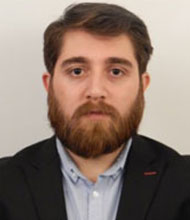
basharat.issa@ahss.habib.edu.pk
Mr. Arsalan Pareyal
Faculty Director,
Center for South Asian Music and
Assistant Professor of Practice,
Comparative Humanities
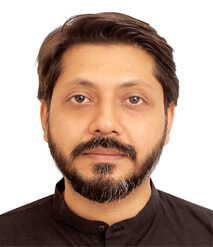
arsalan.pareyal@ahss.habib.edu.pk
Staff Directors
Mr. Salman Khimani
Senior Director,
Academic Operations & Institutional Research
salman.khimani@habib.edu.pk
Mr. Nooruddin Merchant
Assistant Director,
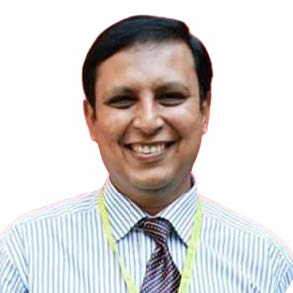
Library and Educational Programs
nooruddin.merchant@habib.edu.pk
Mr. Raheel Tajuddin Lakhani
Assistant Director,
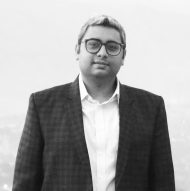
Office of Research & Faculty Development
raheel.tajuddin@habib.edu.pk
Ms. Manahil Huda
Assistant Director,
Design Thinking,
Institute of Design Thinking, Entrepreneurship & Leadership (IDEAL) and,
Lecturer,
Communication and Design
manahil.huda@ahss.habib.edu.pk

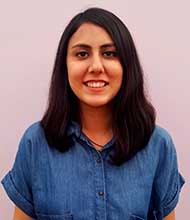
Manahil Huda
Assistant Director,
Design Thinking and
Lecturer,
Communication and Design
Manahil is a multidisciplinary designer, with her expertise lying in Design Research, Experience Design and Service Design. She has a degree in Industrial Design from NUST where her focus was designing research-based environmentally, socially and culturally sustainable products and services for the audience in Pakistan. During her studies, she also went to Middle East Technical University (M.E.T.U.), Turkey for a yearlong exchange program where she took courses on design discourse and design & technology. While practicing as a UX & Service designer, Manahil has worked with clients from numerous industries in Pakistan including but not limited to fin-tech, agri-tech, mobility, ed-tech and healthcare. Extensive design research is at the core of every design project she delves into. Manahil has also previously taught Service Design to fourth year Communication Design students at the Indus Valley School of Art and Architecture (IVS). Her focus for the future is to gain deeper knowledge about the strategies and methods of social innovation design and help in bringing it into the main design discourse within the academia and the industry in Pakistan.
Samra khalid
DEPUTY MANAGER – ACADEMIC AFFAIRS
coming soon

Farhan Khan
Faculty Director QEC & Assistant Professor, Electrical and Computer Engineering
Khan holds a Ph.D. in Computer Systems Engineering (2020) from the University of Auckland (2021 QS Rank: 81) and an M.S in Computer Engineering (2009) from KFUPM (2021 QS Rank: 186). During PhD, Khan worked on localization, scheduling, and routing problems in WSNs in general and VANETs in particular. After completing PhD, Khan taught as Assistant Professor in the Faculty of Computer Science and Engineering at Ghulam Ishaq Khan Institute of Engineering Sciences and Technology (GIKI). Prior to that, he was with one of the largest private creative colleges in Christchurch, New Zealand as a software engineering lecturer focusing mainly on the teaching of UX/UI design and modern agile software development.
In terms of research, Khan has authored 2 books, 6 conference papers, and 5 peer-reviewed journal articles published in high impact factor journals. The main focus of research is different aspects of wireless sensor networking and their applications in Smart Transport and Smart Cities. Khan is currently an Assistant Professor of Computer Engineering at ECE department of Dhanani School of Science and Engineering at Habib University, Karachi.
In terms of industry experience, Khan has collaborated with several UX/UI design startups in the Canterbury region of New Zealand.

Basharat Issa
Faculty Director, Academic Centers and Library & Lecturer,
Comparative Humanities
Basharat’s passion for academic endeavours primarily stems from the quest for understanding the social world in a remote and distinct locality where the aspects of marginalisation, alienation and exclusion were primary contributors to his world view.
For his dissertation at LSE, he attempted to explore the institutionalization process of the Ismaili community which began in the late 19th century, showing that as a result of the institutionalization, the Ismaili community established itself as a transnational state-like entity. In the light of different anthropological perspectives, some important aspects of the institutionalization procedure were analysed to argue that the Ismaili community not only makes an intriguing case of a closely knitted global community by manifesting different modes of religiosity but also an impressive project of modernisation and institutionalisation. He made a case that Standardization and unification of the diverse Ismaili communities and their rituals as an important aspect of the institutionalisation procedure, which united the global Ismailis as a single Jamat but has also affected local and traditional cosmologies of diverse communities. He argued that the effects include but are not limited to aspects of marginality, depoliticisation, and NGOisation in various contexts which make it an intriguing anthropological study for further research.
During his postgraduate program at the Institute of Ismaili Studies London, he did an exploratory ethnographic study of an indigenous musician community in Gilgit focusing on the investigation of their history, culture and the factors which resulted in shaping the identity of this community. His findings revealed that musicians associate themselves with different families and tribes and resist the constituted identity as low-ranked people. The association of the musicians with the musical tradition is not hereditary neither they belong to any other caste, like of the Doms. The choice of the profession for most of the musicians was either for economic reasons or because of their interest. The discriminatory attitude of the wider society has compelled the musicians to give up the profession and even they don’t want their younger generations to learn the music. This indigenous musical tradition can only survive if the stigma attached to the music and the community ends. This would allow the musicians to express their identity without any fear and resistance and would feel secure and respected in the wider society.
He is motivated to continue his research to have a better understanding of marginalised communities in general and in Gilgit in particular. He is particularly interested in the anthropology and sociology of religion within such communities in addition to the changing socio-political and economic circumstances. The growing interest and influence of China in Gilgit-Baltistan and the investment made in the form of projects like the China-Pakistan Economic Corridor will significantly impact populations settled in his own region. The focus of such projects is mostly economic and due to this reason, the socio-cultural and environmental makeup of the communities in the peripheries is rapidly shifting. In such conditions, the changing social patterns and impact on local social settings which he believes requires further examination.

Arsalan Pareyal
Faculty Director Center for South Asian Music & Assistant Professor of Practice, Comparative Humanities
Arsalan Pareyal is a dedicated music educator, ethnomusicologist, rubab player and a jazz guitarist based in Karachi, Pakistan. With over 12 years of experience in music education, he is deeply engaged in exploring the intersection of post-colonialism and music curricula.
In his roles as Academic Coordinator at the National Academy of Performing Arts and Music Coordinator at Veritas Learning Center, Arsalan has worked to transform music education by introducing raga-based curricula that emphasize local musical traditions. He integrates tabla bols, rhythms, and classic Urdu songs, enriching the learning experience and fostering cultural appreciation among students.
Arsalan’s research focuses on music educators in Karachi, investigating how the absence of dedicated music teacher training institutions influences their teaching practices and cultural perspectives. He is committed to advocating for the decolonization of music education, striving to create a more inclusive and representative framework that honors the rich cultural heritage of Pakistan.
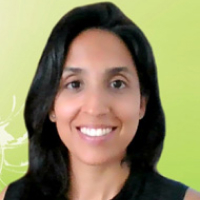
Maleeha Habib
DIRECTOR PLAYGROUND
ASSISTANT PROFESSOR OF PRACTICE
SOCIAL DEVELOPMENT AND POLICY
Maleeha Habib is an independent advisor for Sustainability and Circular Economy with a strong background in global development, environmental policy, and applied psychology. She holds a Master’s degree in Liberal Arts with a focus on Global Development Practice from Harvard University, where she also earned a certificate in Environmental Policy and International Development. Her academic journey began with a Bachelor’s degree in Applied Psychology from Beaconhouse National University in Lahore.
Throughout her career, Maleeha has been involved in the development sector and promoting sustainability, circular economy practices, social and environmental justice in NGOs and private entities.
She has contributed to various organizations and projects, including her role as a circular economy advisor to Engro Polymer and Chemicals’ Limited, where she designed a blueprint to operationalize their Circular Plastics Institute which is now functional at KSBL. She has also served as a circular economy expert with various clients including Environment Resource Management (Singapore and Bangkok) Concept Loop and Shahsons Limited. She served as a Just and Inclusive Economies Professional to Ceres Inc. (Boston), and an advisor to Karachi School of Business and Leadership for a year where she helped realize their sustainability potential, develop a roadmap and transitioned the institute.
Maleeha’s commitment to social and environmental causes is further demonstrated through her roles at Ra’ana Liaquat Craftsmen Colony, where she serves as a General Body Member and Sustainability & Circular Economy Advisor. In these positions, she has streamlined systems, enhanced donor bases, and implemented circular product development, showcasing her ability to drive positive change.
Her experience in the development sector started by writing for a development research magazine NGO World based in Lahore. The foundation of her work can be attributed to her time leading the Green School Programme at WWF-Pakistan where she was able to influence youth as well as corporate entities through their fundraising and environment education initiatives. She has served as Senior Manager for Monitoring, Evaluation, Research & Communications at Indus Earth Trust, where she quantified the social and environmental impact of renewable energy projects. Maleeha’s passion for environmental conservation is not confined to her professional life; she has also been an active member of the National Plastic Action Partnership (NPAP) Pakistan’s Metrics Task Force.
In addition to her professional endeavors, Maleeha has shared her knowledge as a lecturer and conducted multiple workshops and trainings. Her multifaceted career reflects her commitment to creating a sustainable and equitable future through her work in academia, and environmental advocacy.
Ms.Anum Naseer, M.F.A.
Faculty Director Graduate School Curation Program & Assistant Professor Communication and Design
Anum Naseer is an illustrator, educator, and Fulbright Scholar currently pursuing a Master of Fine Arts in Illustration at the Rhode Island School of Design (RISD), USA, where she also earned a Certificate in Collegiate Teaching. Her academic journey combines creative practice with critical inquiry, supported by her M.Phil. in English Literature from Forman Christian College (Magna Cum Laude with Distinction) and a B.A. (Hons) in English Literature from Kinnaird College, where she received the prestigious Mira Phailbus Gold Medal for Overall Excellence.
Her professional experience spans teaching, research, and freelance creative work. At RISD, she has served as a Teaching Assistant in courses such as Character Creation and History of Illustration, and as a Research Assistant at the Center for Complexity, co-authoring work on climate grief rituals. Previously, she taught as a Permanent Lecturer at Government College University and a Visiting Lecturer at Kinnaird College, curating exhibitions and integrating interdisciplinary approaches in art and literature.
Anum’s creative practice centers on visual storytelling, character design, and mixed media illustration, and she has worked with notable organizations including ChadarOrg, Lok Sujaag, and the Center for Social Justice. Beyond academia, she actively engages in community-based projects on empathy, grief, gender, and inclusion, designing art education programs for schools and marginalized communities.
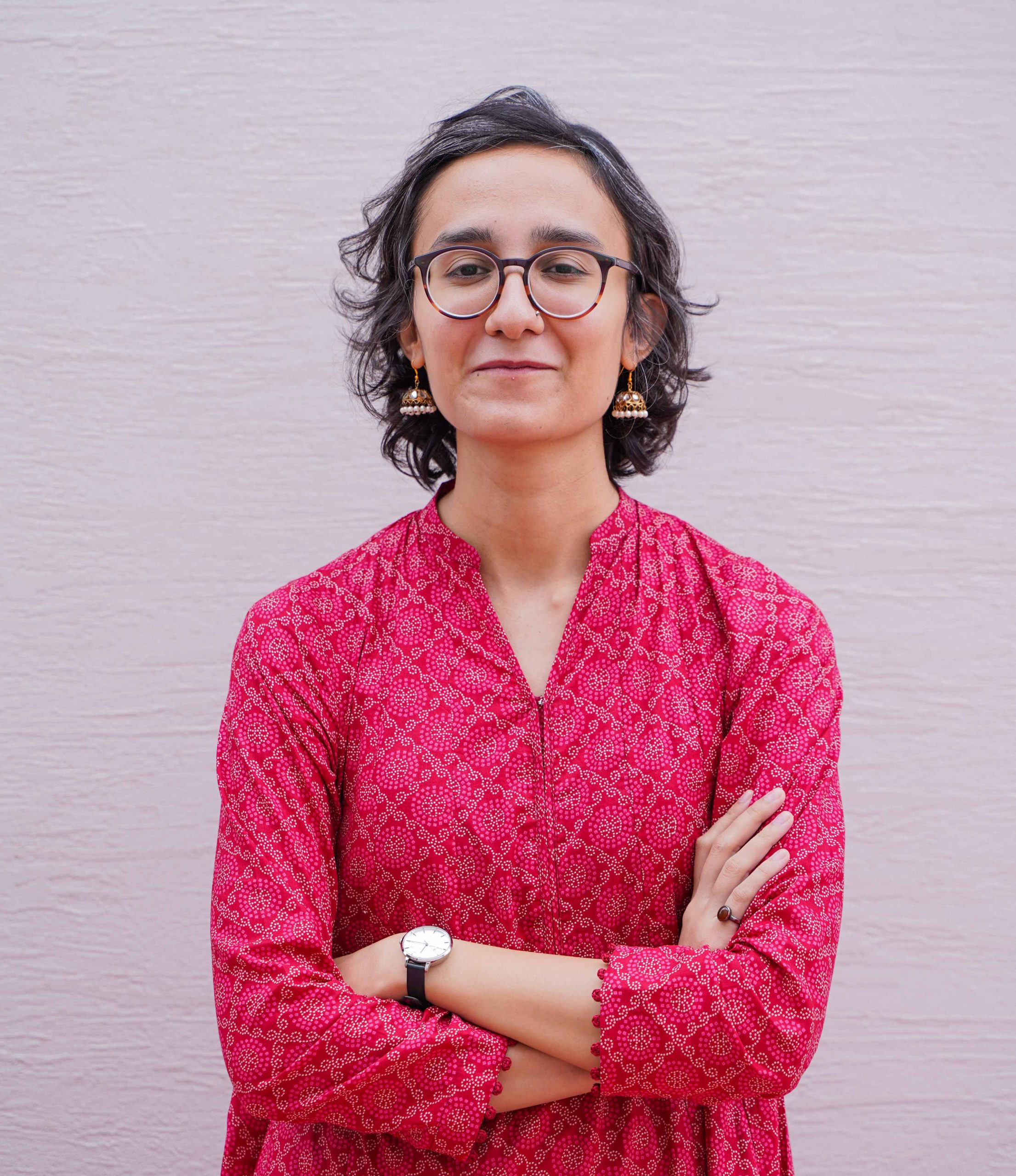
Muneera Batool
Associate Dean,
Teaching and Learning
Muneera Batool earned her MFA in Theatre from Arizona State University (ASU), USA, where she studied media and projection design along with performance. At ASU she taught courses in design & composition as well as narratology.
Muneera is a practicing theatre director and media designer. In her work as well as in her pedagogy she is particularly interested in devised theatre created through the use of Moment Work and Viewpoints & Composition – the postmodern devised theatre modalities that sanctify everyday movement as inherently theatrical. She also employs Jacques Lecoq’s teachings in her work. Her pedagogy centers on the idea of play, creating from intuition, and silencing the mind through meditation.
She is a core collaborator and designer for Whistling Moon – a community-based theatre company from Arizona, USA. Recently she collaborated with Nighat Chaudhry as a media designer for a dance performance that was shown live in India.
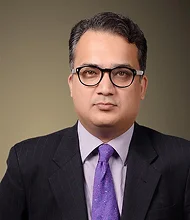
Rehan Malik
Associate Dean Office of Research,
Industrial Engagement and Applied Learning & Assistant Professor,
Social Development and Policy Program
Dr. Mohammed Rehan Malik is a policy advisor, strategist, and academic with experience spanning nearly 25 years across higher education, policy advisory, strategy consulting, and policy research in the U.S., Middle East, and South Asia.
His academic experience spans public policy innovation, institutional reform, public sector governance, energy and climate strategy, and environmental economics. He has held academic leadership roles including Founding Associate Dean for Industry Linkages at the Karachi School for Business and Leadership where he built and led a USD 350,000 p.a. executive education practice in design, entrepreneurship, strategy, and leadership advising clients including Engro, K-Electric, Toyota Motors Pakistan, UEP, ICI, and Novartis. As Founding Head, Policy and Strategy Advisory Unit at the IBA, Karachi he established and led the university’s advisory practice. Since 2013, Dr. Malik has pioneered developing and delivering undergraduate and graduate courses in policy analysis and water and environmental economics in Pakistan.
Dr. Malik has served as a leader in Deloitte Consulting USA’s Public Sector, and Energy Practices. As a national leader in the energy and climate change practice, he led portfolio development pursuits of @USD20 million in climate change, clean energy, & energy system transformations. In 2007, he created and led the State Alternative Energy Offering where he advised state and local governments, universities, and non-profits. He served as a leader in the State of MN advisory team and subsequently in USAID federal policy advisory team in Washington DC. He led a program management portfolio of USD2 million p.a. and a business development portfolio of USD3.5 million p.a. He designed and led Destination 2025, a USD 1 million project shaping Minnesota’s renewable energy and biosciences sectors.
As a Doctoral Fellow at RAND Corporation, he worked on interdisciplinary policy analysis and research projects in education reform, renewable energy development, epidemiology, and public sector reform. His research has been published in peer-reviewed publications such as Addiction and RAND policy analysis reports. He has authored Deloitte’s Destination 2025 strategy series on energy and agriculture futures, industrial development strategy, and policy and higher education programming investments. Dr. Malik has presented at leading global academic conferences including the Association for Public Policy Analysis and Management, International Public Policy Association, American Political Science Association, and American Education Research Association.

Shah Jamal Alam
Associate Dean (interim) Undergraduate Education& Accreditation (UGEA) & Associate Professor,
Computer Science
Until June 2014, Dr. Alam was a postdoctoral researcher at the School of GeoSciences, University of Edinburgh working on projects related to land use change and climate change adaptation. Prior to joining the University of Edinburgh, Dr. Alam worked as a postdoctoral researcher at the School of Public Health, University of Michigan (Ann Arbor) in the Koopman Lab (Dynamic Causal Systems in Epidemiologic Analysis) on HIV transmission dynamics and complex networks.
Dr. Alam has a Ph.D. in Computational Social Science from the Centre for Policy Modelling, as well as a Masters from the University of Saarland and an undergraduate degree from the University of Karachi, both in Computer Science. His previous work includes a post as a research assistant in the Multiagent Systems Group at the German Research Centre for Artificial Intelligence (DFKI GmBH). He is also a former member of the National Growth and Development Pilot Project team at the University of Karachi.
He has an extensive interdisciplinary research background and has worked closely with AI experts, physicists, climate adaptation experts, statisticians, epidemiologists, political scientists, anthropologists and social scientists in several international research projects.
Dr. Mohammad Shahid Shaikh
Interim Vice president Academic Affairs, & Professor, Electrical & Computer Engineering Dhanani School of Science & Engineering
Dr. Shaikh has been an Associate Professor and Head of Department of Electrical Engineering at FAST–National University, Karachi, Pakistan. He also served as Coordinator for the Graduate Studies Committee at FAST–NU. An HEC-approved Ph.D. supervisor, Dr. Shaikh is currently supervising four doctoral candidates. Prior to joining FAST, he was a post-doctoral fellow at McGill University, Canada
Dr. Shaikh has several years of diversified industry experience. He worked for a number of years as an engineer in the Water and Power Development Authority (WAPDA), a public utility company in Pakistan. Later, he switched to IT and worked as a Programmer Analyst in Pakistan and Canada. In 2004, Dr. Shaikh completed his Ph.D. in Systems and Control from McGill University, Montréal, Canada. He was placed on the Dean’s Honor List and won the D. W. Ambridge prize for best Ph.D. thesis in physical sciences and engineering.
Dr. Waqar Saleem
Assistant Dean
Dhanani School of Science and Engineering
Dr. Waqar Saleem is the Assistant Dean for the Dhanani School of Science and Engineering (DSSE). He reports to the Associate Dean for Undergraduate Education and Accreditation. Dr. Saleem is responsible for management and enrichment of current academic programs in DSSE, ensuring the academic success of students, supporting the Dean of Faculty with the review and management of faculty, as well as creating, developing and supporting innovative and rigorous academic programs across disciplines in the Sciences and Engineering. He leads the implementation of special programs and engagement with international partners and institutions to enhance academic programs and services provided by the school. He also supervises all Program Directors and Center Directors that fall under the DSSE.

Salman Khimani
Senior Director,
Academic Operations & Institutional Research
Salman Khimani is the Director of Academic Operations and Strategic Planning in the Office of Academic Affairs. In this role he leads the University’s strategic initiatives in the areas of faculty recruitment and onboarding, manages academic analytics for strategic planning and decision making and oversees academic operations. Salman is a former Fulbright Scholar with a Master’s in International Education Policy from Harvard University and has sixteen years of experience in the education sector. He joined Habib in 2018. In addition, Salman has a Bachelor’s in Computer Science and an MBA from IBA, Karachi. His major professional experience has been with the agencies of the Aga Khan Development Network (AKDN) where he was engaged in planning and implementing large-scale national programs and projects, recruitment, monitoring and evaluation, policy development and review of processes. Salman has also worked with a technology-based strategy consulting organization, leading the implementation of a large education sector project to support the education departments of Balochistan and Sindh.
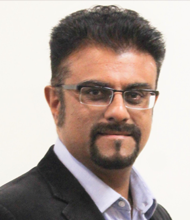
Shamez Mukhi
Director,
Student Life and Health & Wellness
Shamez joined Habib University in August 2019. He has over 15 years of professional experience in education and youth development. He attained his M.Sc. in Computer Science from the University of Kent, UK and his M.A. in Global Diplomacy from the School of Oriental and African Studies (SOAS), University of London, UK. In the field of education, Shamez has worked extensively in student recruitment, career development, alumni programs and co-curricular activities, including student-led clubs at the tertiary level. He also has vast experience in the design and implementation of youth development programs including arts, sports, youth camps and civic projects. Shamez is a certified trainer and has conducted skill-based training sessions for over 8,000 youth and volunteers in Pakistan.

Raheel Tajuddin Lakhani
Assistant Director,
Office of Research & Faculty Development
Raheel Tajuddin Lakhani has professional experience in Educational Development and Digital Learning. Prior to joining Habib University, he headed the Digital Publishing department at Oxford University Press, Pakistan. He has also served as an Educational Technologist at The Aga Khan University Network of Blended and Digital Learning, where he trained faculty members and co-designed blended learning courses in the schools of Medicine, Nursing and Teacher Education. He received High Honours in his Master’s of Education from The Aga Khan University – Institute for Educational Development. He also holds an MA in Technology and Social Change from Lunds University (Sweden). His interests include eLearning pedagogy, learner autonomy, pluralism education and visual narratives. Raheel provides support to both the Center for Pedagogical Excellence CPE and the Office of Faculty Research.
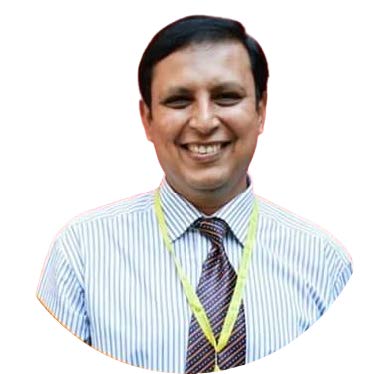
Nooruddin Merchant
Assistant Director,
Library and Educational Programs
Nooruddin joined Habib University in September 2015. He participated on the original team working on developing the space plan for Habib University, including the Library spaces. He has over 20 years of professional experience developing programs and managing projects in the field of education, learning and development. Nooruddin has previously worked on a number of educational endeavors and programs for teacher education, ICT integration for K-12 schools, media and learning, career counseling and staff development. He has also played a pivotal role in developing and implementing spaces and programs for youth vocational skills development and sports for positive youth development sponsored by the Ministry of Sports and Youth Affairs, Government of Sindh. He has also served as an executive board member of the Pakistan Library Association (PLA). Nooruddin has a Master’s in Education Planning and Management, Master’s in Business Administration and a Master’s in Library and Information Sciences.
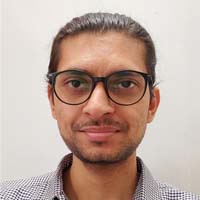
Dr. Muhammad Aatir Khan
FACULTY DIRECTOR GRADUATE SCHOOL CURATION PROGRAM,
ASSISTANT PROFESSOR Social Development & Policy – School of Arts Humanities and Social Sciences
Muhammad Aatir is currently working as an Assistant Professor in the Social Development and Policy program. He is an alumnus of the Fulbright Foreign Student Program through which he completed his doctorate in Public Policy from Oregon State University, USA. Prior to that, he pursued a masters in Social Science from the Shaheed Zulfikar Ali Bhutto Institute of Science and Technology (SZABIST) in Karachi, and a bachelors in Social Sciences and Liberal Arts (majoring in Political Science) from the Institute of Business Administration (IBA), Karachi.
His research interests include public education, climate change, and urban planning. Currently, he is working on a study focusing on public school administration in the province of Sindh. Additionally, he is designing an intervention that aims to raise awareness about climate change through the establishment of civic clubs in public schools in Sindh, funded by the International Institute of Education under the Centennial Fellowship program.
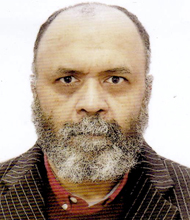
Dr.Muhammad Haris
ASSISTANT DEAN
ASSISTANT PROFESSOR &
PROGRAM DICRECTOR – COMPARATIVE HUMANITIES
SCHOOL OF ARTS, HUMANITIES AND SOCIAL SCIENCES
Dr. Saeed Ur Rehman is an HEC-approved PhD supervisor. In 2017, he chaired the Subcommittee on the syllabus for English Literature for the HEC National Curriculum Review Committee. He received his Doctor of Philosophy in English Literature and Postcolonial Knowledge from the Australian National University in 2005, with a dissertation titled Intellectuals and Specificities: A Study of Postcolonial Knowledge Production by Ziauddin Sardar, Akbar S. Ahmed, and Sara Suleri.
Throughout his academic journey, he has made significant contributions to the field through publications, research, and teaching. Dr. Saeed Ur Rehman has authored and edited several monographs, and research reports, including Narrating Pakistan: An Anthology of Contemporary Creative Writing (2023), and numerous articles in national and international refereed journals. His research interests encompass topics such as translation, postcoloniality, and the figure of the postcolonial intellectual.
Dr. Saeed Ur Rehman is an active member of academic associations like the Modern Languages Association (MLA) and North-Eastern Modern Languages Association (NeMLA). He has also served as an expert member and contributed to faculty selection boards and curriculum development committees.
Dr. Saeed Ur Rehman’s extensive engagement with academia and research reflects his passion for advancing knowledge and fostering intellectual discourse.

Christie Marie Lauder
Dean,
Program Director & Assistant Professor
Communication And Design
School Of Arts, Humanities And Social Sciences
Christie Marie Lauder is a multifaceted professional who has excelled in both the academic and literary spheres. With a Ph.D. in Creative Writing from Louisiana State University and a Bachelor’s degree in American Studies from Temple University, Christie combines her passion for American popular culture with her literary pursuits. Currently serving as an Assistant Professor in Communication and Design at Habib University in Karachi, Pakistan, she imparts her knowledge and expertise to the next generation of communicators and designers.
Christie is not only an educator but also a board member of The Salam Award for Imaginative Fiction, where she supports imaginative storytelling. Her post-doctoral instructor role at Louisiana State University and her previous position as a graduate teaching instructor reflect her commitment to academic excellence. She has also been actively involved in various editorial roles, contributing to the literary community. Christie’s extensive experience and dedication make her a valuable asset to both her students and the literary world.
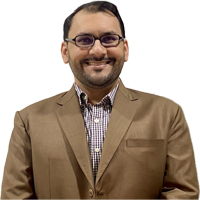
Sahaab Badar Sheikh
PROGRAM DIRECTOR & ASSISTANT PROFESSOR
SOCIAL DEVELOPMENT AND POLICY
SCHOOL OF ARTS, HUMANITIES AND SOCIAL SCIENCES
Sahaab Bader Sheikh holds a double bachelors in Economics and Management from the University of London in association with the London School of Economics and Political Science. Having his curiosity piqued by books such as Freakonomics and Mostly Harmless Econometrics, he went on to pursue a Masters in Economics from Lahore University of Management Sciences (LUMS).
In 2011, Sahaab joined the Center for Economic Research in Pakistan (CERP) to put his academic knowledge into practical research. Working as a Research Associate on the Punjab Economic Opportunities Program proved an invaluable education in data handling and fieldwork. Occasionally, he has also consulted for the Punjab Skills Development Fund (PSDF) and Department for International Development (DfID).
In 2014, Sahaab won the prestigious Fulbright Scholarship to pursue doctoral studies in economics at the University of California, Santa Barbara. During his PhD, his research interests revolved around environmental, health and labor economics. His dissertation focuses on the economics of natural disasters, exploring both the impact of disasters on health outcomes and the political economy of disaster relief.
In his short teaching experience, he has been a teaching assistant for Principles of Economics, Statistics for Business and Economics and Mathematical Methods for Economics, and the instructor for multiple STATA workshops.
Sahaab is joining the Social and Development Policy program in the Arts Humanities and Social Sciences School at Habib University where he hopes to hone his teaching skills and pursue an interdisciplinary research agenda.
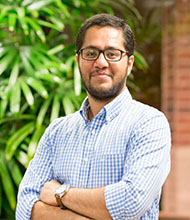
Dr. Ahmad Usman
PROGRAM DIRECTOR AND ASSISTANT PROFESSOR
ELECTRICAL AND COMPUTER ENGINEERING
DHANANI SCHOOL OF SCIENCE & ENGINEERING
Dr. Usman has received his B.Sc. and M.Sc. from the University of Engineering and Technology (UET), Lahore, Pakistan in 2008 and 2011, respectively. He has received his M.Sc. in Electrical Engineering (majors in Optics and Microsystems), M.Sc. in Mechanical Engineering (majors in MEMS, Packaging, and Nanotechnology), and Ph.D. in Electrical and Computer Engineering in 2014, 2016, and 2018 from the Georgia Institute of Technology, respectively. He is a recipient of the prestigious US Fulbright scholarship and was also awarded HRDI-UESTPs/UETs scholarship award from the Higher Education Commission (HEC) of Pakistan. He also holds the certification of Microelectromechanical Systems (MEMS) from the Georgia Institute of Technology.
Syeda Saleha Raza
PROGRAM DIRECTOR AND ASSOCIATE PROFESSOR,
COMPUTER SCIENCE
DHANANI SCHOOL OF SCIENCE & ENGINEERING
Dr. Raza has been actively involved in the areas of Robotics, Machine Learning, Probabilistic Reasoning and Computational Intelligence. She played a crucial role in developing a robot soccer team at IBA named KarachiKoalas. KarachiKoalas participated in World RoboCup Soccer Simulation 3D league in 2011 – 2013, and was the first ever team from Pakistan that participated in this competition. She has also worked on an ICT R&D funded project on anti-money laundering where she worked with the live data of some Pakistani banks and applied novel techniques to identify suspicious financial transactions. Her probabilistic reasoning tool IBAyes is freely available to download. IBAyes allows its user to model uncertain situations and perform inference using Bayesian networks and its variants such as Influence Nets.
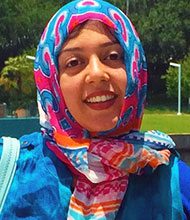
DR. HUMAIRA QURESHI
ASSISTANT DEAN
ASSOCIATE PROFESSOR AND
PROGRAM DIRECTOR – INTEGRATED SCIENCES & MATHEMATICS
DHANANI SCHOOL OF SCIENCE AND ENGINEERING
Dr. Humaira Qureshi is the Program Director for the Integrated and Science and Mathematics (iSciM) and Reports to Vice President Academic Affairs and Dean of Faculty (DoF). As a Program Director, she is responsible to ensure that the program’s mission, vision, learning outcomes are aligned to University’s mission. Having a key academic leadership role, she needs to ensure excellent learning outcomes for the students of their program through robust academic planning, operations and review. These responsibilities encompass a wide range of activities that include curriculum development and its implementation, its review and improvement, resource planning, and faculty and academic staff development. All these activities are undertaken in close coordination and support from the Offices of Associate Deans, Assistant Deans and Academic Operations.
She is the primary point of contact for faculty guidance in teaching within the program and the role model for the program faculty to develop and maintain a positive and productive work environment that promotes excellence in teaching, learning, advising, scholarly achievement and service by all program members.
DR. Ishtiyaq A. Makda
Associate Dean,
Academic Systems and operations
Dr. Ishtiyaq Makda the temporary Director for the Office of Undergraduate Education and Accreditation in the Office of Academic Affairs, assisting and working closely with the Associate Dean Undergraduate Education and Accreditation. Reporting to the Interim Vice President Academic Affairs (VPAA) and Dean of Faculty, he is also working with the Quality Enhancement Cell at Habib University helping in the University’s accreditation efforts.
His role also includes working with the programs and initiatives that support student success, curriculum development and review, assessment of student learning and institutional efforts for Accreditation. And ensures that the academic management and governance bodies at program, school and institutional levels, formed as per the Charter, are reviewing the curriculum and courses with rigor and consistency.

DR. Jessica Werneke
Director
Habib Graduate School Curation Program
Jessica Werneke received her Ph.D. in Modern European History with a concentration in Russian and Soviet visual culture from the University of Texas at Austin, USA. She has since held a postdoctoral research fellowship at the International Centre for the History of World War II and its Consequences at the Higher School of Economics in Moscow Russia and was a British Academy Newton International Fellow at Loughborough University in the UK. Dr. Werneke has taught broadly in history, but primarily courses on historiography and modern Russian cultural history.
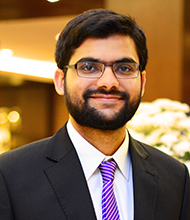
Dr. Hassaan Khan
Associate Director
Habib Graduate School Curation Program
Sustainably addressing water challenges of the 21st century requires approaches that move beyond individually applying engineering, hydrology, management, sociology, or economics. In his interdisciplinary research, Dr. Hassaan F. Khan tackles water resource allocation and management questions using integrated water systems analysis. His research aims to help policy makers in water-stressed developing countries make better decisions regarding investments in, and management of, water resources.
Dr. Hassaan was previously a Postdoctoral Scholar at Stanford University in the Department of Earth System Science working with Dr. Steven Gorelick. At Stanford, he was part of the FUSE team developing integrated hydrogeologic and human systems model to inform sustainable urban water management in Amman (Jordan) and Pune (India). He also serves as a visiting scholar with LEAD Pakistan where he is working on a water systems model for the transboundary Kabul River in collaboration with governmental and non-governmental stakeholders.
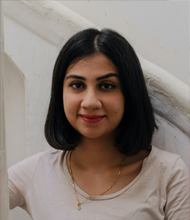
Anum Asi
DIRECTOR,
GRADUATE SCHOOL CURATION PROGRAM & ASSISTANT PROFESSOR – COMMUNICATION AND DESIGN PROMOTION
Anum Asi holds an M.F.A. in Creative Writing from Cornell University and was a Fulbright Scholar at Columbia University where she studied Sociology and Education; her research investigated the educational strategies of South Asian Muslim students and parents in NYC. Her creative work has been published widely and won the 2021 Emily Clark Balch Prize for Fiction. She has over ten years of experience in teaching and in program and curriculum development, focusing on equity, meaningful mentorship and rigorous instructional design. Most recently, she served as a Lecturer in Cornell University’s Department of Literatures in English, where she taught courses in Creative Writing and Memoir.

Coline Ferrant
Program Director and Assistant Professor,
Social Development and Policy Program
I obtained my Ph.D. in Sociology from Northwestern University and Sciences Po. My professional interests include urban & rural sociology, cultural sociology, and ethnography. Within my dissertation research, I studied the dietary tastes and culinary practices of first- and second-generation immigrants in neighborhoods of Chicago and Paris.
I enjoy collaborating with colleagues and students of various backgrounds and experience levels. For instance, I have been an investigator in projects on: – social times and eating practices in Santiago and Paris; – barriers to participation in the WIC (Women, Infants, and Children) program in the United States; – electoral participation and human development in Mexico and Central America; – worldviews of garbage collectors in Paris; – Egyptians’ recollections of the 2011 revolution.
Lastly, I have a longstanding interest in writing for cultural, literary, and political magazines, mostly Ibero-American.
Hadiqa Maqsood
Faculty Director,
Dean’s Fellowship Program &
Assistant Professor,
Integrated Sciences & Mathematics Program
Dr. Hadiqa Maqsood is a Fulbright and Commonwealth Scholar with extensive experience in water resource management, sustainable agriculture, and computational environmental modeling. She brings a rich blend of expertise in artificial intelligence and biosystems engineering, integrating research and assessing environmental systems. Her interdisciplinary career spans academia, research, and international development projects funded by the USDA, USAID, World Bank, and UN-HABITAT.
She has worked in diverse contexts across the US, the UK, Germany, and Pakistan, contributing to climate-resilient irrigation systems, hydrological modeling, environmental data analysis, GIS-based flood and drought mapping, and AI-powered research methods.
In addition to her academic contributions, Dr. Maqsood is an active science communicator and educational coach through her platform, The Blue Cube, where she supports students worldwide with study abroad planning and AI-based learning tools. Through workshops, mentorship, and online content, she guides learners in their personal development journey and helps them cultivate a growth mindset.
Waseem Hassan
Faculty Director Research & Assistant Professor,
Electrical and Computer Engineering Program
Waseem Hassan holds a Ph.D. in Engineering Cybernetics, specializing in acoustic biotelemetry for monitoring fish behavior in marine aquaculture. During his PhD, he developed the “Internet of Fish” concept and a novel method for measuring individual fish swimming speed in real-time using the Doppler principle. After completing his doctorate, he worked as a development engineer at Nortek AS, working with algorithm and application development for Acoustic Doppler Current Profilers (ADCPs). Having a keen interest in cross-disciplinary tasks, his expertise lies in embedded systems, machine learning, and cyber-physical systems. He holds 5+ years of industrial experience and has contributed significantly to academia, teaching embedded systems labs and supervising research-related projects. In his spare time, he enjoys cycling, hiking and badminton.
Qasim Pasta
Faculty Director, Academic Planning and Governance & Associate Professor, Computer Science Program
Dr. Pasta is passionate about teaching computer science at the undergrad level and has more than 12 years of teaching experience. He has completed his Ph.D. in Computer Science from Karachi Institute of Economics and Technology in 2018. His research interest lies in the field of Network Science and Data Science, particularly in the areas of extraction, analysis, and visualization of complex networks. He is working on models for the generation of synthetic networks based on dynamics observed in real-world networks, while also enabling the embedding of ground-truth structures, such as community structures.
Dr. Pasta is also working in the area of computational social science and studying the usage of technology to understand the underlying problems of society. He received funding to attend the Summer Institute of Computational Social Science (SICSS) at the University of Bamberg, Germany in 2019, and the Winter Workshop on Complex Systems organized by the European Society of Complex Systems in 2020. His recent work collaborated with two other German professors, is recently published in one of MIT journals.
Prior to joining academia, he has been part of the software development industry of Pakistan in different roles. He is passionate about software development and is part of different open-source project teams. In addition, Dr. Pasta is an active social worker and works with different Memon community organizations to promote education; especially for underprivileged students.
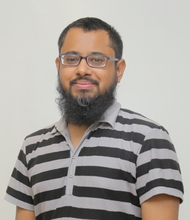
DR. MUHAMMAD FARHAN
Program Director and Associate professor
Dhanani School Of Science And Engineering
Dr. Muhammad Farhan has been involved in the field of Research and Academia for the past decade. It started from him joining SUPARCO, Pakistan in Jan. 2007 where he worked on Embedded Systems at Digital Systems Lab for around 2 years. During 2009-2014 he worked as Researcher and also as Lecturer in Department of Signal Processing, Tampere University of Technology, Tampere, Finland. From 2015 onwards, he has been involved in undergraduate engineering education in Pakistan with a mission of inculcating active R&D culture in the university as well as among students. He joined HU to carry on this mission and also to employ modern pedagogical methods focusing more on collaborative and engagement-based learning and instigating critical thinking, problem analysis and problem solving among students using active-learning approach.
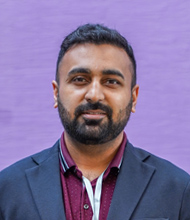
Usman Salahuddin
Interim Program Director, Integrated Sciences & Mathematics & Assistant Professor, Integrated Sciences & Mathematics
Usman Salahuddin is an expert in the field of Material Science, specializing in catalysis, sustainable energy, and advanced materials. With a passion for addressing global challenges through scientific innovation, Usman’s academic journey has been marked by excellence, curiosity, and a commitment to pushing the boundaries of scientific knowledge.
Usman embarked on his academic pursuit with a Bachelor’s degree in Chemical Engineering from the National University of Sciences & Technology (NUST), Islamabad, Pakistan. He then pursued a Master’s degree in Energy Systems Engineering at the US-Pakistan Center for Advanced Studies in Energy (USPCAS-E), where he gained a profound understanding of energy technologies and their implications.
He was awarded the prestigious Fulbright Scholarship for his Ph.D. in Material Science at the University of Connecticut, Storrs. Under the mentorship of Professor Puxian Gao, Usman’s research has encompassed a diverse range of cutting-edge projects, including the development of innovative honeycomb monoliths for catalytic applications and environmental sustainability. His work has also extended to investigating low-temperature nitric oxide adsorption in the brain using metal organic frameworks, showcasing his commitment to exploring the frontiers of scientific discovery.
Usman gained invaluable practical experience through his roles at prominent organizations such as Tesla Motors, where he contributed to cathode mixing and cell engineering, and Indus Earth Trust, where he spearheaded distributive solar installation initiatives. As a Fellow at the Future Climate Venture Studio and a participant in the Universitas 21 micro-internship program, Usman continued to demonstrate his unwavering commitment to addressing pressing global challenges, particularly those related to sustainability and climate change.
In addition to his extensive research contributions, Usman has authored and co-authored several impactful publications in renowned scientific journals. His work on brain-machine interfaces, energy efficiency analysis, and nanomaterial synthesis reflects his dedication to sharing knowledge and fostering scientific discourse.
Usman’s technical proficiency spans a wide range of tools and methodologies, including COMSOL, MATLAB, SolidWorks, and Gaussian, reflecting his ability to seamlessly integrate theoretical insights with practical applications.
Driven by an insatiable curiosity and a deep-seated desire to make a meaningful impact, Usman Salahuddin’s journey stands as a testament to the power of scientific inquiry and innovation. His work exemplifies a tireless commitment to shaping a more sustainable and technologically advanced future.