
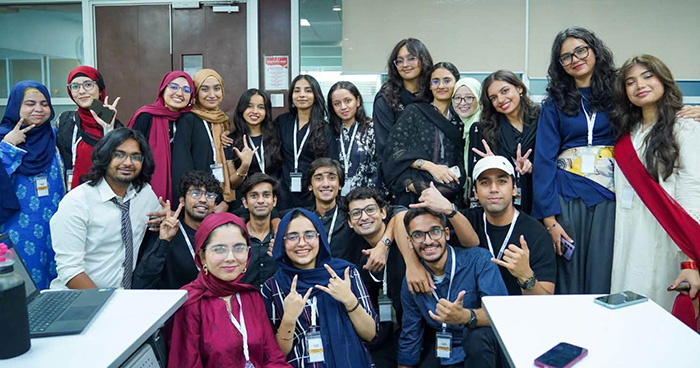
Stepping into the Next Leap: Inside Zero Week with Habib University’s Class of 2030
Transitioning from high school to university marks a profound shift, redefining how students engage with knowledge, community, and their own potential. From August 8 to 13, 2026, Habib University’s incoming Class of 2030 officially embarked on this transformative path during Zero Week, an immersive orientation curated by the Office of Academic Performance, as part of the First Year Experience. Designed to familiarize the new cohort to the Habib University ethos, the week provided students with the intellectual grounding and practical tools essential for thriving in a collaborative, inquiry-driven environment.
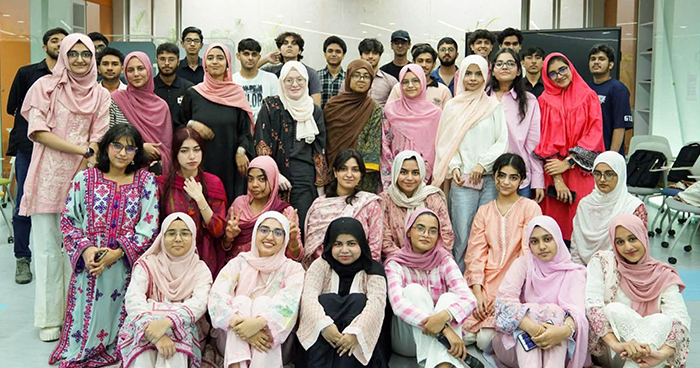
At the core of the experience was an introduction to the Habib Liberal Core, the institution’s signature breadth curriculum. Rather than viewing their chosen majors as isolated disciplines, students engaged in dynamic sessions like the Interdisciplinary Hour, where faculty across diverse fields demonstrated how engineering, computation, social sciences, and the arts intersect. Through faculty interactions and structured academic readiness workshops, freshmen learned how to approach critical inquiry, balance rigorous course loads, and leverage institutional resources to take ownership of their academics.
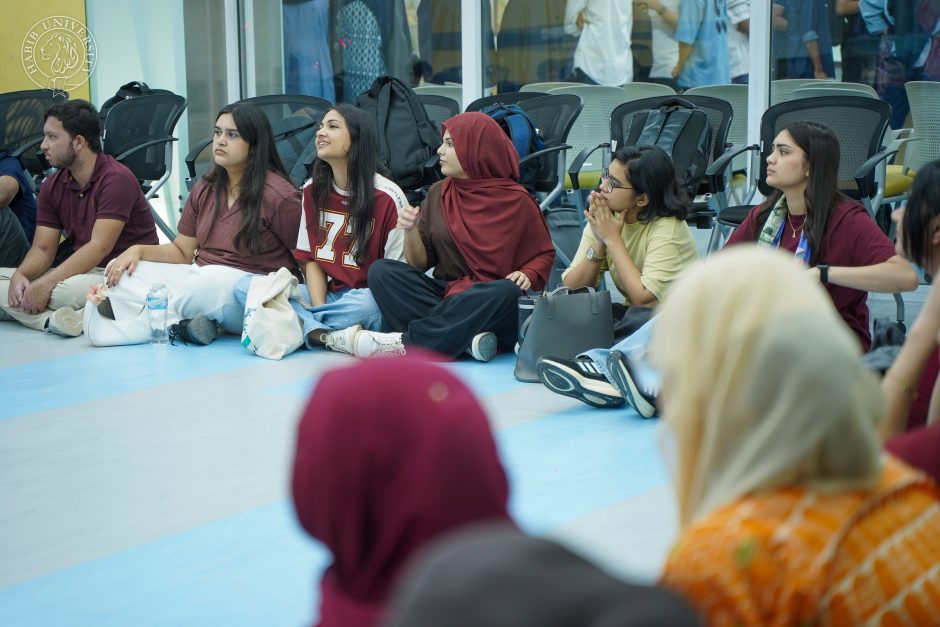
Equally central to the week was embedding the cohort within Habib University’s distinctive ethos. Through interactive forums like “Living the HU Way,” students engaged directly with upperclassmen, mentors, and staff, exploring the values of thoughtful self-cultivation, mutual respect, and ethical leadership that define campus life. Collaborative icebreakers, open dialogues, and small-group discussions demystified the university experience, giving students the space to acquaint themselves and forge authentic bonds with their peers.
Some of the interesting sessions included Know Your Major consisting of a Design Thinking activity, and matching features of benchmarked programs. Speed Meet a Professor had students familiarize themselves with their future mentors. In Know Your Labs, students engaged in a mini engineering design challenge. Dr Nauman Naqvi, Associate Professor in the Comparative Humanities program, and a founding faculty member at Habib University, conducted a session called Humility as an Intellectual & Social Virtue. A panel session between faculty members and Muhammad Husain Zaidi (Senior Manager, Learning Support Services) titled, Academic Ethos in the Age of AI discussed ethical usage of AI and Habib University’s policy regarding plagiarism. In the interdisciplinary hour, a diverse range of sessions also included Career Prospects in the Age of AI, the Power of Computational Thinking, Introduction to CS, Introduction to CS from a problem-solving lens with an emphasis on interdisciplinarity. Along with these, other diverse sessions included film screenings by CND students, Learning How to Learn, discussions on AI along with Summer Tehqiq Research Program project exhibition, introduction to Habib University’s exciting South Asian minor by Arsalan Pareyal (Director, Center for South Asian Music), and a poster exhibition on students’ applied learning projects.
By the end of the week, unfamiliar classrooms had become shared spaces of curiosity and ambition. Zero Week gave the Class of 2030 their first glimpse of the next four years, equipping them with the clarity, confidence, and community needed to question paradigms and step boldly into their next leap.