

 Share Profile
Muhammad Anas
Hilton Pharma HU TOPS Scholar

Aspiration Statement
I aspire to become an Ethical AI Consultant, giving back to the society that shaped my journey and creating a positive global impact through responsible and innovative technology.
Core Skills
- Cloud-Native & DevOps Engineering
- Data Science and Machine Learning
- Ethical & Responsible AI System Design
- Full-Stack AI Product Development (Next.js, FastAPI and Langchain)
- LLM Systems Engineering
Preferred Career Paths
First priority: Generative AI Engineer/Ethical AI Consultant/AI Solutions Engineer
Second priority: Software Engineer
Third priority: AI Researcher
Experience
Leadership / Meta-curricular
- Tech Lead
- Treasurer, Brain.Hack() - CSEC (Computer Science and Engineering Club)
Internship / Volunteer Work
- Teaching Assistant - Generative AI, Habib University (January – May 2026)
- Associate Software Engineer, Tps Worldwide (December 2025 – June 2026)
- Associate Backend and AI Engineer, Vectorr.io (October 2025 – January 2026)
- Software/AI Engineering Intern, Dawlance (July – August 2025)
Publications / Creative Projects
- Publication – CLEF 2025 Working Notes (CEUR-WS Proceeding), Europe
- Conference Presentation – International Bhurban Conference on Applied Sciences & Technology (IBCAST) 2025
Final Year Project
Project Title
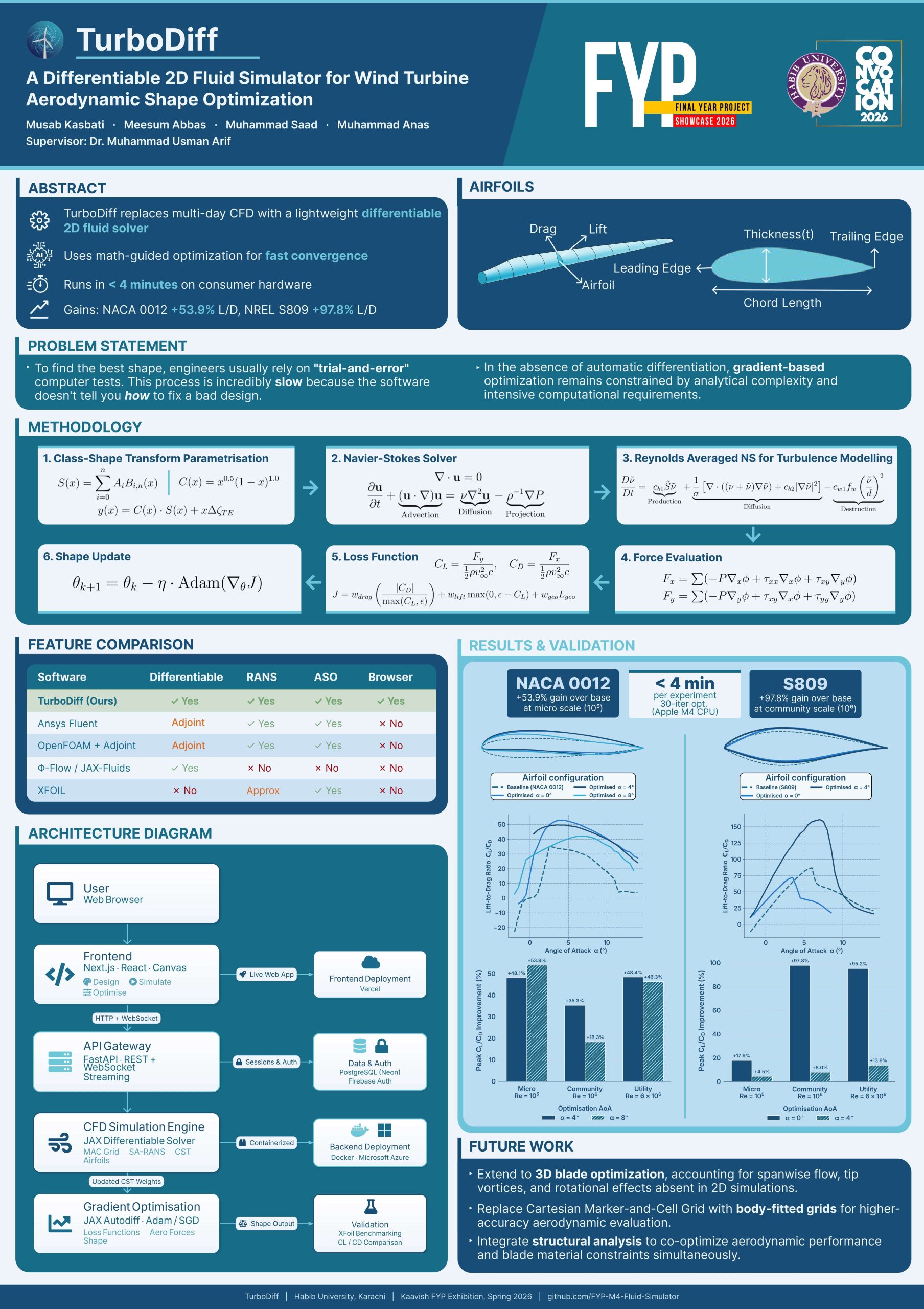
TurboDiff - A Differentiable Wind Turbine Blade Optimization Simulator
Description
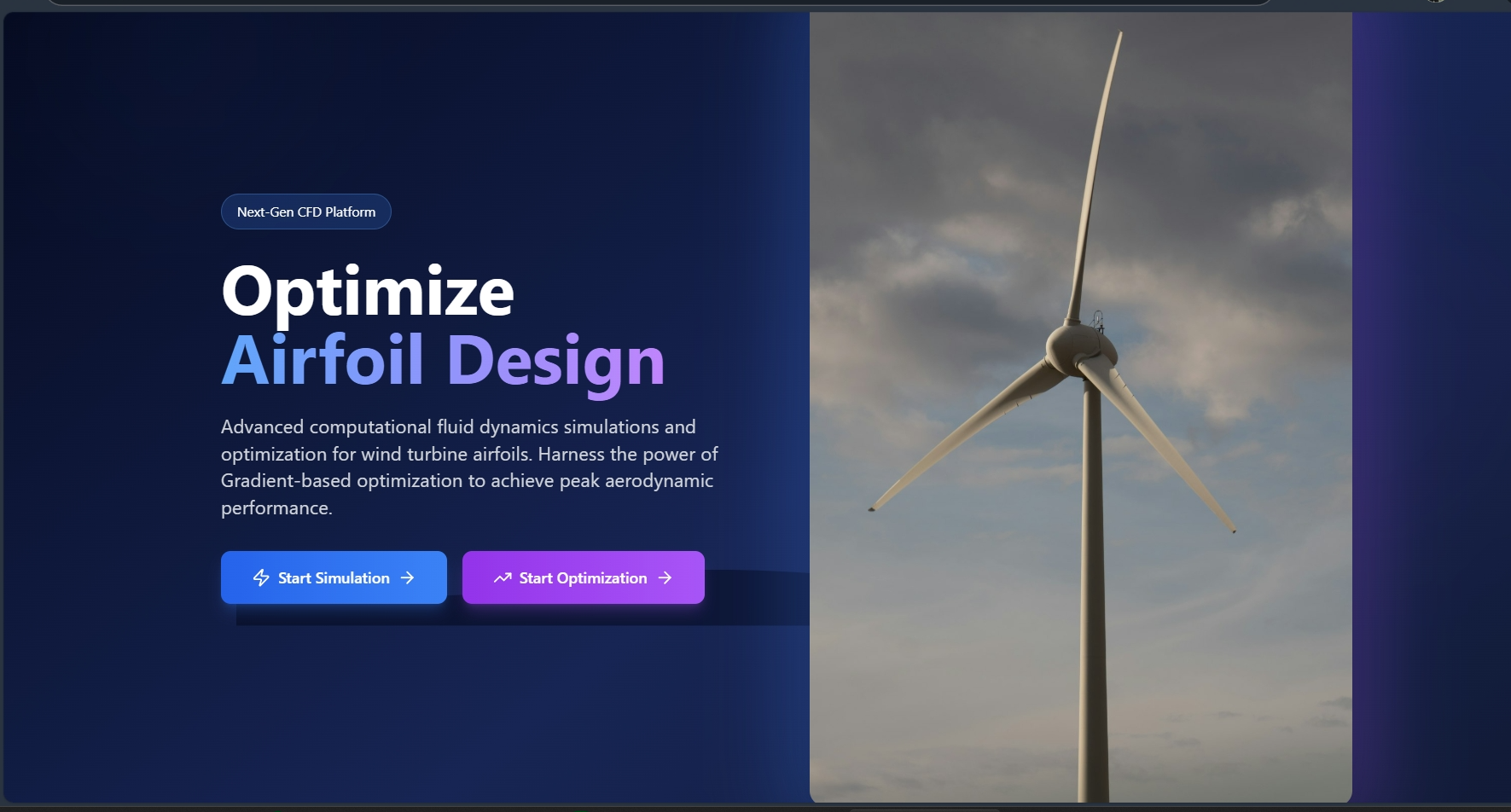
As the global shift accelerates toward renewable energy, optimizing wind turbine efficiency is critical. My project aimed to replace slow, trial-and-error blade design by bridging theoretical physics and machine learning. The simulator is a differentiable 2D physics engine built using Python, JAX, and Blade Element Momentum theory. Utilizing XLA JIT compilation for very fast computation, this engine enables gradient-based optimization to automatically calculate the most aerodynamic and power-efficient blade shapes. To make this actionable, it has a Next.js web interface streaming real-time telemetry and dynamic pressure visualizations via WebSockets from a FastAPI backend. Deploying the system as Docker-containerized Azure microservices with a full CI/CD pipeline, I successfully transformed complex AI concepts into scalable, production-ready enterprise software.
Project Pictures