



 Share Profile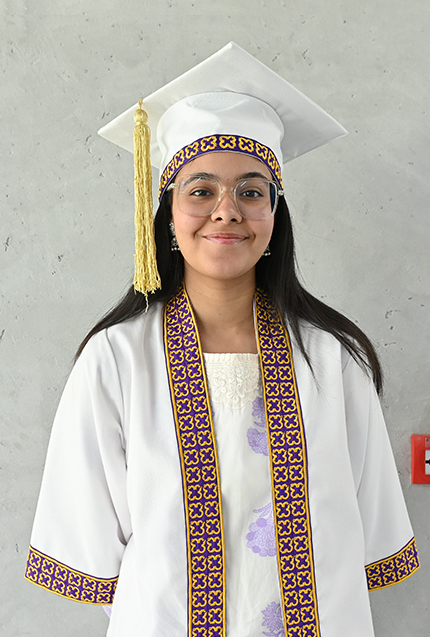
MALIHA IRFAN
Aspiration Statement
"I aspire to attend graduate school to deepen my understanding of social development and policy, focusing on inclusive urban planning and climate justice, especially for marginalized communities in South Asia."
Core Skills
- Proficient in English & Urdu Writing, Public Speaking, Qualitative Research, Quantitative Research
Academic Awards / Achievements
- Dean's List Spring 2022 Recipient of Meritorious Scholarship (70% Scholarship)
Experience
Leadership / Meta-curricular
- Election Committee Member, HUSG Former Parliamentary Lead , Habib Debate Union General Secretary and Director General for HUMUN V Learn Abroad Program (UC Berkeley) Summer 2023
Internship / Volunteer Work
- Research Assistant, Karachi Water Project (May Aug 2024) Teaching Assistant, Pak and Modern South Asia (Aug Dec 2023) Learning Community Mentor, Academic Performance (Aug Dec 2023) Orientation Leader, Office of Academic Performance, Habib University (May Aug 2022) Program Assistant, GSCP
Publications / Creative Projects
- Co-authored the Fieldwork Manual of Habib University that was presented in a session in Fall 2024
Final Year Project
Project Title
Resilience in the Rain: The Unheard Stories of Karachi's Disabled
Description
"Resilience in the Rain: The Unheard Stories of Karachi's Disabled," explores how increased urban flooding and heavy rainfall disproportionately impact individuals with physical disabilities in Karachi, Pakistan. Using PSLM data and regression models with qualitative interviews, the research uncovers the vulnerabilities, from health risks to mobility constraints and inadequate state support. The study introduces a Precipitation Disparity Index to illustrate how disabled populations report worse outcomes during rainfall. Structural inaccessibility, lack of early warning systems, and social stigma are key aggravators. The research documents these lived experiences but also advocates for more inclusive climate adaptation policies. Ultimately, the thesis emphasizes the need to center disabled voices in urban planning and disaster preparedness in order to build truly resilient cities in the face of intensifying climate risks.