



 Share Profile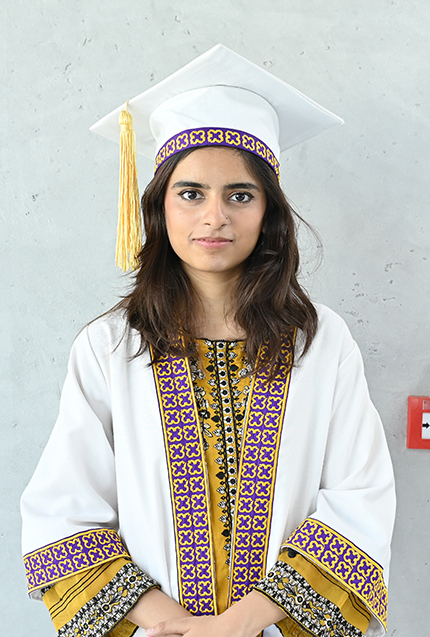
HINA AHMED
Aspiration Statement
I am interested in qualitative research and working on projects that allow me to explore culture and the arts. I also want to explore social and economic policy making.
Core Skills
- Analytical and Critical Writing Skills in English, Canva, Microsoft Office, Painting, Sketching, Drawing, Qualitative and Quantitative Research, STATA, R-studio
Academic Awards / Achievements
- HU TOPS Scholar
Experience
Leadership / Meta-curricular
- Design Team Member, Pride Press, 2023-24 Registration Desk Volunteer, HU Con, 2024 President, Mouseequi & Raqs Club, Habib University 2024-25
Internship / Volunteer Work
- Campus Leader, Teach for Pakistan (October 2024 March 2025) Design Associate, Tehzib Undergraduate Research Journal Fine Artist, Freelance (January 2021 May 2025) Teaching Intern, Green Crescent Trust (March 2025)
Publications / Creative Projects
- Published two Oil Paintings in Arzu Anthology 2024, titled "Courts" & "Nani's House" Published two Oil Paintings in Arzu Anthology 2025, titled "Sleepy Portrait" & "Winter Snacks"
Final Year Project
Project Title
Karachi: Where Art meets Politics
Description
Intersection of Arts and Politics in Karachi, using qualitative data from different producers of culture. The findings discuss the different ways that these people navigate social cohesion, community building, social change, resistance and censorship in the changing socio-political climate of Karachi. The participants shared their insights on societal openness towards artistic works and how they integrate political aspects into their artistic pieces. Key insights from this study reveal that art is a powerful medium for driving social change, the work of Karachi's artists is heavily censored, and art can be used to build empathy and play with the emotional senses of the masses. The study highlights the intertwined play between politics and creative expression by recounting real life events and opinions from visual art teachers, classical dancers and published writers. The conclusion calls for a more open mind towards artistic expression and letting the artistic community flourish.