
Preparing for University: Critical Reading and Writing at Habib University’s Summer Academy 2026
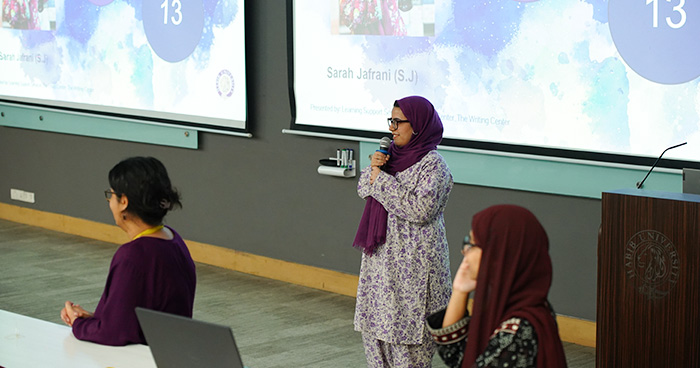
Habib University’s Summer Academy is designed to provide incoming students with the support necessary to have a successful transition into university life. It demonstrates Habib University’s commitment to creating exceptional learning opportunities for students. The Academy offers them exciting platforms to sharpen their skills before the commencement of the first semester. Read Sarah Jafrani’s reflection essay as the co-instructor for the Academic Toolbox, which is designed to prepare students for the rigorous demands of university writing.
Bridging the Transition: The Need for Summer Academies
In the years I’ve worked in higher education, I’ve realized that nothing humbles a student faster than their first semester of university. I am often confronted by my own memories of what it was like to be a clueless undergraduate in those first few months. No matter how much time has passed since what university used to be like in those days, that initial period never gets easier. Therefore, bridge programs such as the Summer Academy at Habib University provide the perfect transition period to give incoming students a sense of what campus life can be like, especially in terms of academics, before their classes begin.
Every year as part of the bridge program, the Learning Support Services (LSS) team at Habib University spends their summer planning and executing the foundational course of Academic Toolbox. We believe the most important tools to survive higher education are knowing how to read and write well. This year’s course felt different from previous iterations for me in two ways: it was my first time co-teaching it, and we had two student facilitators join us as co-instructors.
Breaking the Ice: Fun Facts and Finding Voices
To kick things off, we set a rule in place where, whenever the students wanted to share an opinion or ask a question, they had to first state their name and a fun fact about themselves. This could be anything from a hobby to something interesting they found on the internet. Not only did it serve my goldfish memory in helping me remember their names, but the students grew more comfortable in speaking up and asking questions and got to know one another better.
Week 1: Unpacking Ideology Through Critical Reading
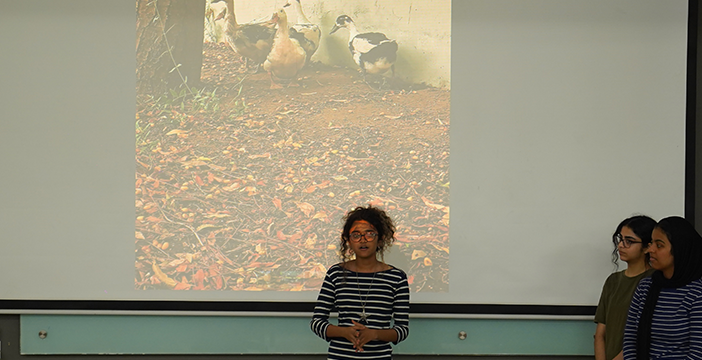
In the first week, we introduced them to the importance of critical reading, especially at a time when fake news and propaganda are rampant. By studying the personal essays of Joan Didion and the feminist writings of Chimamanda Ngozi Adichie, we explored the relationship between an author’s ideologies and how they inform the content of their writing, delving deeper into the oft-quoted advice: “write what you know”. One might expect such deep analysis of academic texts to be boring and tedious for students, who’d much rather engage in other elective workshops, but I was pleasantly surprised by their enthusiasm.
Weeks 2 & 3: Mastering Academic Structure and Visual Analysis
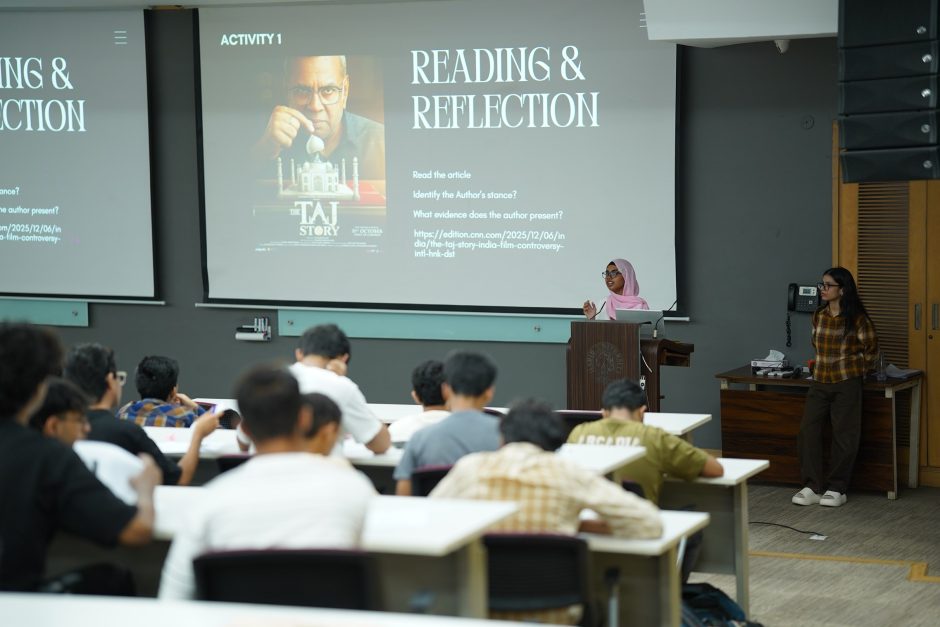
For Weeks 2 and 3, we moved from reading and analyzing academic texts, to understanding the structure for them to write their own. Here, my co-instructor, Rumaisa Mushtaq, taught them to identify the main idea and thesis statement from a body of text, use transition words to connect ideas, and structure sentences for effective writing. The students enjoyed analyzing an academic paper based on the film “Padmaavat” (2018, directed by Sanjay Leela Bhansali), and were introduced to the concept of visual analysis to understand how the film’s stylistic choices were utilized in constructing biased narratives. By the end of the third week, they were able to write a fully formatted response piece to the paper.
Student-Led Engagement: Pop Culture, Clues, and AI
To break up the academically dense lessons, our student facilitators led a variety of engaging sessions. These included solving a murder mystery using context clues, exploring the use of AI in language to fuel harmful narratives, and building character constructs based on preconceived notions by watching snippets from the Pakistani drama Zindagi Gulzar Hai.
The Grand Finale: Presentations, Performances, and Play
At the start of the course, students were asked to form groups and choose a topic of interest to present their opinions on, for the final week. The aim was to build confidence in speaking on topics that mattered to them, whether it was the philosophy behind a social media trend, statistics of a sports team, or new vocabulary adopted from the internet into current vernacular. To conclude the course on a lighter note, the students had to perform, either as a group or individually, any piece of media which they found interesting. The room burst into fits of laughter and energy as they performed a dialogue from Minions, recited the famous opening of Macbeth, acted as sports commentators and local news anchors, and even dramatically read out a poem from Alice in Wonderland.
The Lasting Impact: Reigniting Curiosity and the Desire to Read
Throughout these sessions, I was able to witness them gradually build up confidence in sharing their thoughts and ideas and find value in how they perceived the world. Some even came up to me at the end of lessons asking for similar readings, book recommendations, and tips on building a reading habit. When we collected feedback at the end of each week, we were delighted to learn that some students, who admitted to having stopped reading despite being avid readers in the past, had finally picked up a book after ages! I was satisfied with the outcome of these sessions as, for me, the biggest motivation to take on the challenge this year of co-teaching high schoolers before they start their university journey, was the hope that at least one student would walk away from the lessons with the itch to read more.
It is in these moments that I’m reminded how the efforts towards nurturing a well-rounded student experience don’t stop once they graduate high school. It’s a continuous process to inculcate a sense of curiosity and a passion for lifelong learning, to question the world and try to understand it, and to look inward on their own biases and self-reflect.
Watch glimpses of this year’s Summer Academy on our YouTube channel: 𝗧𝗵𝗿𝗼𝘄𝗯𝗮𝗰𝗸 𝘁𝗼 𝗦𝘂𝗺𝗺𝗲𝗿 𝗔𝗰𝗮𝗱𝗲𝗺𝘆 𝟮𝟬𝟮𝟲
By Sarah Jafrani (Deputy Manager, Learning Support Services)