
Lady Fatima Zahra (A.S.): An Exalted Exemplar of Spirituality, Dignity and Divine Justice
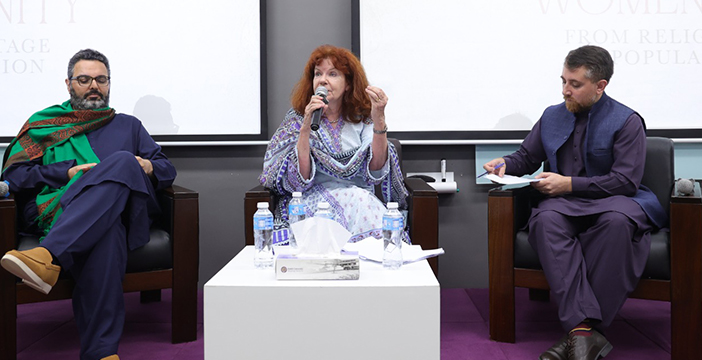
On October 16th 2026, Habib University welcomed audiences from across Karachi, including notable people in academia and literary circles, as well as students, for the second biennial lecture of the Lady Fatima Zahra Endowed Chair in Women and Divinity, endowed by Abbas D. Habib and family in memory of his late mother, Zainab Dawood Habib. The lecture, titled “Women & Divinity: From Religious Heritage to Popular Imagination”, reflects the family’s long-term commitment to academic scholarship and the institution’s sustained legacy of cultivating knowledge in underrepresented discourse.
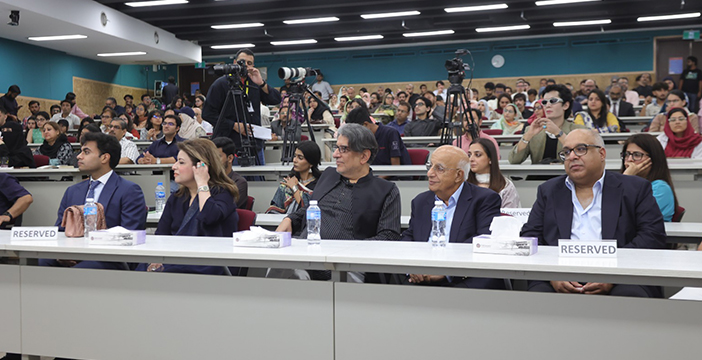
Established in 2024 and housed within the Comparative Humanities program at Habib University, the Chair is dedicated to the study of women, theological authority, and conceptions of the divine across religious traditions. Named after Lady Fatima Zahra (A.S.), a central figure in Islamic intellectual and ethical history, the Chair addresses the significant gap in academic discourse by exploring women’s roles in society through religious traditions.
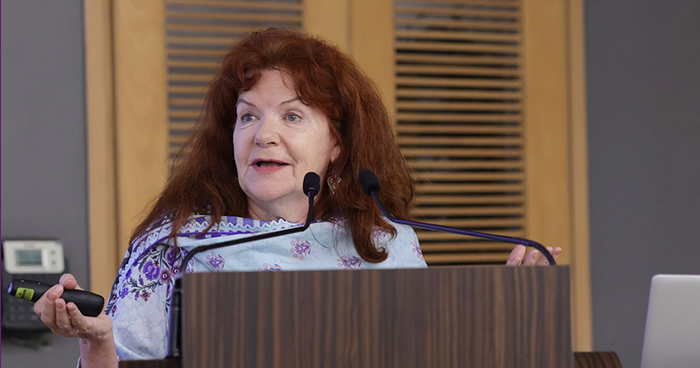
The lecture was delivered by Dr Marcia Hermansen, the inaugural appointee to the Chair and a distinguished scholar of Islamic Studies who previously served as Professor of Islamic Studies in the Theology Department at Loyola University Chicago, where she also directed the Islamic World Studies Program.
“The significance of Professor Hermansen’s lecture cannot be exaggerated. Not only are women half the population, but to neglect the feminine aspects of religion and divinity is to gravely distort both. And it could not be timelier given the contemporary rise of fascist and nationalist hypermasculinity and the toxic manosphere across the world,” shared Dr Nauman Naqvi, Associate Professor in the Comparative Humanities program.
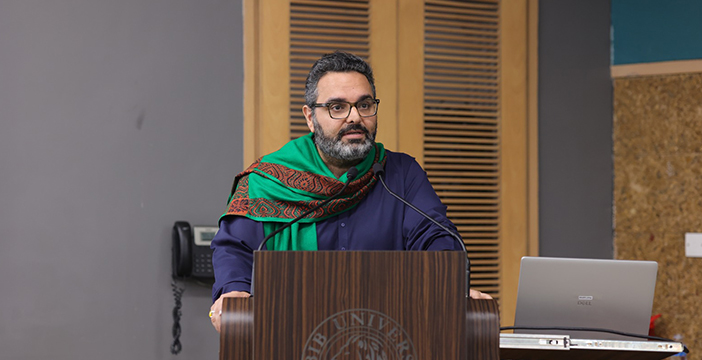
The program opened with Dr Sajjad Rizvi, Professor of Islamic Intellectual History, University of Exeter, and the inaugural chair of the Imam Ali Ibn Abi Talib (A.S.) Endowed Faculty Chair in Wisdom and Humanities endowed by Zain and Farzana Jeewanjee’s reflection on the crucial act of understanding the world through the lens of female divinity, “Professor Hermansen’s talk is critical for our times; not only is the study of the humanities and the role of religion within that under threat from the quantitative neo-liberal calculus of the present, so too is the significance of the feminine and the female perspective to understanding our world and making theological sense of it increasingly challenged and once again being marginalized”, he remarked.
Dr Hermansen began by mapping a long history of the feminine being pushed to the edges of religious symbolism, similar to Carl Jung’s warning, issued before the Second World War, that a Europe stripped of the feminine from its spiritual imagination was on “a very dangerous course” that would end in conflict or to the modern search of feminist anthropologists driving the self-help idea of “finding your inner goddess”. Her own verdict, however, was definitive: “The texts are there. The ideas are there. It’s not that they don’t exist, but somehow, they have been pushed aside.”
Finally turning to Lady Fatima Zahra herself, Dr Hermansen described her as “a prime example of a manifestation of divinity through being an exemplary, sacred person in Islam.” Beyond her relational roles as daughter, wife and mother, she observed that contemporary scholarship has turned to Lady Fatima’s sermon for its eloquence, intellectual and rhetorical command, and advocacy for social justice.
“The mission of the Lady Fatima Zahra Endowed Chair at Habib University is to explore, analyze, and express how the study of women and divinity is both spiritually and ethically meaningful for individual men and women”, said Dr Hermansen in closing.
The second lecture follows the Chair’s inauguration on September 5, 2024, when Bosnian scholar Dr Larisa Jasarevic delivered “Thinking on the Tattered Planet: Ecostress, Religion, and the Gender Quarrel”. Her lecture addressed climate ecology, religious thought, and gender, establishing the series’ commitment to examining complex contemporary concerns through interdisciplinary scholarship.