billion
People worldwide — about 1 in 6 of us — live with a significant disability.
Source: World Health Organization, 2022



Habib University — Karachi, Pakistan
Making the invisible visible.
Pakistan’s first dedicated academic platform to advance research, awareness, and policy on visible and invisible disabilities and inclusion across the Global South, with a particular focus on women.
Scroll to see what light reveals“A prism does not create color. It reveals what was always there — hidden inside light that seemed plain and undivided”
The Chair seeks to catalyse systemic change by addressing the gaps in knowledge, policy, and practice that leave millions of people in Pakistan unseen by the systems meant to serve them. It exists to build the evidence that enables those systems to see, and to educate the next generation of scholars, policymakers, and practitioners to redesign them for inclusion.
“Systems cannot respond to what they are not trained to see.”— Zainab Wadood, Benefactor of the Chair
The Zainab Wadood Endowed Chair in Inclusive Systems and Policy Design is a permanently endowed academic position at Habib University, housed in the Social Development and Policy Program within the School of Arts, Humanities and Social Sciences. It is dedicated to the study of disability — visible and invisible — as it intersects with gender, and to the design of systems and policy that recognize it, in Pakistan and across the Global South.
The Zainab Wadood Endowed Chair is distinct. It is, to our knowledge, the first academic platform anywhere to integrate invisible disability, gender, systems design, and public policy within one interdisciplinary program — a model built for Pakistan, grounded in its South Asian context, and legible to the world.
Habib University, Karachi | Social Development and Policy Program
The Scale
billion
People worldwide — about 1 in 6 of us — live with a significant disability.
Source: World Health Organization, 2022
in 7
People worldwide live with a mental health condition. Mental health conditions are now the single largest cause of disability on Earth, and none of it can be seen.
Source: World Health Organization, 2025; The Lancet, 2026
% / %
Pakistan’s 2023 census recorded 3.1% of people as having a disability, and 9.6% as reporting a functional limitation. The first time the census used internationally comparable questions, and the two figures have not yet been officially reconciled.
Source: Pakistan Bureau of Statistics, Census 2023
Nationally representative studies of autism, ADHD or learning disabilities have ever been conducted in Pakistan — a country with the world’s highest adult diabetes rate and its largest hepatitis C burden.
Source: IDF Diabetes Atlas, 2025; WHO Global Hepatitis Report, 2026
%
The impairment a hospital medical board must certify before a Pakistani can be issued a disability ID — a threshold built for what can be seen. Barely half a million people are registered nationally, against surveys suggesting a number many times higher.
Source: Documented certification practice across provinces; NADRA registration data, 2023
%
The share of Pakistan's public-school teachers with any training to teach children with difficulties.
Source: Pakistan Education Statistics 2023–24; PSLM 2019–20
%
Approximately, primary-age children with disabilities are out of school.
Source: Pakistan Education Statistics 2023–24; PSLM 2019–20
in 10
Girls with disabilities between the ages of six to eleven are out of school.
Source: Pakistan Social and Living Standards Measurement Survey, 2019–20
The Rationale
The case for this Chair rests on five facts. Each is documented. None has been resolved.
Hearing loss, depression, anxiety, autism, ADHD, epilepsy, diabetes, chronic pain: none of it shows up on a form or in a five-minute consultation.
Pakistan has never conducted a nationally representative study of autism, ADHD or learning disabilities, and has never run a national hearing survey. Its only national epilepsy study is more than three decades old. Policy cannot be built on numbers that swing twenty-fold with the wording of a form.
Across South Asia, official censuses consistently record more disabled men than women. Surveys that instead ask about everyday functioning usually find the opposite. In Pakistan’s own 2023 census, men were recorded at 3.3% and women at 2.9% — while the national health survey found more women than men reporting serious difficulty. Women’s disabilities are not less common. They are less counted, and — for conditions like autism and ADHD — less diagnosed.
Pakistan ratified the UN Convention on the Rights of Persons with Disabilities in 2011, has disability legislation in every jurisdiction, and has legislated employment quotas that the Supreme Court has ordered applied at every level of every organization. Yet where quotas have been measured, roughly a third is filled. [In March 2026, Pakistan underwent its first UN review of disability rights; concern: a certification system that still cannot see invisible conditions, and disaster responses — in the 2022 and 2025 floods — that collected no disability data at all.]
The Story Behind the Chair
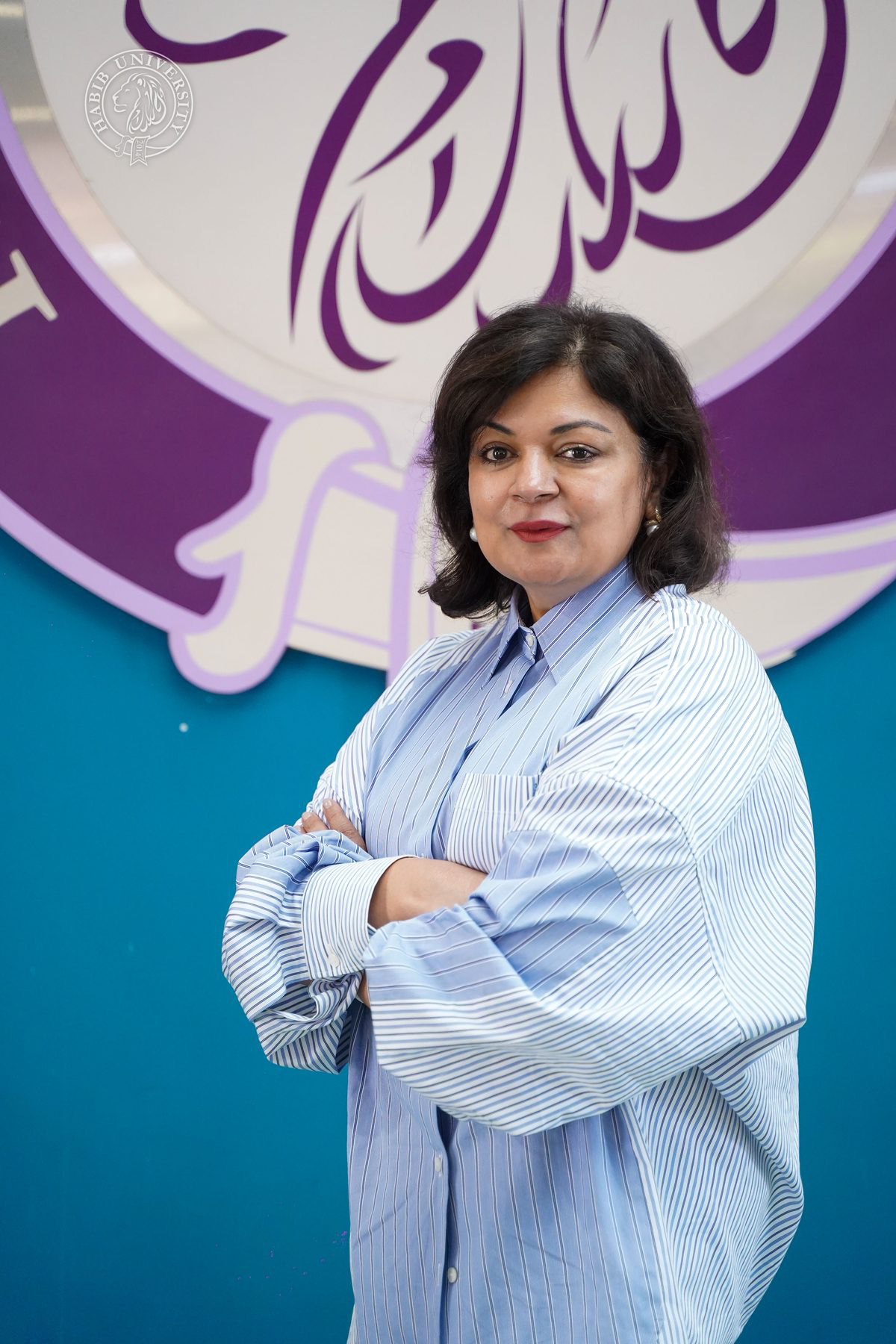
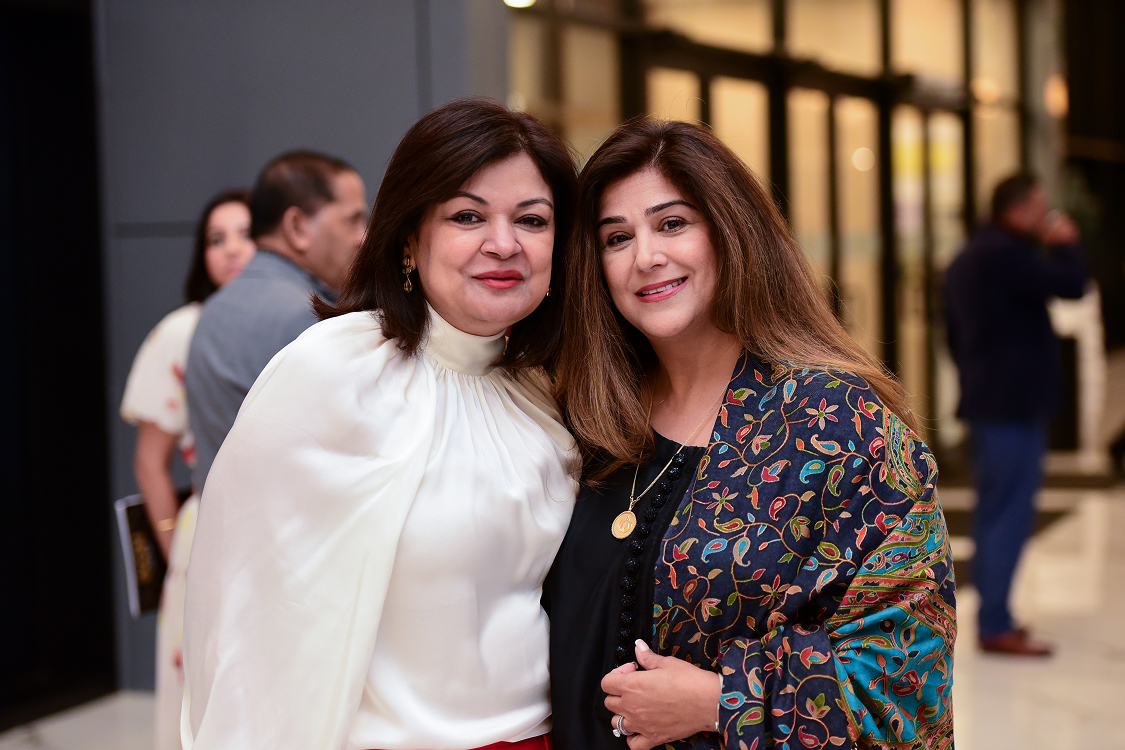
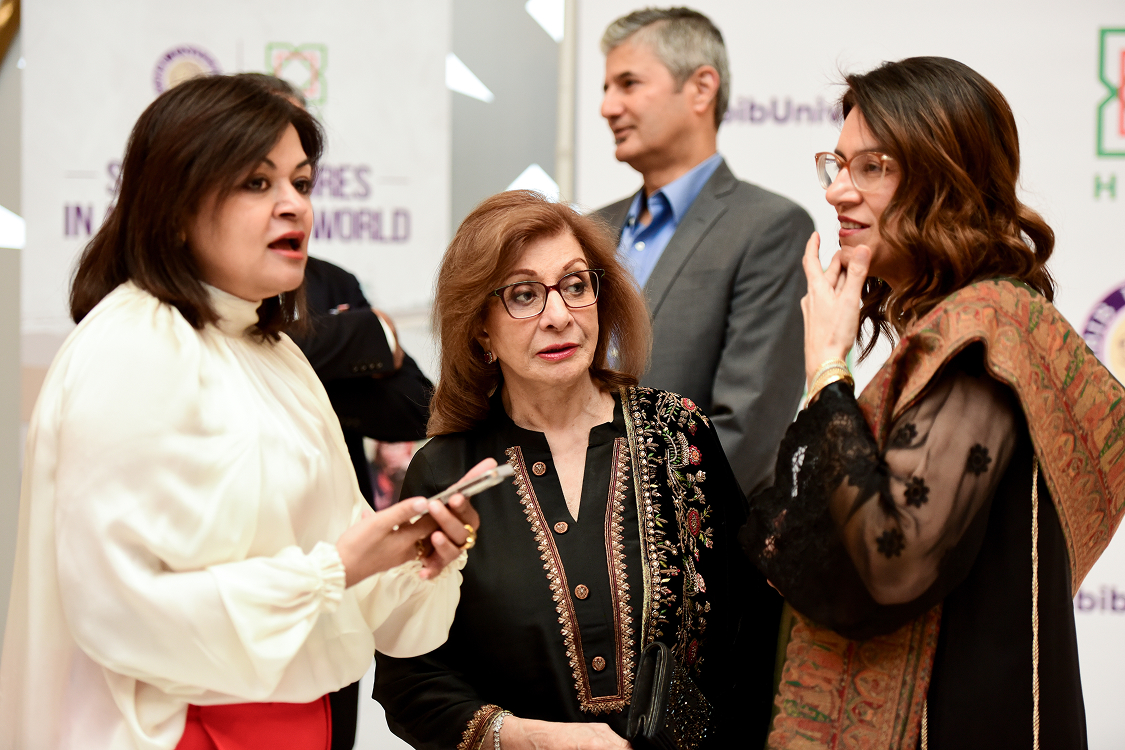
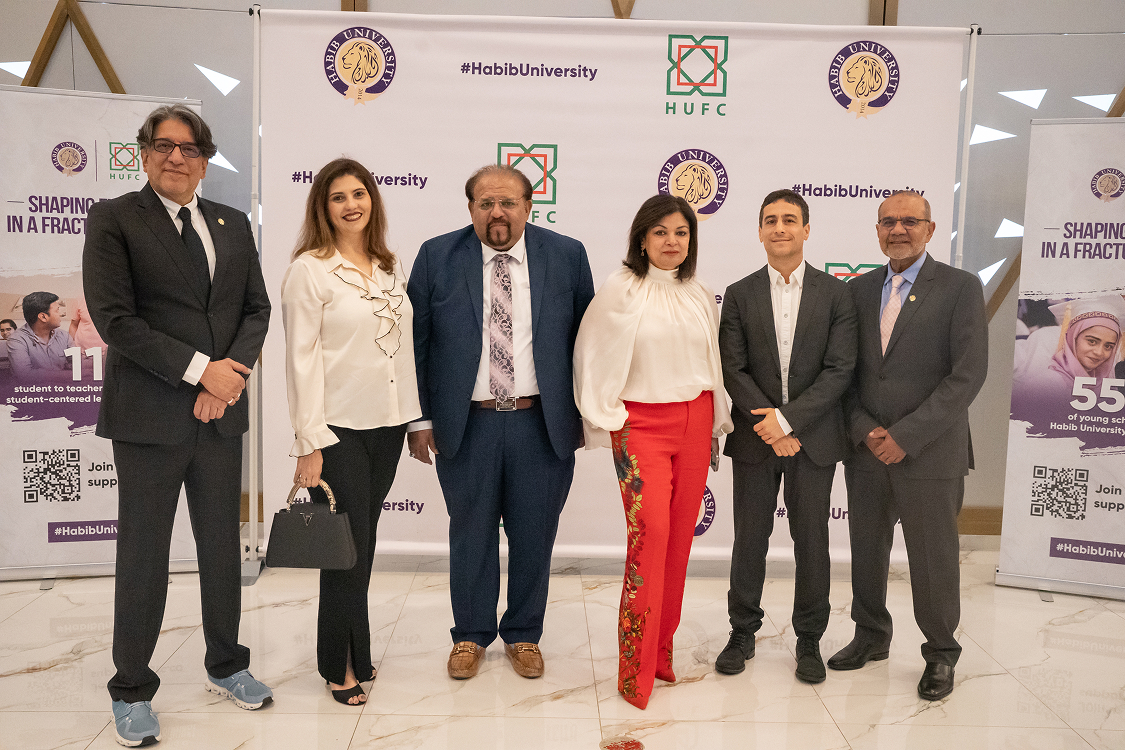
Zainab Wadood is a systems change advocate, strategist, and philanthropist, and a member of Habib University’s community of supporters. She was born with a hearing impairment that went unrecognized for much of her life. She went through her entire education without structured support, because no system around her was designed to notice a disability that could not be seen; learning to lip-read and adapt through her own ingenuity. She was formally diagnosed only in adulthood.
What she chose to build from that experience is not a monument to her own case but an institution for the next person: systems (educational, healthcare and societal) that identify, accommodate and include people, especially women, with invisible disabilities, so that no one has to wait until adulthood to be recognized.
Zainab Wadood, founder of the Chair, on living with a hearing impairment that went unrecognised into adulthood, and on why Pakistan cannot count what it cannot see.
Interview by VCast Online.
I envision systems — educational, healthcare, and societal — designed to identify, accommodate, and include people with invisible disabilities, rather than leaving them unseen or excluded.
— Zainab Wadood, Benefactor of the Chair
The Answer — An Intellectual Legacy
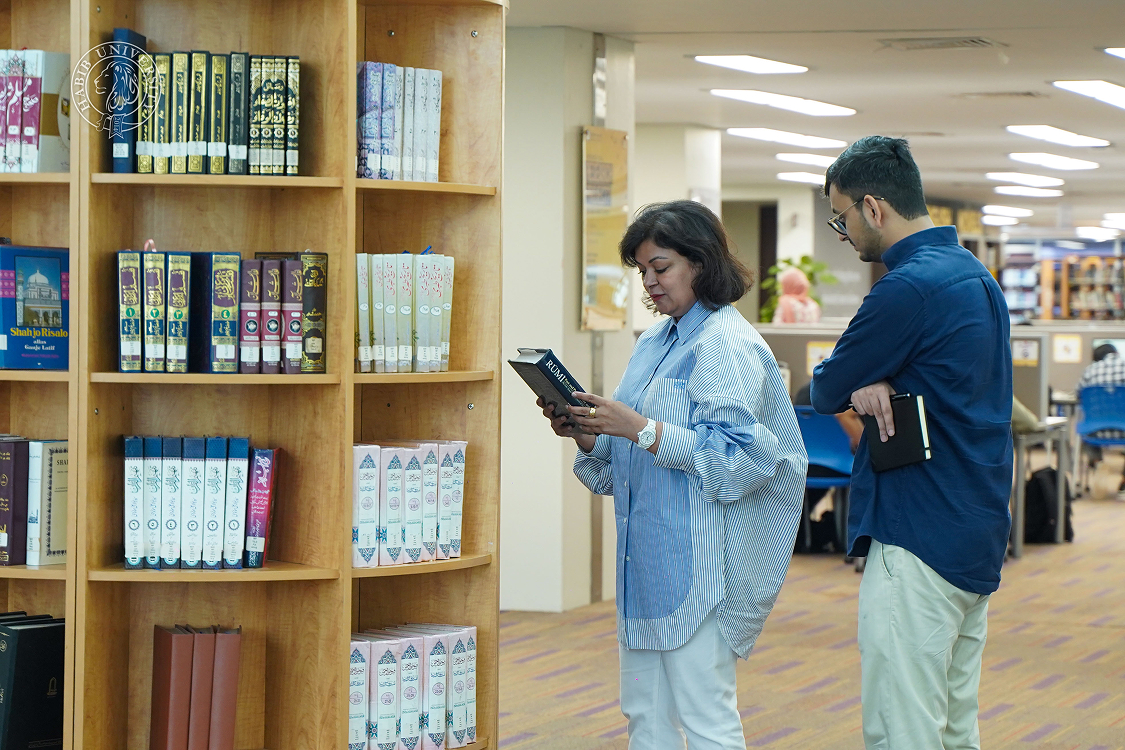
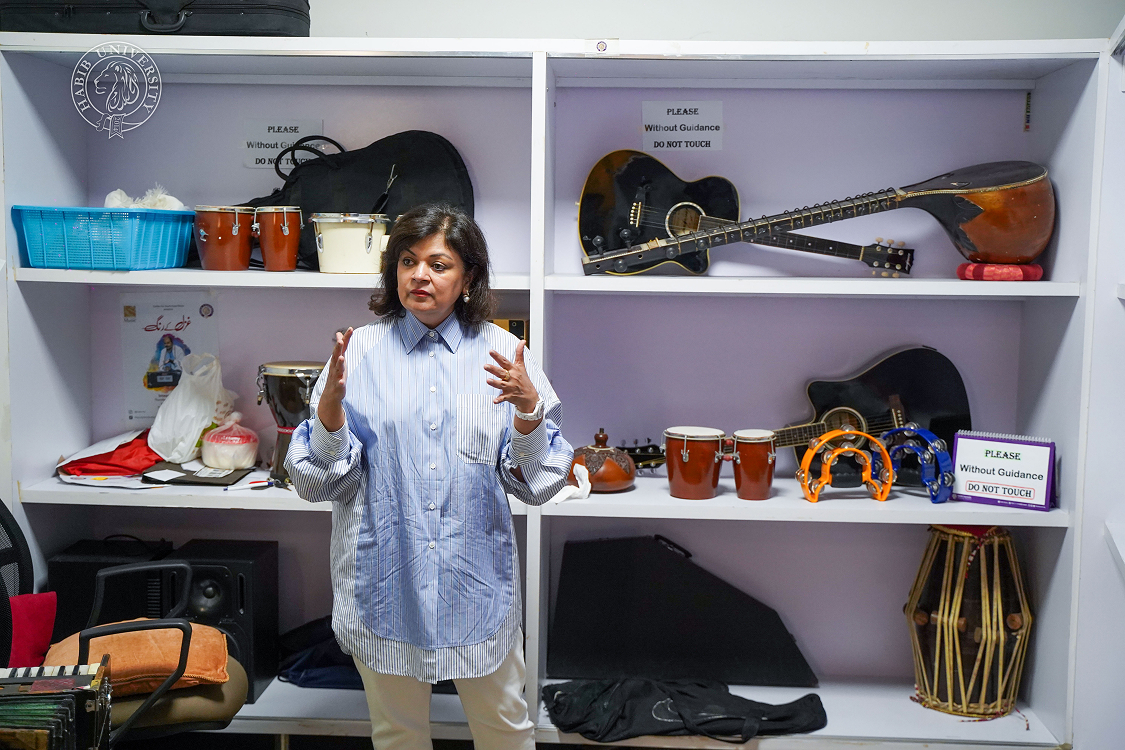
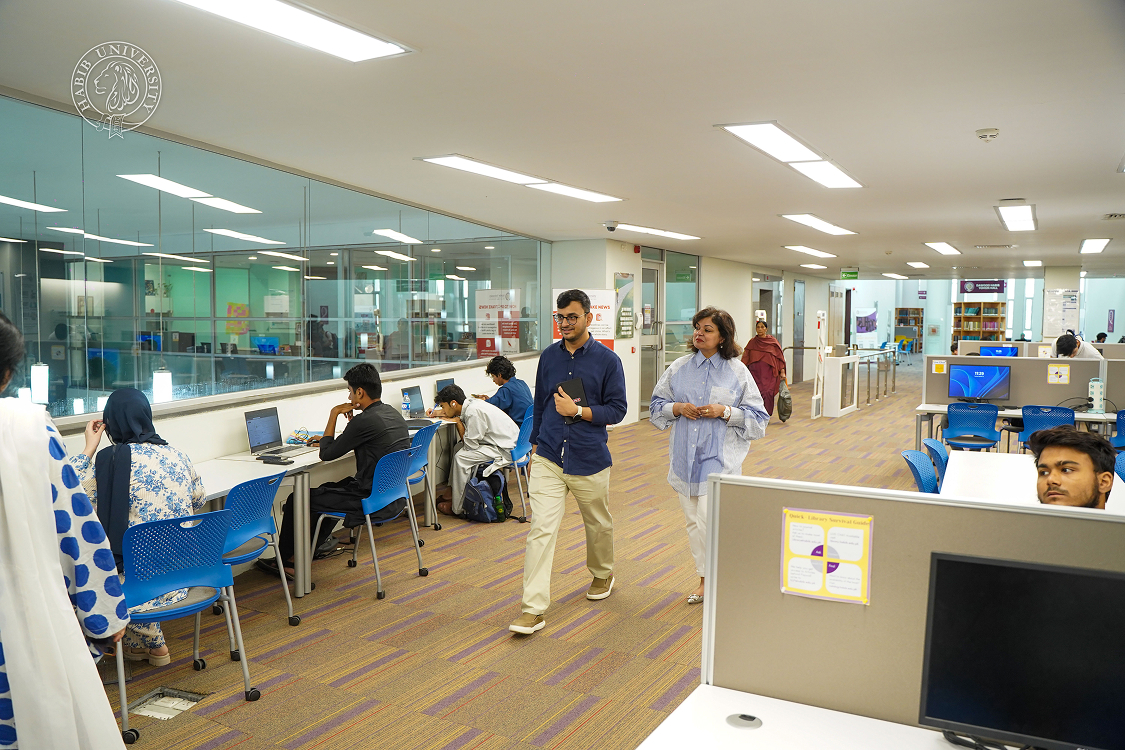
Founded in 2014, Habib University was established with a reparative mission: to address the ruptures in knowledge, language, and culture left by colonial modernity, and to re-anchor higher education in the realities and intellectual traditions of our own society. This commitment to epistemic reparation means asking whose experiences enter the record, whose knowledge is recognized, and whose lives remain unseen. The Zainab Wadood Endowed Chair in Inclusive Systems and Policy Design brings this commitment to life. Housed within the Social Development and Policy Program in the School of Arts, Humanities and Social Sciences, the Chair exists to turn lived experience into evidence, and evidence into change. Its home is deliberate. By treating disability not simply as a medical concern but as a question of how society is organized — who gets counted, who gets believed, and who gets designed for — the Chair extends Habib’s reparative mission into research and policy. In doing so, it seeks to bring overlooked experiences into the production of knowledge and using that knowledge to build more inclusive systems.
01
The Chair will be held by a scholar of global stature, appointed to lead sustained research into conditions Pakistan has never studied nationally — among them autism, ADHD, and learning disabilities - and into why the country’s own statistics on disability disagree with each other by a factor of twenty?
02
Research from the Chair will translate directly into recommendations for the systems that currently cannot see invisible disability: a certification process built around a single visibility-based threshold; an education system in which only 1% of public-school teachers are trained to teach children with difficulties; and disaster-response protocols that, in 2022 and again in 2025, collected no disability data at all. The work will be done with, not around, the institutions that hold the data — the Bureau of Statistics, provincial departments, the Higher Education Commission — because a ministry cannot act on a figure it cannot cite.
03
The dominant models of inclusion were built in and for high-income welfare states. Pakistan is a different setting in kind: over 80% of its employed people work informally, care is family-based, and disclosure carries different risks. Concepts of inclusion need translating here. The Chair will convene researchers, policymakers, and practitioners from Pakistan, South Asia, and the wider Global South — drawing on models tested in India, Bangladesh, Brazil, and South Africa.
04
The Chair will start close to home, training the first generation of scholars, policymakers, and advocates equipped to build systems that notice what earlier systems were built to miss, and helping Habib itself become a campus that identifies need rather than waiting for disclosure.
References
Every figure on this page was checked against its original source in August 2026. Where a widely repeated figure could not be traced to a primary source, we have not used it.
World Health Organization, Global Report on Health Equity for Persons with Disabilities, 2022 — 1.3 billion people; 1 in 6.
Pakistan Bureau of Statistics, 7th Population and Housing Census, 2023 (analysis: Gallup Pakistan, 2025) — 3.1% disability (men 3.3%, women 2.9%); 9.6% functional limitation. Express Tribune, 2017, for the Bureau’s statement that the 0.48% figure could not be treated as realistic.
World Health Organization, Mental Disorders fact sheet, 2025 — nearly 1 in 7 people. The Lancet, 2026 — mental disorders the leading cause of disability worldwide.
International Diabetes Federation, Diabetes Atlas, 11th edition, 2025 — Pakistan 31.4%, the world’s highest adult rate; about a quarter undiagnosed. World Health Organization, Global Hepatitis Report, 2026 — about 9 million people with hepatitis C, the world’s largest burden.
Absence of national studies of autism, ADHD, learning disabilities and hearing: verified in the Chair’s research review, August 2026.
Aziz H. et al., Epilepsia, 1994 — Pakistan’s only national epilepsy study; fieldwork in the late 1980s.
Disability certification threshold (about 40% assessed impairment): documented practice across provinces. Registrations: NADRA, about 555,000 by 2023.
Pakistan Demographic and Health Survey 2017–18 — women 9% vs men 7% with serious difficulty. Saikia et al., PLoS ONE, 2016, on why South Asian censuses undercount disabled women.
Pakistan Social and Living Standards Measurement Survey 2019–20 (PIDE analysis) — literacy 20.6% vs 46.2%; about 70% of primary-age children with disabilities out of school. Pakistan Education Statistics 2023–24 — 1% of public-school teachers trained.
Arsh et al., 2019 — Khyber Pakhtunkhwa government departments employed 0.67% persons with disabilities against a 2% quota. Supreme Court of Pakistan, 2020, on quotas at every organizational tier.
UN Committee on the Rights of Persons with Disabilities, review of Pakistan, 34th session, March 2026.
Pakistan Labour Force Survey 2024–25 — over 80% of employed Pakistanis in informal work.
Loomes, Hull and Mandy, JAACAP, 2017 — autism diagnosed 4:1 boys to girls; about 3:1 when whole populations are screened.
UK Parliament POSTnote 689, 2023 — on the absence of a primary source for the “70–80% invisible” figure.
Zainab Wadood, Forbes, January 2026 (“Systems cannot respond to what they are not trained to see”); Habib University news, November 2025 (Muhammad Wadood Distinguished Endowed Scholarships).