

 Share Profile
Laiba Bintay Khurrum
Recipient of Hilton Pharma Grant

Aspiration Statement
I am passionate about education equity and policy. Interested in improving access, pedagogy, and instructional design to build inclusive learning systems and expand opportunities for underprivileged communities in Pakistan.
Core Skills
- Graphic Design
- Microsoft Office Suite
- Stata
- Qualitative Research
Core Demonstrated Competencies
- Drive for Results
- Effective Presentation Skills
- Problem Solving
Preferred Career Paths
First priority: Education Policy Analyst
Second priority: Education Researcher
Third priority: Instructional Design Associate
Academic Awards / Achievements
- Dean's List 2023
Experience
Leadership / Meta-curricular
- HUMUN V - Deputy Director Content
- HUMUN VI - Director Content
- HUMUN VII - Director Content & Director Equity
- Academic Affairs Member, Habib University Student Government
- President, Feminist Collective
Internship / Volunteer Work
- Development And Communications Intern, Habib University (May – June 2025)
- Community Engagement Associate, Habib University (October 2024 – March 2025)
- Learning Community Mentor, Habib University (August – December 2024)
- Hr And Sustainability Research Intern, Itextiles Pvt. Ltd. (July – August 2024)
Publications / Creative Projects
- Exchange Program – UC Berkeley Summer Session 2025
Final Year Project
Project Title
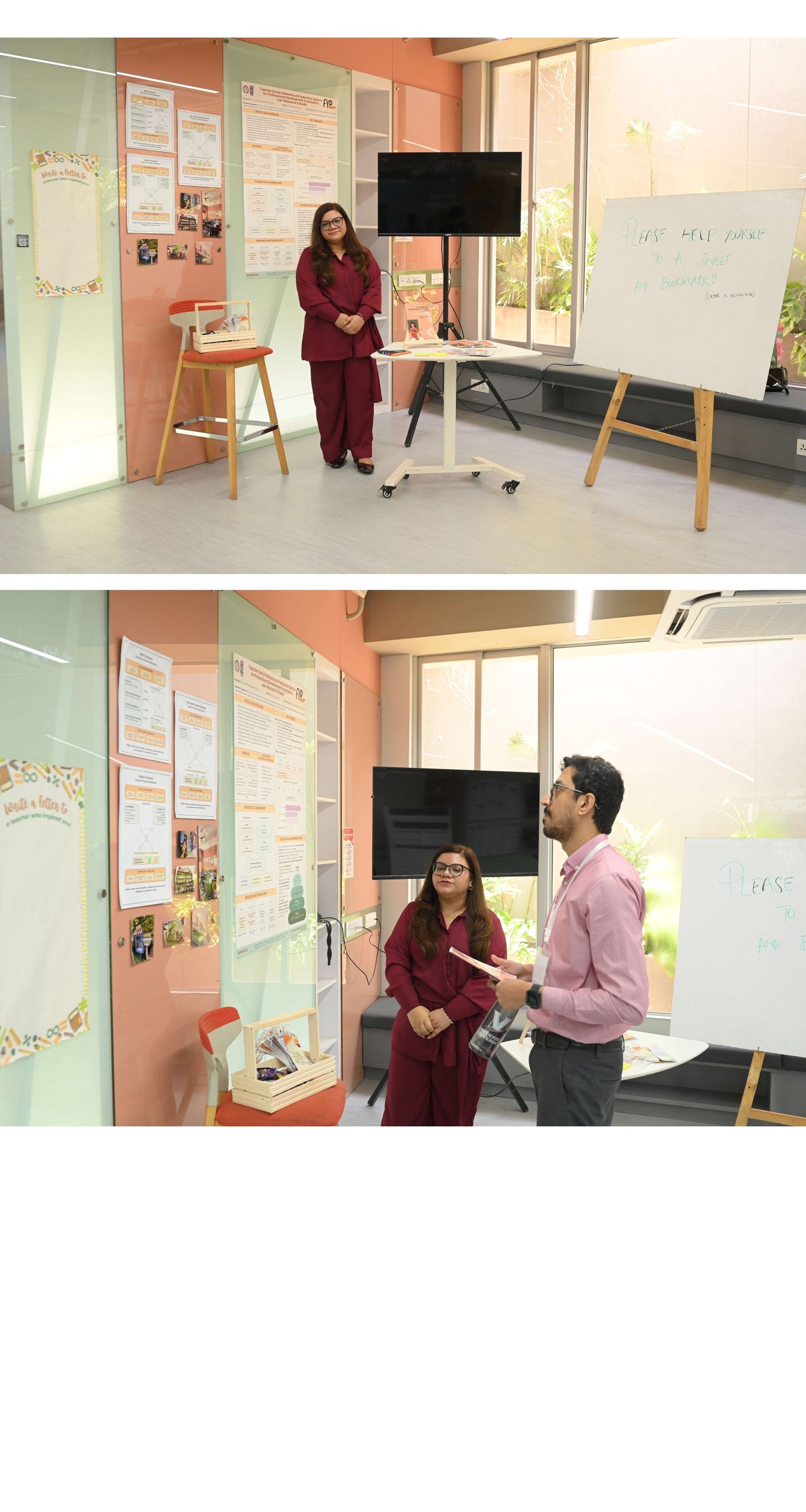
Teacher Social Networks as Productive Spaces for Professional Development in Karachi's Low-Resource Schools
Description
This research examines how teacher social networks (TSNs) function as spaces for professional development in low-resource schools in Karachi. The study aims to understand how teachers learn from one another through everyday interactions, friendships, and informal collaboration rather than relying solely on formal training programs. Using semi-structured interviews with school leadership and structured surveys with teachers, the research maps patterns of teacher collaboration and knowledge exchange within schools. The findings highlight both the limitations of formal professional development and the potential of informal peer networks to support teaching improvement. By analyzing these dynamics, the project seeks to propose practical, context-sensitive strategies for strengthening teacher collaboration and improving instructional quality in low-resource educational settings.
Project Pictures