

 Share Profile
Fatima Sami

Aspiration Statement
I am interested in public policy, social development, and research related to how institutions shape social and economic outcomes. I am motivated by urban development, public service delivery, and evidence-based policymaking.
Core Skills
- Stata
Core Demonstrated Competencies
- Drive for Results
- Effective Presentation Skills
Preferred Career Paths
First priority: Policy Analyst
Second priority: Data Analyst
Third priority: Monitoring and Evaluation Specialist
Academic Awards / Achievements
- Dean's List 2024
Experience
Leadership / Meta-curricular
- Husg Constituent Assembly Member
- Vice Chair Rae, Habib University Student Government
- Pr Team Member, Sustainability Club
- Volunteer Photographer Humun V, Gaming Club Habib Debate Union
- Director Photography Humun Vi, Gaming Club Habib Debate Union
Internship / Volunteer Work
- Research Assistant - Civic Club Pilot Project, Habib University (June 2024 – March 2026)
- Conference Assistant - Imagining Futures Conference, Habib University (April – August 2025)
- Undergraduate Researcher - Summer Tehqiq Research Program, Habib University (May – August 2025)
- Undergraduate Researcher - Summer Tehqiq Research Program, Habib University (June – October 2024)
Publications / Creative Projects
- Research Paper – Research paper on suicide in Pakistan published in SSM-Mental Health in April 2025
Final Year Project
Project Title
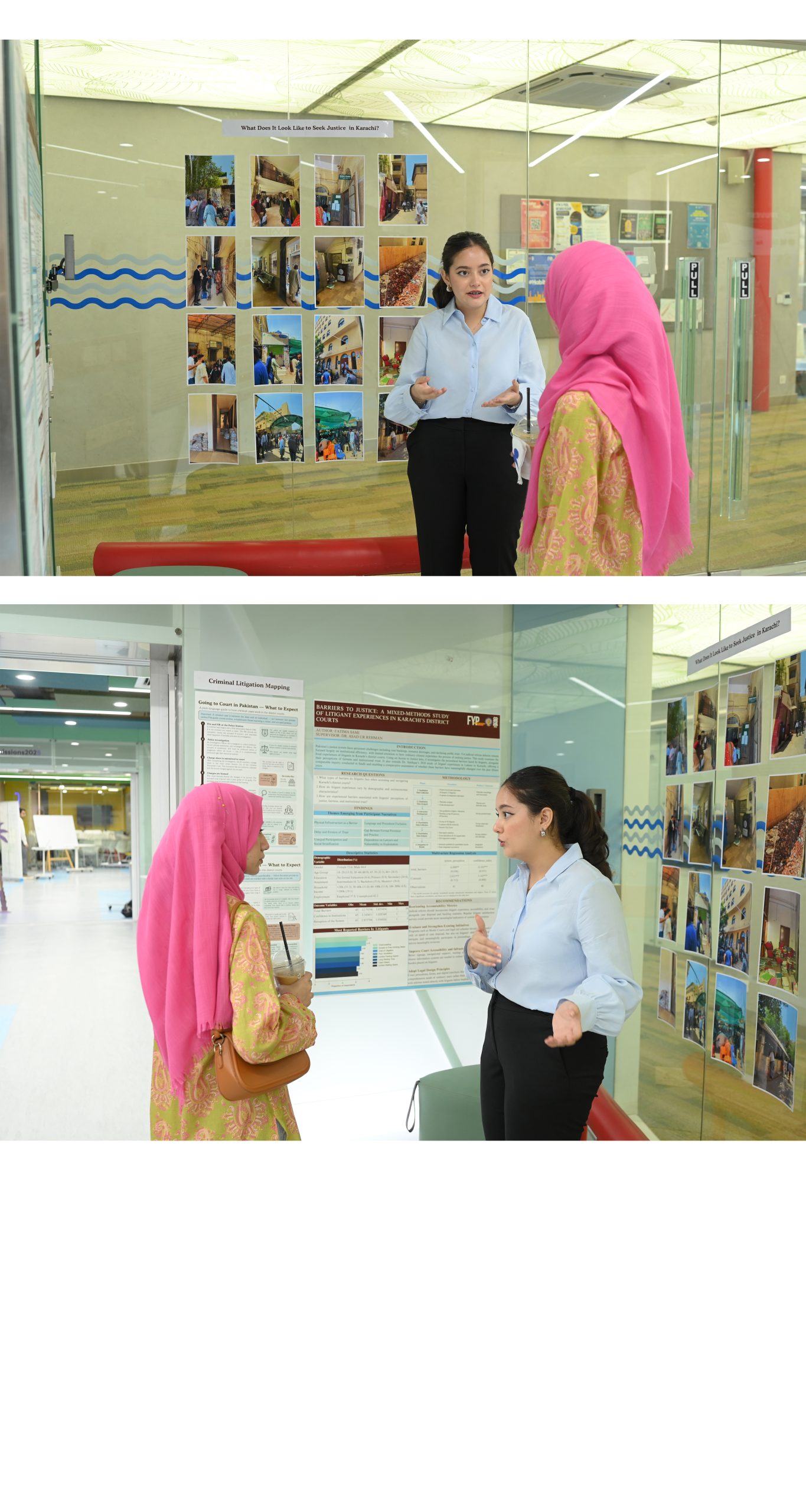
Barriers to Justice in Pakistan: A Mixed-Methods Study of Litigant Experiences in Karachi’s District Courts
Description
Pakistan’s justice system faces a crisis of legitimacy and efficiency, with over 1.8 million pending cases and low civil justice rankings reflecting public distrust. Reforms have focused on quantitative measures like case disposal rates, overlooking litigants’ everyday experiences. This study examines the perspectives of justice-seeking citizens in Karachi’s district courts, focusing on civil and family cases. Using a sequential exploratory mixed-methods design, it begins with interviews with litigants and lawyers. Preliminary findings show litigation is shaped by structural barriers, including language and financial constraints, which limit participation and increase dependence on lawyers. Financial strain and emotional stress are significant, while delays are normalized. These dynamics undermine fairness, erode judicial legitimacy, and highlight the need for human-centered reforms.
Project Pictures