



 Share Profile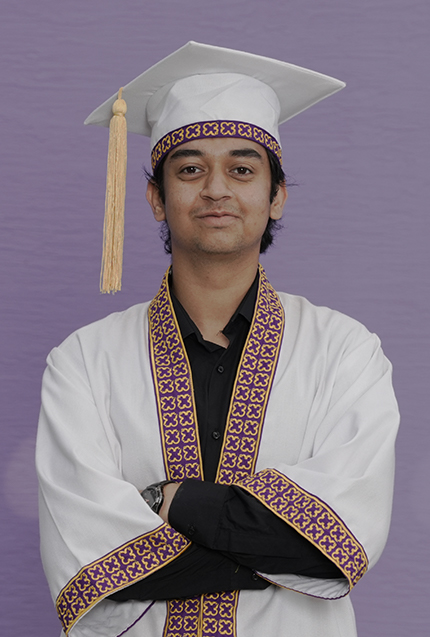
Syed Muhammad Yousuf

Aspiration Statement
I’m an emerging storyteller and filmmaker driven by a curiosity to understand how people live, work, and navigate complex systems around them.
Core Skills
- Adobe Suite
- Capcut
- Da Vinci Resolve
- Figma
Preferred Career Paths
First priority: Filmmaking
Second priority: Brand Design
Third priority: Brand Strategy
Core Competencies
- Effective Presentation Skills
- Encourages Innovation
- Problem Solving
Academic Awards / Achievements
- Dean's List 2023
Experience
Leadership / Meta-curricular
- Design Lead,Pride Press
- Design Lead,Young Leaders Club
Internship / Volunteer Work
- Brand Lead, Bazaar Technologies (January – April 2026)
- Brand Associate, Bazaar Technologies (September 2025 – January 2026)
- Brand Design Associate, Bazaar Technologies (September 2024 – September 2025)
- Brand Design Trainee, Bazaar Technologies (May – September 2024)
Publications / Creative Projects
- Research paper on The Multidimensional Self: A Comparative Analysis of Buddhist and Islamic Hermeneutics of the Self-Published in Tehzib undergraduate journal in March 2024. Documentary on the Tattooing ritual among Sindhi women in Mithi selected for 9th Folklore Film Festival in Kerala
Final Year Project
Project Title
Abey Karachi
Description
Abey Karachi is an observational documentary that examines how Karachi’s traffic and failing road infrastructure shape everyday life. The project aims to move beyond surface-level awareness and instead explore how constant exposure to congestion, noise, and systemic inefficiency affects people physically, psychologically, and socially. Through interviews with commuters, drivers, traffic police, and street workers, the film reveals a shared condition of pressure, fatigue, and adaptation. The research highlights how individuals develop tolerance and coping mechanisms within a dysfunctional system, often normalizing stress as routine. By contrasting official narratives of progress with lived realities, the project offers a grounded perspective on urban life in Karachi, encouraging viewers to reflect on resilience, inequality, and the human cost of infrastructural neglect.