
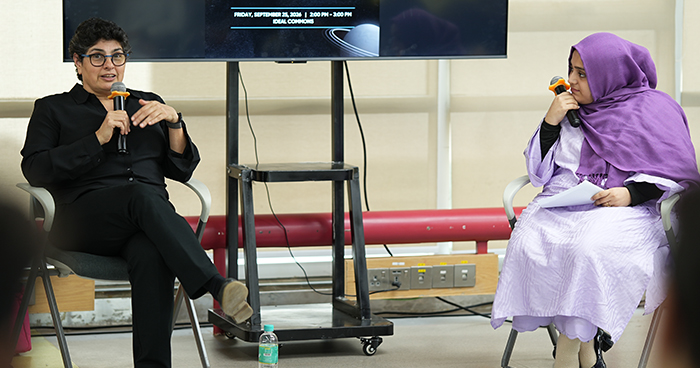
Never Settle: Dr Nergis Mavalvala in Conversation with Habib Alumni
As part of her visit to Habib University to deliver the 10th YOHSIN Lecture, Dr Nergis Mavalvala, Dean of the School of Science at MIT and one of the scientists at the heart of the first detection of gravitational waves, sat down with Habib alumni for an intimate conversation on curiosity, purpose, and the life of the mind.
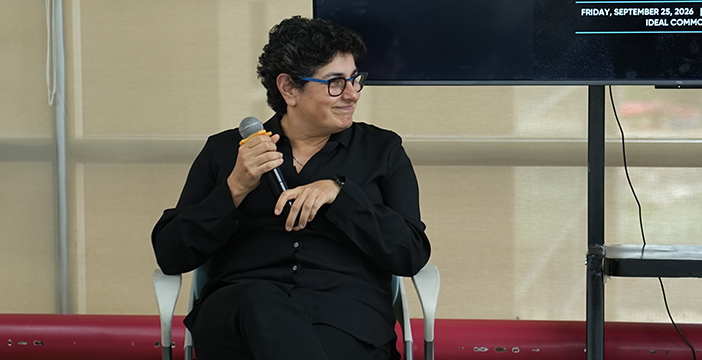
Speaking to Habib graduates, she returned to a question that sits at the core of the Habib project itself: why study the liberal arts at all? Her answer was personal. She chose a liberal arts college deliberately, to broaden rather than narrow herself. She recalled the habits it formed in her, from thinking from many angles to holding one’s work to one’s own moral compass. “If anything”, she told the room, she wishes she “had done more of it”, said Dr Mavalvala, addressing her educational journey.
The most memorable stretch of the conversation highlighted how little of her path was planned. The career that led her to LIGO began almost by accident. As a graduate student, she was looking for something interesting and experimental to work on when she met the man who would become her PhD advisor, Rainer Weiss. He described what sounded to her like an insane experiment, an instrument sensitive enough to hear the universe. Little did she know, she would spend the rest of her PhD pushing at the edge of what humanity could measure.
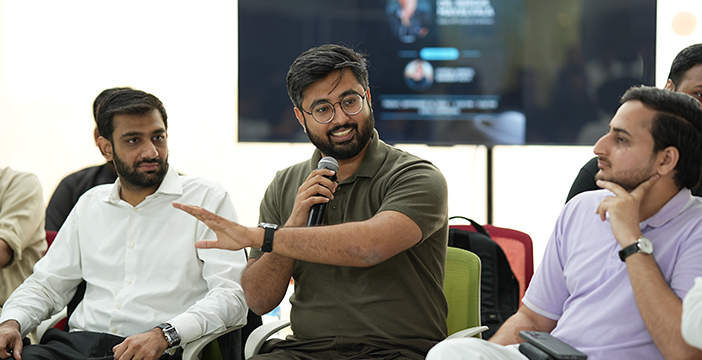
Luck, opportunity, ambition, and passion all played their part, she was careful to say, but so did listening, and largely what you choose to listen to. Her advice to the alumni followed from that story. Never aspire to be settled, because settled-ness breeds complacency; “expand your outlook, and choose your trusted, impartial colleagues carefully, because your networks shape what you see and keep asking yourself what you wake up excited about”, Dr Mavalvala advised.
During the Question-and-Answer session, alumni asked whether a researcher should walk away from work that could be misused; “build the social institutions that safeguard it, because even the most benign things get misused”, she answered, hinting at the larger question of accountability in science and tech. Another answer of hers shed light on the difficulty of slowing down in a field structured against it, i.e. hard sciences.
Dr Mavalvala left the alumni with one piece of advice, “Never be settled; never aspire to be settled, that makes you complacent”.
For many in the room, the session was a reminder of what a Habib University education was for.
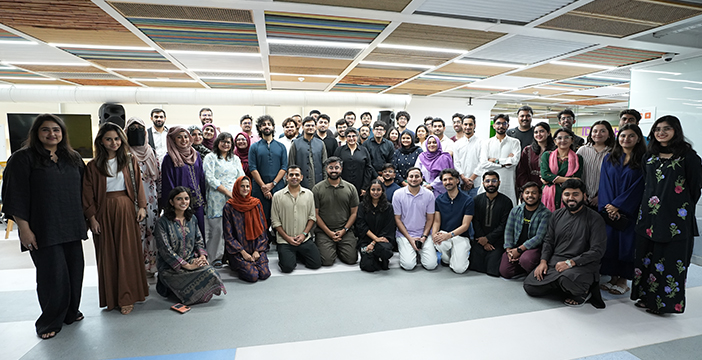
Fareha Siddiqui, Comparative Humanities, Class of 2023, believed that “Hearing the Dean of MIT’s School of Science admit that slowing down is hard even for her, but that you assert control wherever you can, was oddly freeing.”
Owais bin Asad, Computer Science, Class of 2022, shared that “Her answer to my question on research being misused stayed with me: you can’t just think about the good of humanity, because even the most benign things get misused. The real work is building the institutions that safeguard what we create.”