
FYP 2026: How Habib University Students Are Solving Real-World Challenges
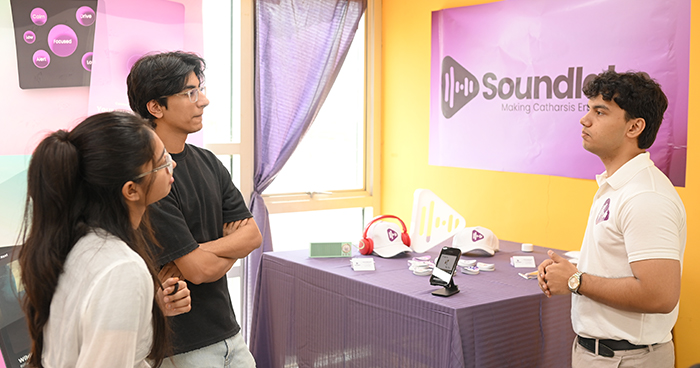
In a vibrant culmination of their undergraduate journey, Habib University’s final-year students of the Class of 2026 presented their capstone achievements at the annual Final Year Project (FYP 2026) Showcase on May 16th. Welcoming parents, industry leaders, alumni, donors, and leading academics to the campus, the showcase was far more than a celebration of academic completion; it was truly a demonstration of intellectual prowess.
Across more than a hundred projects, spanning artificial intelligence, material sciences, public policy, indigenous linguistics, and philosophical inquiry, the exhibition exemplified the power of a holistic, interdisciplinary Habib education. These projects proved that the Class of 2026 is not merely consuming knowledge; they are actively producing frameworks to navigate a volatile world. Throughout the day, students routinely credited the university’s faculty for their unwavering, round-the-clock mentorship through a daunting year of research. Parents, witnessing the sophisticated execution of their children’s work, expressed both awe and profound optimism for the systemic impact these young thinkers are poised to make.
What truly distinguished this year’s showcase was the students’ deliberate engagement with the defining Global Poly-Crises of our era. Rather than pursuing abstract academic exercises, students utilized their specific regional context to pioneer solutions for the Global South’s most pressing challenges.
Theme 1: The Ethical Governance of Artificial Intelligence
While the global tech industry remains obsessed with the raw capability of Artificial Intelligence, Habib University’s engineering and computer science students are fundamentally interrogating its character. As automated systems aggressively integrate into healthcare, law, and education, society faces a crisis of transparency – a systemic blind spot regarding how these models make decisions and alter human agency.
The Class of 2026 countered this vulnerability by designing systems that champion accountability, transparency, and human-centric logic.
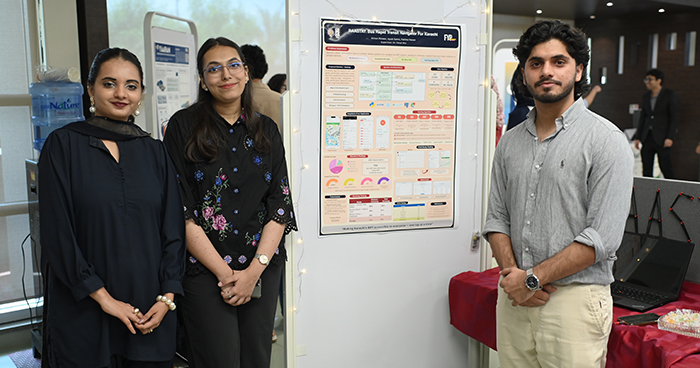
Ilm Dost directly intervenes in correcting AI’s core mathematical and reasoning vulnerabilities. The EMG-based Hand Prosthetics project builds an intuitive, empathetic human-computer interface. The campus-born Crash Detection System beautifully balances public safety with strict data privacy protocols.
Rather than building technology that replaces human life, these innovators are engineering systems that augment and protect it, proving that tech without ethics is a design flaw.
 Theme 2: Urban Resilience in the “Megacity Era”
By the year 2050, nearly 70% of the world’s population will reside in urban centers. As one of the world’s most complex megacities, Karachi serves as a microcosm for almost every impending urban crisis, from climate-induced vulnerabilities and transport collapses to severe social fragmentation. The global imperative is clear: how do we manage hyper-dense urban spaces without sacrificing social equity or ecological health?
Habib University students transformed Karachi into a high-stakes living experiment, treating its chaotic, real-world conditions as the blueprint for scalable urban tech.
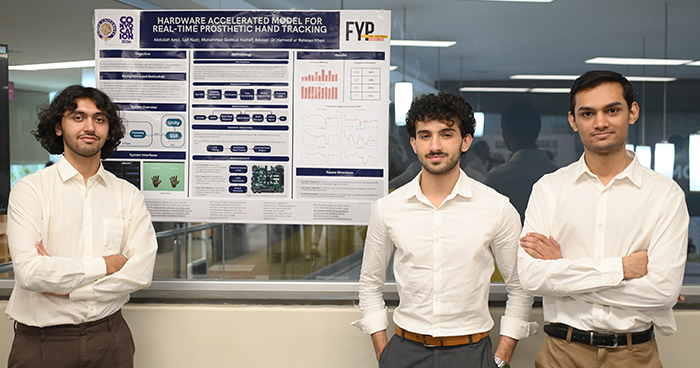
 Saheli Safar tackles mobility through a gender-conscious lens, advocating for safe, equitable transport infrastructure. Abey Karachi utilizes the power of documentary filmmaking to map the deep, often-ignored infrastructure psychology of the city’s inhabitants. Raastay offers optimized logistical frameworks designed to survive and thrive amidst urban volatility.
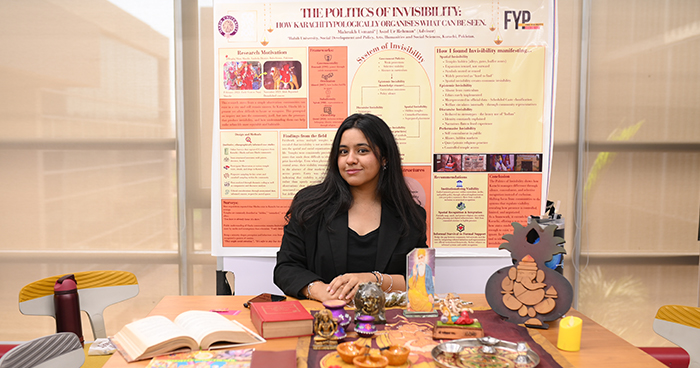 By creating what functions as a “digital twin” of systemic city solutions, these projects demonstrate that the future of resilient urban planning is being authored in the Global South.
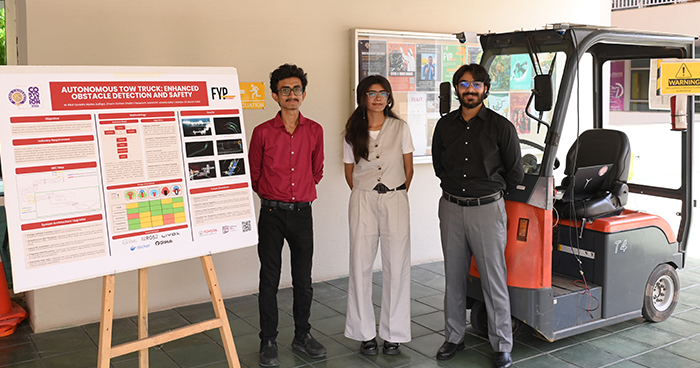 Theme 3: Epistemic Reparation and the Crisis of “Belonging”
In a hyper-globalized, digitally flattened world, indigenous wisdom, regional languages, and marginalized histories are being erased at an alarming rate. The critical question facing the humanities today is how to prevent a total “cultural flattening”- a state where global media and mass migration strip communities of their unique textures, leaving them entirely rootless.
At the intersection of the School of Arts, Humanities, and Social Sciences, students deployed cutting-edge tools to enact deep historical and cultural preservation.
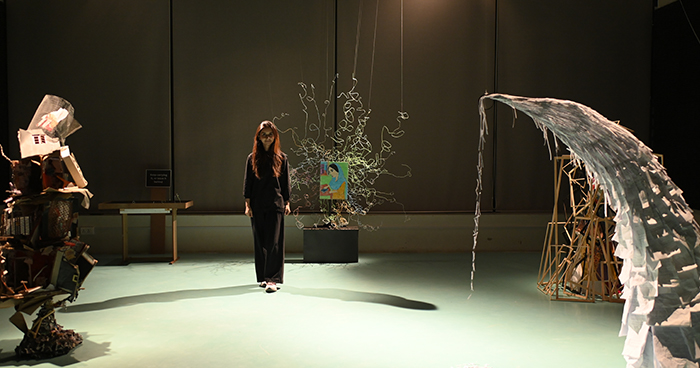 “Burning Harmonium“ offers a poignant, multi-layered exploration of refugee identity and displacement. The EthnoVerse project utilizes 3D archiving technology to digitally preserve the heritage, sounds, and textures of indigenous groups and endangered regional languages.
By anchoring their research in the lived realities of their region, these students are actively fulfilling Habib University’s core mission of epistemic reparation: reclaiming spaces for indigenous knowledge systems within the dominant global narrative and proving that technology can be a powerful custodian of history rather than its destroyer.
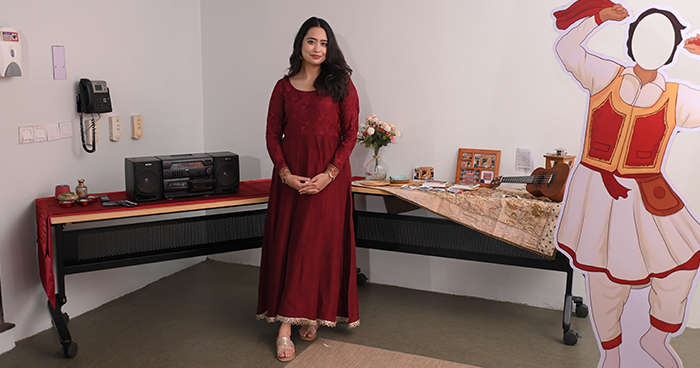 Drivers of a New Paradigm
Ultimately, the FYP 2026 Showcase underscored a profound institutional reality: Habib University has evolved into a critical regional driver for solving global dilemmas. Whether decolonizing algorithmic logic in computer science or re-engineering urban survival frameworks in social policy, the Dhanani School of Science and Engineering and the School of Arts, Humanities, and Social Sciences have proven to be deeply symbiotic.
The Class of 2026 leaves the university campus as contextually aware, ethically conscious, and fiercely bold thinkers. They stand uniquely equipped to transform raw data into powerful public narratives, bridging the gap between local challenges and global influence.