
Habib University Hosts First Ever Symposium on Illustration and Folklore in South Asia
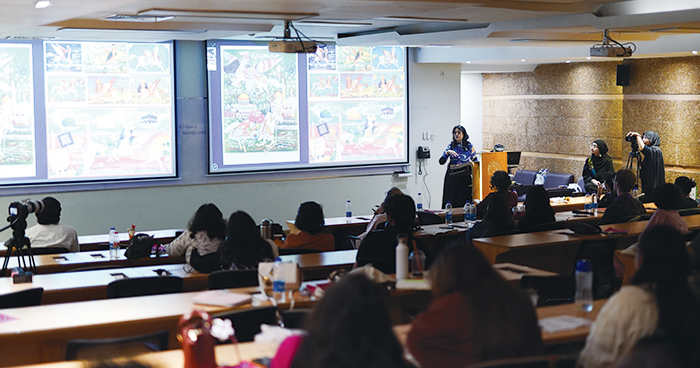
Karachi, Pakistan: On 28th of March, 2026, Habib University successfully hosted the Symposium on Illustration and Folklore in South Asia, a compelling interdisciplinary event and the first of its kind in Pakistan, that brought together academics, practitioners, and illustrators to explore the rich intersections between visual arts, storytelling, and collective heritage.
The symposium examined how illustration and broader visual traditions in South Asia have historically supported the preservation and transmission of folklore and myths, from oral traditions that helped societies articulate meaning in an enchanted world, to visual vocabularies that shaped imperial narratives and community identity. Participants reflected on how these forms of visual storytelling continue to resonate in contemporary concerns, such as ecological precarity, minority rights, and diasporic identities.
Presenters shared research, case studies, and creative practices demonstrating how contemporary illustrators draw on archival material, regional visual motifs, and cultural memory to re‑enliven age‑old narratives through mediums like animation, comics, printmaking, and painting. These contributions underscore how visual storytelling can help sustain cultural heritage for newer generations, even as global aesthetic influences challenge local visual identities.
Among some of the presentations, Bibi Hajra, renowned architect, academic, and visual artist, delivered the keynote address, “My Saint, A Courtyard,” while award-winning illustrator Sana Nasir presented her research, “In Her Footsteps.” The symposium fostered rich dialogue around themes including the history of visual iconography associated with mythic narratives, the use of symbols to craft personal and community stories, the role of pedagogy and publishing in engaging younger audiences, and the affordances of multiple visual media to preserve stories for the future.
In addition to scholarly discussions, the event concluded with a live classical music performance rooted in South Asian traditions, echoing the symposium’s focus on storytelling as a living, performative practice. This artistic performance provided a reflective close to the day’s conversations and reinforced the importance of music, poetry, and oral heritage in cultural continuity.
The symposium highlighted Habib University’s ongoing commitment to interdisciplinary learning and cultural discourse within both academic and creative communities. Through events like this, the University continues to position itself as an intellectual space where scholarly exploration and creative expression converge to deepen understanding of South Asia’s artistic and narrative traditions.