
Vision Quest 2026: Mahiya Se Wujood Ka Safar
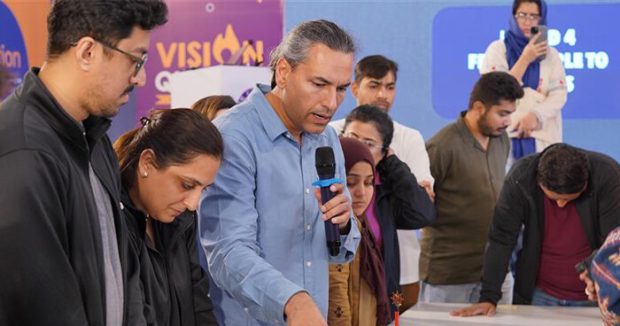
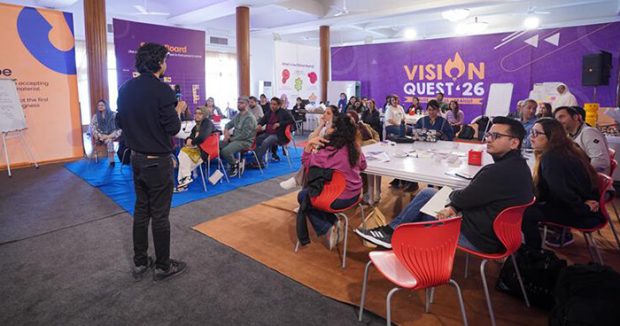
Vision Quest 2026 brought together the Leadership Cohort at Beach Luxury Hotel, Karachi, for two days of structured immersion aligned with the University’s strategic objectives for the next decade.
It was designed not as a team-building exercise, but as a purposeful institutional intervention — built to surface complex challenges, create shared institutional perspective, and generate clarity for what lies ahead.
The retreat was anchored in a clear three-part framework: Realize. Assess. Transit. — a progression that asked participants to examine present realities with honesty, assess institutional strengths and fault lines, and begin charting the conditions required for meaningful transition.
What set Vision Quest 2026 apart was its instructional and experiential design. The retreat was structured around four carefully curated experiments — each engaging a different dimension of institutional reflection, and together forming a coherent arc from introspection to imagination to shared resolve.
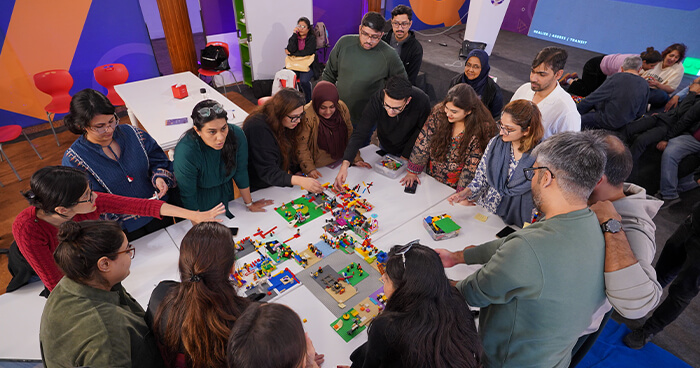
LEGO® Serious Play®
LEGO® Serious Play®, translates strategic imagination into physical form. By building models and then unpacking their meaning collectively, participants arrived at shared interpretations of institutional challenges that transcended individual vantage points. It was, by design, one of the retreat’s most generative sessions
Kintsugi
Kintsugi, the Japanese practice of repairing broken objects with gold, opened the retreat as a systems and identity metaphor. It invited participants to reimagine institutional challenges. Establishing the intellectual and emotional register for everything that followed.
Audio-visual storytelling
Audio-visual storytelling gave participants a different language for the work — surfacing futures and tensions through image and narrative in ways that structured dialogue rarely permits. The session created space for the kind of honest, textured conversation.
Yoga and Meditation
The retreat closed with Yoga and Meditation, an embodied practice of reflection that grounded participants before they returned to the demands of institutional life.
In a program that asked a great deal intellectually and emotionally, it was a necessary and deliberate conclusion.
From Reflection to Direction
What crystallized across the two days was something institutions often strive for and rarely achieve in a single intervention: clarity, collective vision, and tangible pathways forward. Participants left with a shared understanding of where the University stands and what the next chapter requires — built through genuine, structured dialogue.
Vision Quest 2026 represents a significant articulation of how Habib University thinks about its people: as co-authors of institutional direction, whose alignment, insight, and commitment are foundational to the University’s long-term trajectory.
A Global Perspective on Leadership and Community: Professor Susan Phillips at Habib
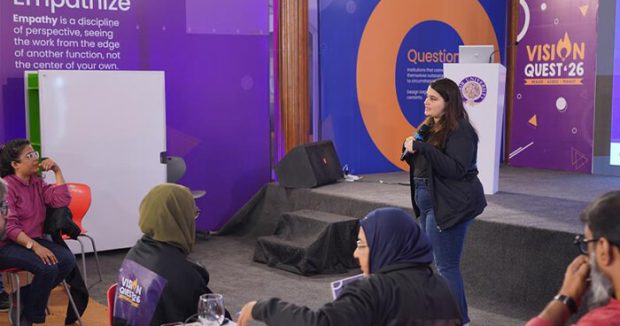
The Office of People & Culture also welcomed Professor Susan Phillips, Director of the Robert Redford Conservancy for Southern California Sustainability at Pitzer College, to Habib’s campus. Professor Phillips, whose expertise lies in developing student leaders in environmental justice through community-engaged research, addressed Habib’s leadership cohort in a session that broadened the conversation around what purposeful institutional leadership looks like in practice.
Her visit drew a direct connection between Pitzer’s model of socially embedded learning and Habib’s own commitment to developing graduates — and institutional leaders — who are oriented not only toward excellence, but toward responsibility. It was a reminder that the most enduring institutions are those that remain in genuine conversation with the world beyond their walls.