December 25, 2025
“Feeding the hungry, clothing the vulnerable, and providing medical care are all deeply noble acts. Yet when zakat supports students in higher education, it accomplishes something more: it empowers them to one day uplift many others.”
In 2014, Habib University set out to build Pakistan’s first truly community-owned institution. A decade later, voices from across the country’s philanthropic, business, corporate, and media communities stand united around a shared conviction: philanthropy must build institutions that endure.
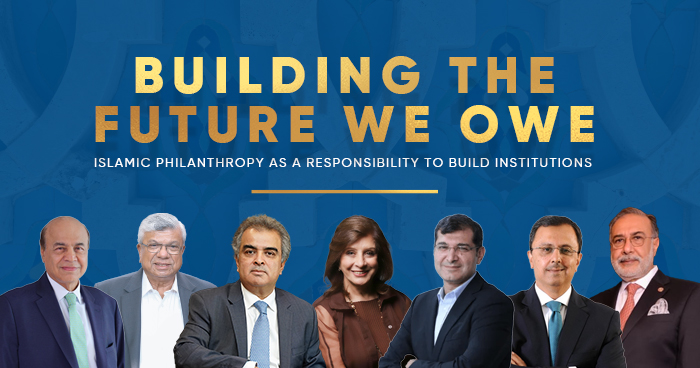
That conviction lies at the heart of Habib University’s newly released Zakat video. Bringing together reflections from Habib University’s community of Mohsineen, the video makes a compelling case for reimagining Islamic philanthropy not as short-term relief alone, but as a force for institution-building and generational transformation.
From Charity to Civilization-Building
Each year, Muslims worldwide give an estimated USD 600 billion to 1 trillion in Zakat. Pakistan stands out for its extraordinary culture of giving; studies consistently show it to be among the most philanthropic societies in the world, rivalling only the United States in certain measures.
Yet the video poses a vital question: How can this immense generosity be structured to create lasting impact?
History offers powerful proof that when generosity is organized with purpose, its impact multiplies. During Islam’s Golden Age, Zakat and waqf (endowments) sustained scholars, universities, libraries, and centers of learning—institutions that shaped civilizations and continue to serve humanity centuries later as sadaqah jariyah, ongoing charity.
Lessons Recognized Across Civilizations
The video reminds us that this Islamic tradition of philanthropy has inspired far beyond the Muslim world. In the early writings of Thomas Jefferson, Islamic societies are cited as models of philanthropic institution-building from which others could learn. This insight helped shape early American traditions that encouraged private giving toward public institutions, especially universities.
That same understanding is echoed in contemporary times by Daron Acemoglu, who emphasizes that societal progress is driven not by resources alone, but by strong institutions. Wealth may exist in abundance, but without institutions that cultivate human potential, progress cannot be sustained.
Education as the Engine of Transformation
Every society that has successfully transformed itself has done so by investing in its people. Whether through vocational training or advanced skills, the quality of education determines a nation’s trajectory.
At the heart of this vision lies liberal arts education—an education that teaches students how to think, not just what to do. It fosters intellectual breadth, ethical grounding, and the communication skills essential for leadership in any field. As the video reflects, even the most technically skilled individuals need the ability to articulate ideas, persuade, and engage meaningfully with the world.
This is the educational philosophy that defines Habib University: producing well-rounded, grounded graduates equipped not only with expertise, but with responsibility.
Zakat in Practice: A Sacred Amanah
Since its founding in 2014, Habib University has worked toward a bold goal: building Pakistan’s first truly community-owned university. Central to this mission is a rigorous, Shariah-compliant Zakat framework.
Merit is assessed first. Financial need is then carefully evaluated. Zakat eligibility is verified with the guidance of qualified Shariah scholars. Only after this thorough process is Zakat allocated—ensuring it reaches those who are genuinely deserving.
The impact is tangible. Since 2014, Habib University has awarded over USD 42 million in financial aid and scholarships, including Zakat, supporting nearly eight out of every ten students. Many of these students would otherwise have been excluded from quality higher education.
A Collective Responsibility
The video concludes with a powerful reminder: this university no longer belongs to a single family or benefactor. It belongs to society. Its future depends on a shared sense of responsibility to sustain it, strengthen it, and carry it forward for generations to come.
Supporting education through Zakat is not simply an act of charity. It is a sacred Amanah, a trust placed in us to shape the future.
Give Zakat. Support education. Build institutions. Shape the future we owe.
Watch our Zakat documentary below.