



 Share Profile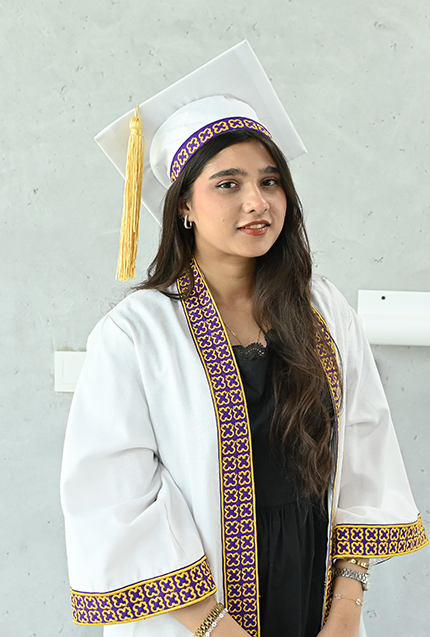
SANIA OWAIS
Aspiration Statement
"I am passionate about research and development, specializing in data analysis and problem-solving. I thrive in analytical environments, aiming to contribute to impactful, evidence-based solutions across academia, policy, and industry."
Core Skills
- Data Analysis, Qualitative Research, Quantitative Research, Statistical Analysis
Experience
Leadership / Meta-curricular
- Student Life Ambassador, Habib University Treasurer, Arts and Cultural Club Volunteer for Liaison Team, HUMUN Deputy Director Laison, HUMUN Assistant Committee Director, HUMUN
Internship / Volunteer Work
- Fundraising Intern, Family Educational Service Foundation (July 2023)
Publications / Creative Projects
- Conducted data curation and cleaning for the 2019 Pakistan Maternal Mortality Survey by the DHS Program. Used STATA to perform regression analysis and statistical evaluations to assess the influence of variables on contraceptive usage among married women of reproductive age. Developed a policy framework to enhance pedestrian walkability on Karachi's Main University Road. Conducted primary and secondary research to analyze urban mobility challenges, assess pedestrian infrastructure, and propose data-driven improvements. "Through Green: Tackling Domestic Violence and Climate Change": Led an interactive session at the Aamozish-e-Tehqeeq Conference 2023, featuring Tofiq Pasha. Focused on the increase in domestic violence and food insecurity due to climate change along with a hands-on plantation activity.
Final Year Project
Project Title
Under The Open Sky: The Lived Experiences Of Karachi's Street Vendors Urban Flooding And Heatwaves
Description
My research examined the impact of climate change on street vendors in Karachi, focusing on heatwaves, heavy rainfall, and urban flooding. The study aimed to understand how these environmental challenges affected vendors' work conditions, health, financial stability, and overall livelihood. Using a mixed-methods approach, I conducted GIS mapping to visualize vendor locations and exposure to climate risks, alongside interviews to capture their lived experiences. The research highlighted how climate-induced disasters disproportionately impacted informal workers and how they adapted to extreme weather conditions. Findings from this study provided valuable insights into the vulnerabilities of street vendors, contributing to discussions on urban planning, climate resilience, and policy interventions. By addressing the challenges these vendors faced, the research supported data-driven strategies that promote sustainability, economic stability, and adaptive solutions for marginalized communities in Karachi's informal economy.