

 Share Profile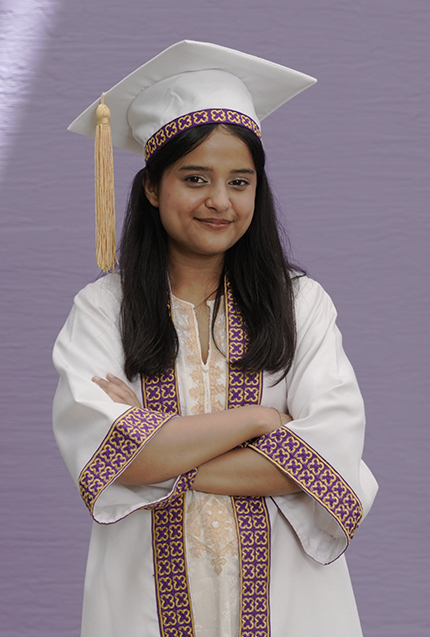
Najam Us Sahar
Hilton Pharma HU TOPS Scholar

Aspiration Statement
I am interested in and experienced with language instruction, research, HR, and client services and am comfortable in different settings, be it a classroom, a corporate environment, or a customer-facing role.
Core Skills
- Qgis
- Rstata
Core Demonstrated Competencies
- Adaptability
- Takes Initiative
Preferred Career Paths
First priority: Training and Development
Second priority: Research
Third priority: Human Resources
Experience
Leadership / Meta-curricular
- Presenter - Aamozish-E-Tehqeeq (Climate, Gender, and Peace Conference)
- Volunteer - Breast Cancer Awareness Fundraiser, Serve Club
Internship / Volunteer Work
- Research Assistant, Habib University (May – August 2025)
- English Language/Ielts Instructor, Berlitz Pakistan (August 2023 – March 2026)
- Management Trainee, Berlitz Pakistan (December 2021 – August 2023)
Publications / Creative Projects
- Publication – Navigating Climate Chaos: A Gendered Analysis of Urban Flooding Impact in Karachi’s Varied Socio-economic Landscapes (pp. 130–137)
- Publication – Tezhib: Undergraduate Research Journal, Habib University
- Publication – June 1, 2024
- Publication – HIV Prevalence in Pakistan: Challenges, Trends, and the Path to Reduction by 2030
Final Year Project
Project Title
Experiences of Mothers Raising Children with Neurodevelopmental Disorders in Karachi, Pakistan
Description
My research documents the lived experiences of mothers raising children with neurodevelopmental disorders (NDDs) in Karachi. Using a qualitative approach, this study interviewed eight mothers with children with NDDs through purposive sampling. Thematic analysis was employed to reveal emerging patterns. Findings entail that 1) mothers report undergoing grief and stress at the time of their child's diagnosis, 2) after diagnosis, mothers had minimal support systems, 3) raising children with NDDs significantly impacted mothers' physical and mental health, work life, and social relationships, 4) mothers expressed gratitude to Allah by comparing their children to those with more severe disabilities, and 5) mothers recommended improving support systems, including specialized centers, societal awareness, and family involvement.
Project Pictures