

 Share Profile
Janita Baloch

Aspiration Statement
I am interested in education research and public service (either provincial or federal) in order to bring the research culture into Pakistan's public sector.
Core Skills
- Canva
- Microsoft Office Suite
- QGIS
- Stata
Core Demonstrated Competencies
- Acts with Ownership
- Drive for Results
- Problem Solving
- Strategic Thinking
Preferred Career Paths
First priority: Civil Service
Second priority: Research work (development sector)
Third priority: Academia (Teaching & Research)
Academic Awards / Achievements
- Dean's List 2023, 2024, 2025
- High Achievement Scholarship 2022, 2023
- President's List 2023, 2024
Experience
Leadership / Meta-curricular
- NECHE Student Representative
- Student Representative - Valedictorian Committee
- Cabinet Chair - Rights, Advocacy, and Ethos Committee, Habib University Student Government
- Student Representative - Convocation Committee, Habib University Student Government
Internship / Volunteer Work
- Project Coordinator - Civic Club Pilot Project, Habib University (January 2024 – March 2026)
- Intern, STEAM Pakistan (December 2025 – January 2026)
- Student Scholar, STRP I Habib University (June – August 2025)
- Student Scholar, STRP I Habib University (June – August 2024)
Final Year Project
Project Title
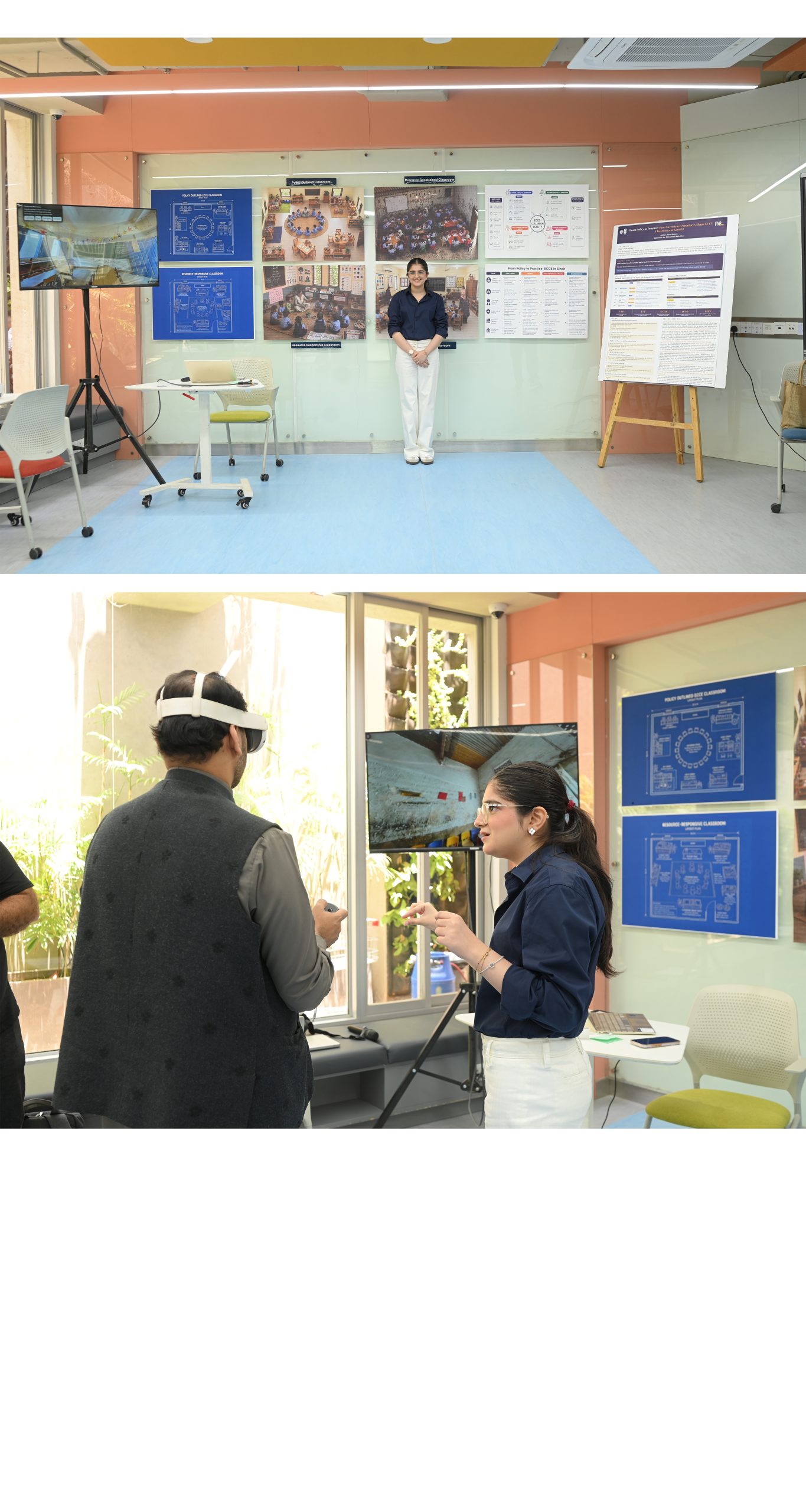
From Policy to Practice: Examining the Government of Sindh’s Pre-Primary and Primary Education Policies
Description
This study examines how the School Education and Literacy Department (SE&LD), Government of Sindh, designs and implements education policy, using Early Childhood Care and Education (ECCE) to understand institutional dynamics. After the 18th Amendment, provinces assumed full responsibility for education, placing Sindh at the center of policy delivery. The recent integration of Foundational Literacy and Numeracy (FLN) into ECCE provides a lens to assess how policy intent translates into classroom practice. Using a qualitative critical approach, the study draws on document analysis, teacher interviews, and classroom observations in District Korangi, Karachi. Findings indicate stronger policy design, sectoral integration, and improved curriculum-material alignment. However, implementation gaps persist due to resource shortages, limited teacher preparation, monitoring pressures, and expectations, constraining play-based learning.
Project Pictures