


 Share Profile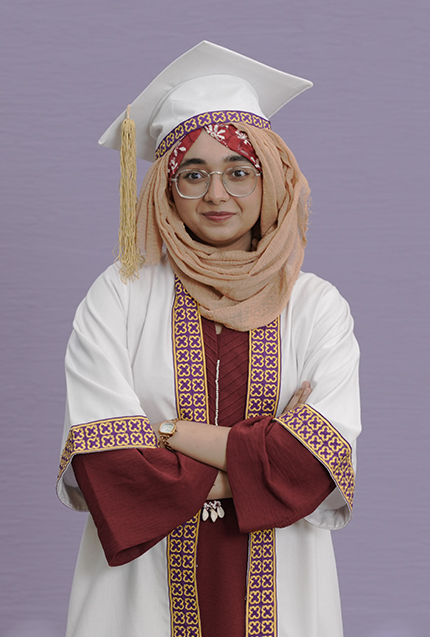
Aisha Abdul Qadir
Recipient of Hilton Pharma Grant

Aspiration Statement
I’m drawn to improving healthcare, especially for adolescents, and aim to pursue public health. My experience in HCI has shaped my interest in designing human-centered solutions that improve access and impact.
Core Skills
- Gephi
- Microsoft Office
- Stata
Core Demonstrated Competencies
- Adaptability
- Planning
- Takes Initiative
Preferred Career Paths
First priority: Research Associate
Second priority: Program Management
Third priority: Data Analyst
Experience
Leadership / Meta-curricular
- Deputy Director Of Finance
- Director Of Finance
- Orientation Leader
- General Secretary, Pride Press
- Treasurer, Young Leaders Club
Internship / Volunteer Work
- Research Intern, Aga Khan University (June 2024 – August 2025)
- Research Intern, Aga Khan University (June – August 2025)
- Project Student Lead, Habib University (June – August 2024)
- Project Student Lead, Habib University (January – May 2024)
Publications / Creative Projects
- Research Paper – Research Paper on "Understanding Pakistani Mothers’ Use and Non-Use of Screen Media-based Devices: Gratifications, Strategies, and Design Implications" published in CHI 2025
- Conference Presentation – presented research paper at the interational conference CHI: conference on human factors in computing systems 2025 held in Yokohama, Japan
Final Year Project
Project Title
How do communities from diverse socio-economic backgrounds in Karachi make healthcare choices, particularly the preference for emergency healthcare over preventive care?
Description
My research explores how people from different socio-economic backgrounds in Karachi make healthcare decisions, with a focus on why emergency care is often preferred over preventive care. Despite the availability of services like routine check-ups and screenings, many individuals delay seeking care until conditions become severe. The study aims to examine healthcare-seeking behavior, identify barriers to preventive care, and understand how factors such as income, education, health literacy, and access to services shape these choices. It also considers the role of cultural beliefs and perceptions of healthcare quality. By analyzing these factors, the research seeks to highlight patterns of healthcare use and contribute to a better understanding of urban health inequalities and the need for more accessible preventive healthcare systems.
Project Pictures