

 Share Profile
Ahsan Siddiqui

Aspiration Statement
Interested in Machine Learning, AI, and Computer Vision. I aim to begin my career as an Associate ML Engineer/MLOps and plan to pursue a Master’s specializing in Computer Vision.
Core Skills
- Deep Learning
- LLMs
- Machine Learning
- Python
- Vision Transformers
Core Demonstrated Competencies
- Adaptability
- Agility
- Strategic Thinking
Preferred Career Paths
First priority: Machine Learning/AI Engineer
Second priority: Software Engineer
Third priority: Data Scientist
Experience
Leadership / Meta-curricular
- Volleyball Lead, Sports & Recreational Club
- Security Team Lead and Volunteer, Multiverse Club
- Volleyball Team Captain, Sports & Recreational Club
- Table Tennis Lead, Sports & Recreational Club
Internship / Volunteer Work
- Habib University, Researcher - Summer Tehqiq Research Program (June – August 2025)
Publications / Creative Projects
- Research Paper – Research Paper on Automating ROP Diagnosis and Severity with Deep Learning published in IEEE(HONET) in December 2025
- Research Paper – Participation in SemEval-2026 Task 5: Rating Plausibility of Word Senses in Ambiguous Sentences through Narrative Understanding - Manuscript ready and sent for Acceptance
- Research Paper – Participation in CLEF 2026 Touche LAB - Currently in progress
Final Year Project
Project Title
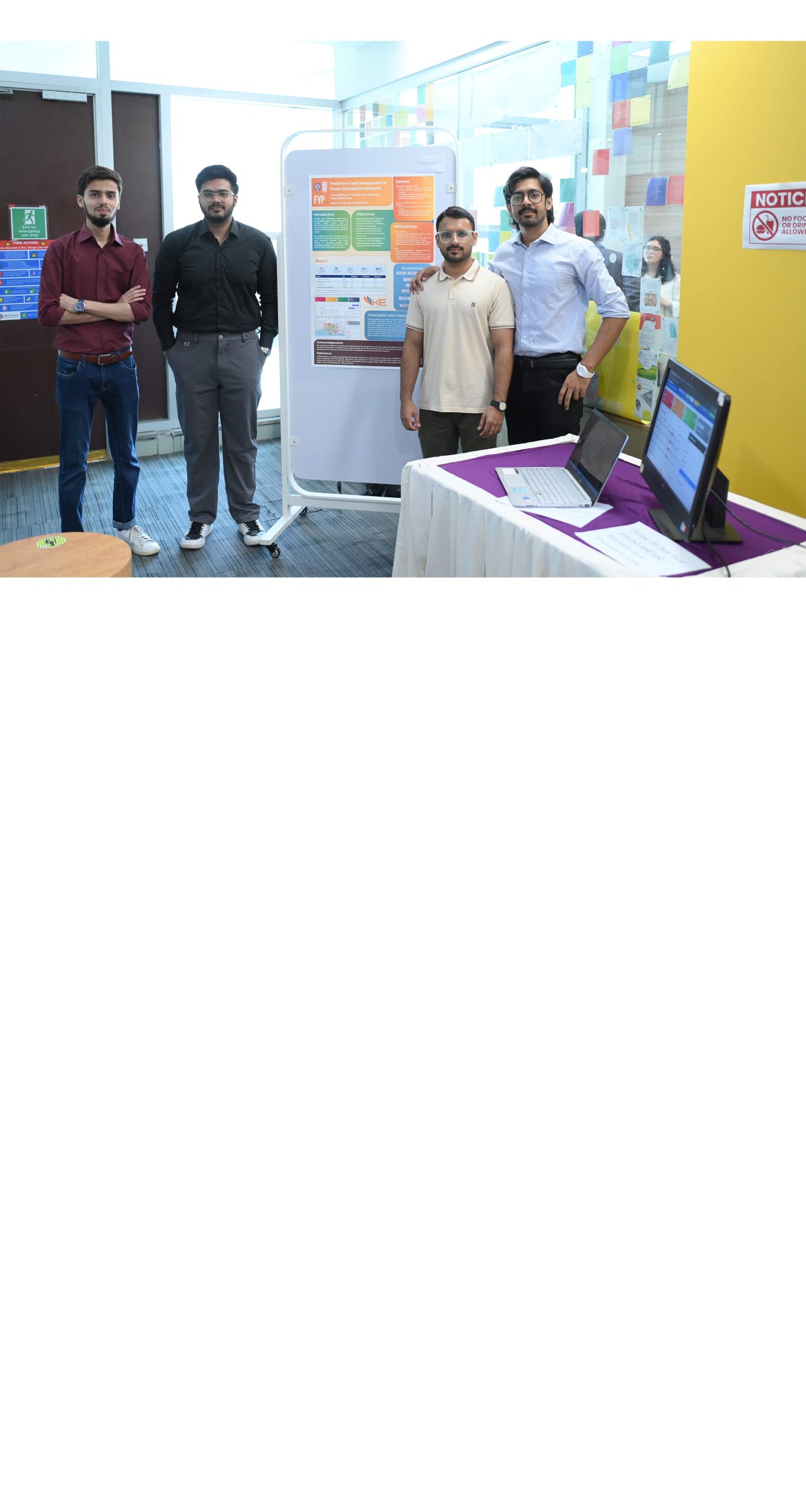
Predictive Fault Management in Power Distribution Networks
Description
This research addresses the energy security challenges of Karachi, a metropolis of 20 million, by transitioning utility operations from a reactive to a proactive model. Utilizing three years of K-Electric historical data, live sensor readings, and localized variables like weather and traffic, the project develops a context-aware predictive system. The primary aim is to accurately identify fault locations, classify failure types, and estimate "Time to Repair" (TTR). By integrating "Just-in-Time" maintenance and risk mapping, the system reduces operational costs, minimizing the 70 PKR cost per manual complaint, and enhances customer trust through transparent communication. Validated against actual Outage Management System (OMS) data, this model leverages unutilized logs to create a robust, localized solution for Karachi’s unique socio-economic and climatic landscape.
Project Pictures