

 Share Profile
Zehra Tejani

Aspiration Statement
I am motivated by using data analytics to uncover insights that inform strategy, improve decision-making, and drive sustainable business growth while supporting innovative, evidence-based solutions to complex economic challenges.
Core Skills
- Stagis
Core Demonstrated Competencies
- Acts with Ownership
- Adaptability
- Collaborates Openly
- Drive for Results
- Planning
- Problem Solving
- Takes Initiative
Preferred Career Paths
First priority: Sustainability & ESG Analyst
Second priority: Growth Analyst
Third priority: Research Analyst
Experience
Leadership / Meta-curricular
- Tehzeeb, Contributed To Research
Internship / Volunteer Work
- Independent Researcher, Habib University (May – August 2025)
- Teaching Assistant, Habib University (January – May 2025)
- Research Assistant – Summer Tehqiq Research Program, Habib University (June – August 2024)
- Research Analyst Intern, Habib Bank Limited (HBL) (June – July 2023)
Publications / Creative Projects
- Conference Presentation – Tejani, Z., Malik, A., Sahar, N., Ahmed, A., Ahad, S., & Zashir, S. (2024, March 8–10). Navigating climate chaos: A gendered analysis of urban flooding impact in Karachi’s varied socioeconomic landscapes [Conference presentation]. Aamozish-e-Tehqeeq Conference, Habib University, Karachi, Pakistan.
Final Year Project
Project Title
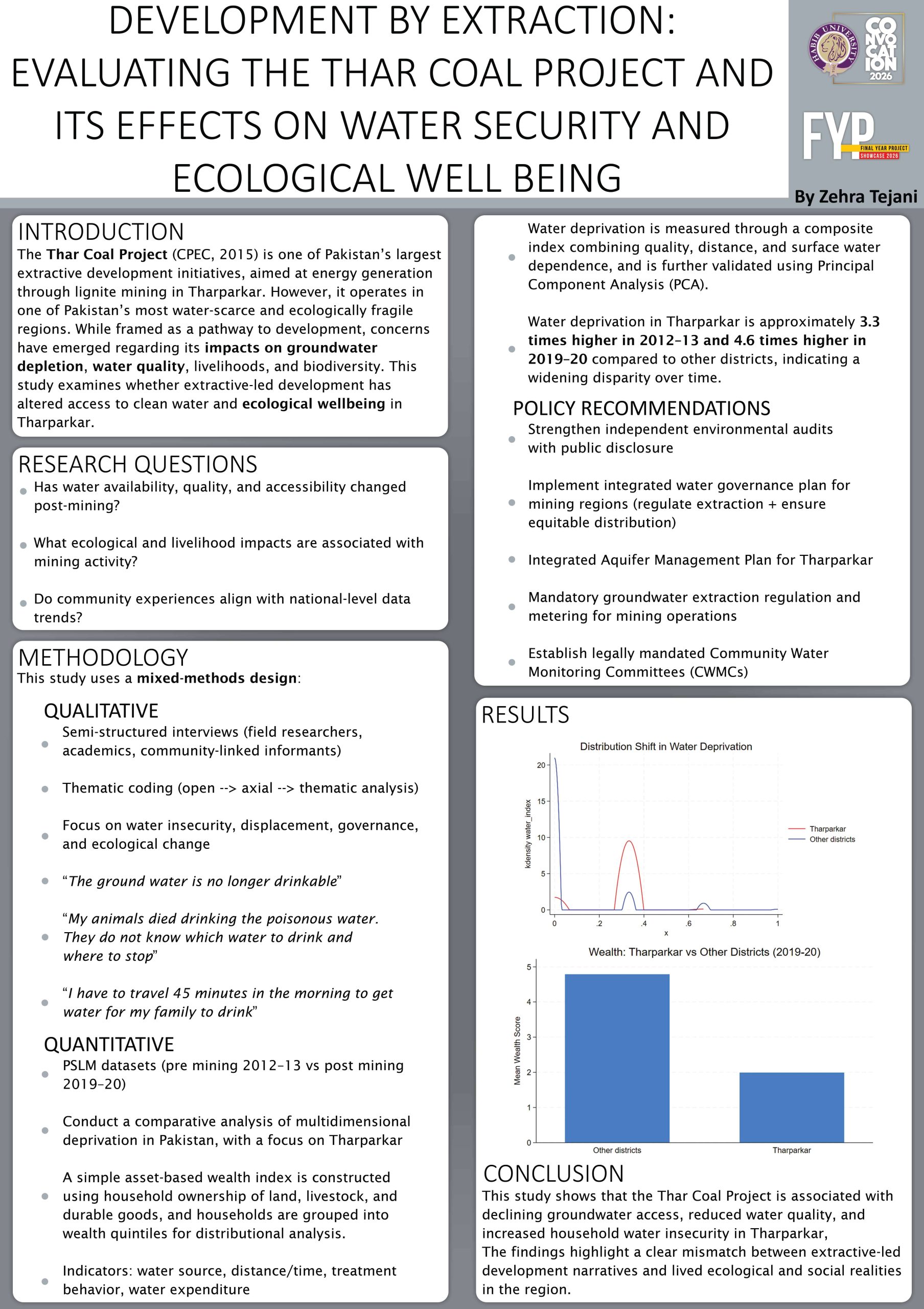
Development by Extraction: Evaluating the Thar Coal Project and Its Effects on Water Security and Ecological Well-being
Description
Mining contributes to economic growth but often carries significant social and environmental costs. This study examines the impact of the Thar Coal Project in Block II, Sindh, on access to clean water and ecological sustainability in Tharparkar. Using a mixed-methods approach, it combines interviews with stakeholders and analysis of Pakistan Social and Living Standards Measurement (PSLM) data from pre-mining (2012–13) and post-mining (2019–20) periods. Preliminary findings indicate groundwater depletion, water contamination, loss of grazing land, and livelihood disruptions, highlighting the trade-offs between resource extraction, environmental sustainability, and local development.
Project Pictures