

 Share Profile
Madiha Qasmi
Towfiq Chinoy & Family HU TOPS Scholar

Aspiration Statement
A final-year undergraduate passionate about social science research, inequality, and justice, seeking to support marginalized communities through evidence-driven NGO and development work.
Core Skills
- Deedose
- Excel
- Microsoft Word
- QGIS
- Stata
Core Demonstrated Competencies
- Drive for Results
- Planning
- Takes Initiative
Preferred Career Paths
First priority: Academic Researcher
Second priority: Research Associate
Third priority: Research Assistant
Academic Awards / Achievements
- Dean's List 2023
Experience
Leadership / Meta-curricular
- Humun 24' And 25' Director Security
- Food & Hygiene Chair, Habib University Student Government
- General Secretary, Sustainability Club
- Food & Hygiene Member, Habib University Student Government
- Events Cabinet Member, Habib University Student Government
Internship / Volunteer Work
- Research Associate, Aga Khan University (March – August 2026)
- Research Intern, CFAW (November 2025 – February 2026)
- Corporate Communication, Getz Pharma (July – August 2025)
Publications / Creative Projects
- Documentary – Tehqiq-II Documentary accepted in 9th International Folklore Film Festival
Final Year Project
Project Title
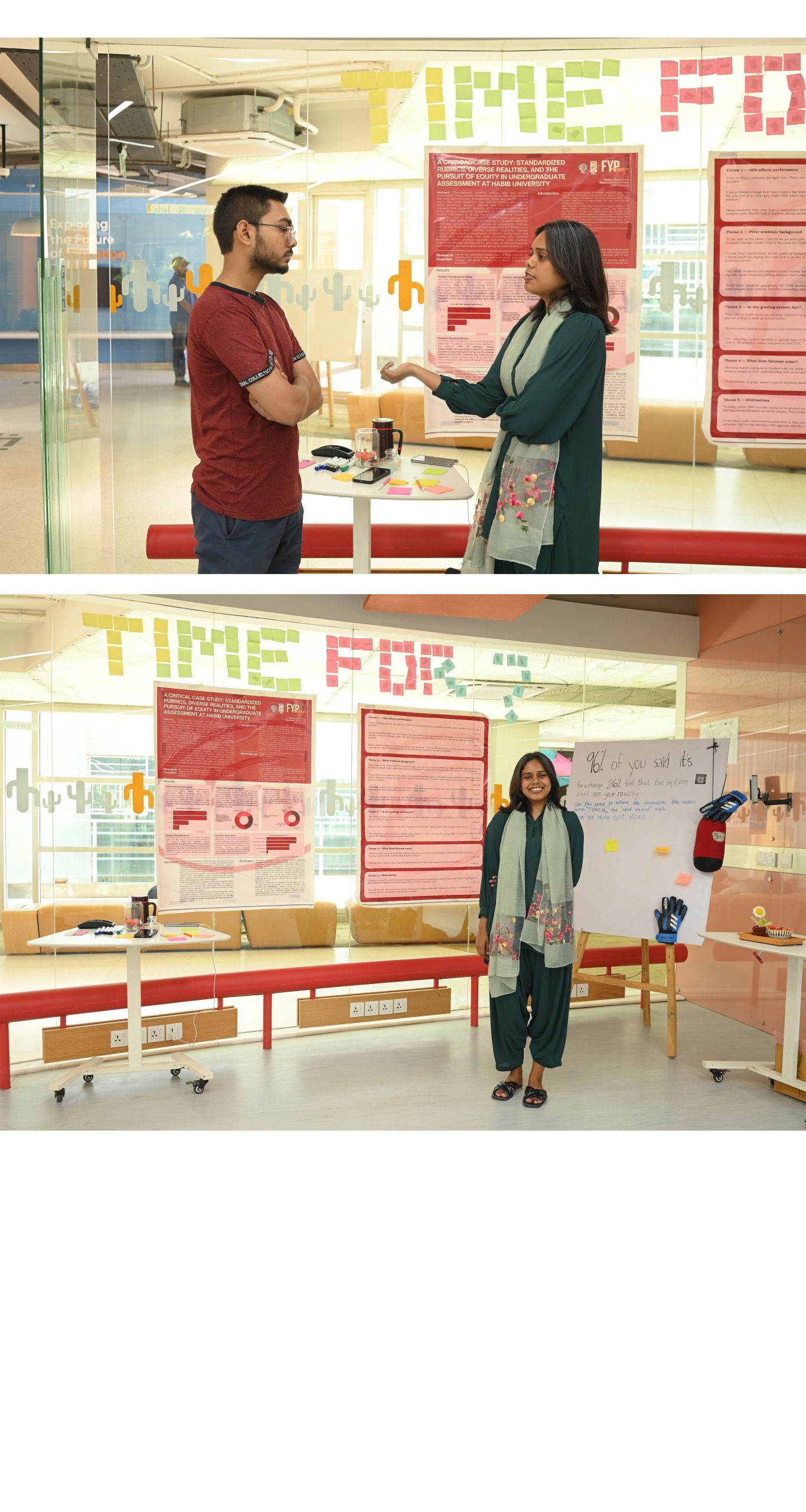
A Critical Case Study: Standardized Rubrics, Diverse Realities, and the Pursuit of Equity in Undergraduate Assessment at Habib University.
Description
My research examines how standardized grading rubrics at Habib University affect students from diverse socioeconomic, linguistic, and academic backgrounds. While the university acknowledges unequal starting points through support services, assessment practices largely treat all students as if working under identical conditions. Through interviews with students and faculty, the project explores whether rubrics embed assumptions about an "ideal student," how students perceive fairness given their material realities, and how instructors navigate the tension between standardization and equity. The findings aim to surface where grading practices reinforce structural inequality and where more contextually sensitive assessment approaches might better serve a genuinely diverse undergraduate population.
Project Pictures