

 Share Profile
Eman Fatima

Aspiration Statement
As a Computer Science student with a minor in Design, I’m passionate about building user-centered digital products, combining technology, data, and design thinking to create thoughtful, real-world solutions.
Core Skills
- Angular
- Figma
- Next JS
- Python
- SQL
Core Demonstrated Competencies
- Agility
- Collaborates Openly
- Drive for Results
- Strategic Thinking
Preferred Career Paths
First priority: Frontend Engineer
Second priority: Product Management
Third priority: UI UX Designer
Experience
Internship / Volunteer Work
- Undergraduate Research Assistant, Habib University (July 2024 – May 2026)
- Teaching Assistant for Database Systems, Digital Logic & Design, Data Structures & Algorithms, Habib University (January – December 2024)
- Student Ambassador, Habib University (September 2022 – May 2023)
Publications / Creative Projects
- Research Paper – Research Paper on Evaluating Data Retrieval and Quality in Pakistani High Court Systems published in 7th International Conference on Advancements in Computational Sciences in 2026
- Research Paper – Research Paper on Mapping criminal connectivity across Lahore published in Tezhib in January 2026
Final Year Project
Project Title
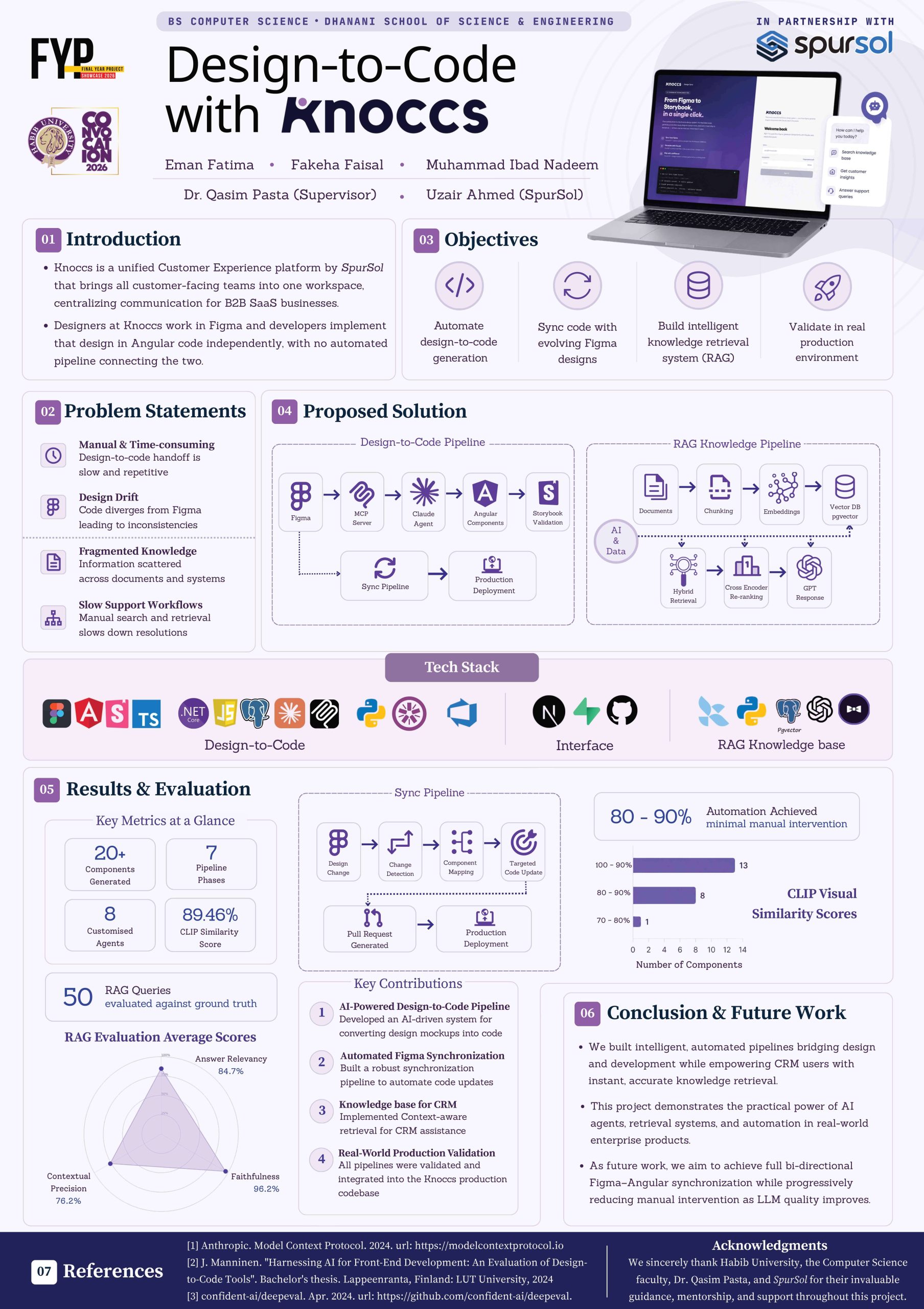
Design-to-Code with Knocks
Description
Design-to-Code with Knoccs is a final-year CS project that addresses the disconnect between UI design and software development on SpurSol's CRM platform, Knoccs. The project pursues two parallel goals: first, building an automated pipeline that converts Figma designs into production-ready Angular code using Claude and Figma MCP, eliminating manual design-to-development handoff; second, implementing a Retrieval-Augmented Generation (RAG) knowledge base that lets users query Knoccs documentation intelligently using semantic search and LLM-generated answers. Practical validation comes through two implemented features, Tag Management and Macro Management, generated using the new component library. Expected benefits include significantly reduced development time, greater design-code consistency, fewer hallucinations via grounded retrieval, and a scalable foundation for future AI-driven automation within the platform.
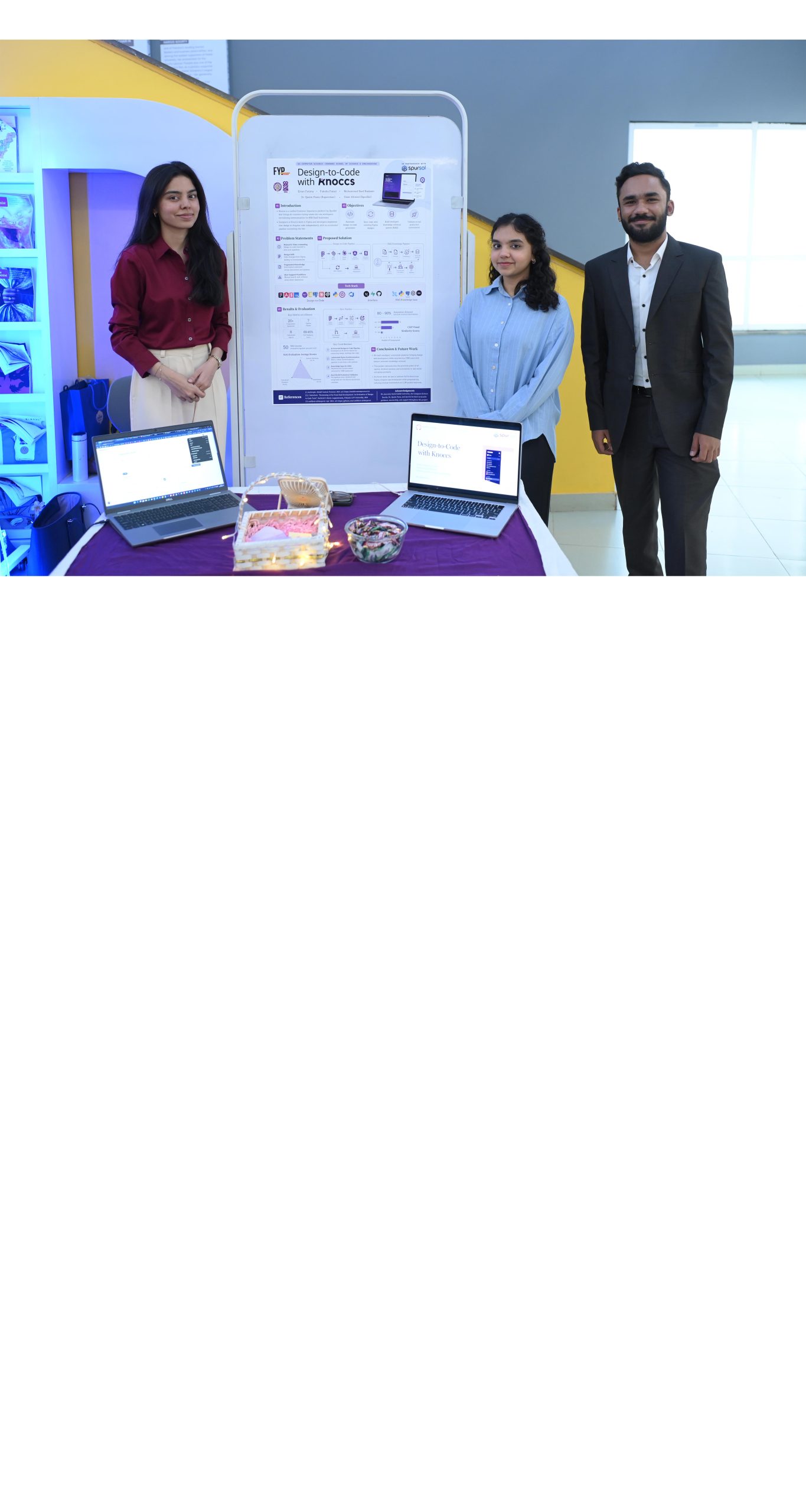
Project Pictures