



 Share Profile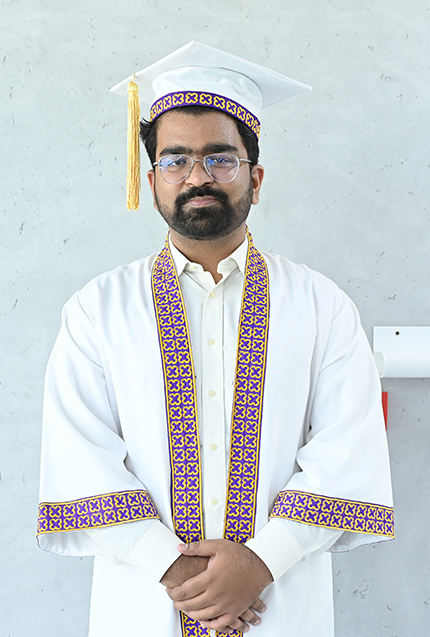
ASAD ULLAH CHAUDHRY
Aspiration Statement
"I aspire to become a leading data scientist, leveraging AI, machine learning, and big data to drive impactful decisions. I aim to innovate in AI ethics, automation, and real-world problem-solving. "I aspire to become a leading data scientist, leveraging AI, machine learning, and big data to drive impactful decisions. I aim to innovate in AI ethics, automation, and real-world problem-solving. "
Core Skills
- Deep Learning & LLMs, Data Science & Analytics, Software Development, Computer Vision
Academic Awards / Achievements
- Dean's List, Spring 2023 Dean's List, Fall 2024 High Academic Leap Scholarship, Fall 2022
Experience
Leadership / Meta-curricular
- Associate Producer, CND Productions (2022 2023) Digital Image Technician and Podcast Producer (2023-2024) Orientation Leader, 2022
Internship / Volunteer Work
- Data Engineering Intern, Data Science Dojo (Jan 2025 April 2025) Project Intern, Dawlance (Oct 2024 May 2025) Film Studio Assistant, Habib University (Jan 2022 May 2024) Independent Researcher, Habib University
Publications / Creative Projects
- CLEF 2024 CheckThat! Lab Tasks 1 and 2 Urdu Grammar Error Correction using Deep Learning Models and Synthetic Data Generation
Final Year Project
Project Title
Real-Time Safety Monitoring System for Industrial Workplaces
Description
Our project enhances workplace safety using computer vision and deep learning to detect hazards in real time. In collaboration with Dawlance, we deployed this system at their Karachi plant, where safety lapses can cause serious accidents. We developed an AI-powered monitoring system to detect unsafe behaviors like missing helmets or restricted area entry, instantly alerting supervisors to reduce workplace accidents and ensure safety compliance. Due to data privacy concerns, we built a fully local solution for on-site processing. We installed and interfaced CCTV cameras while optimizing detection across multiple feeds. Since no suitable datasets existed, we manually created and annotated one, and fine-tuned our model, significantly improving accuracy. Our system enhances hazard detection, ensuring: Faster response times to violations Reduced workplace injuries through proactive monitoring Data-driven insights for long-term safety improvements