مَثَلُ ٱلَّذِينَ يُنفِقُونَ أَمْوَٰلَهُمْ فِى سَبِيلِ ٱللَّهِ كَمَثَلِ حَبَّةٍ أَنۢبَتَتْ سَبْعَ سَنَابِلَ فِى كُلِّ سُنبُلَةٍ مِّا۟ئَةُ حَبَّةٍۢ ۗ وَٱللَّهُ يُضَـٰعِفُ لِمَن يَشَآءُ ۚ وَٱللَّهُ وَٰسِعٌ عَلِيمٌۭ
The example of those who spend their wealth in the way of Allah is like a seed [of grain] which grows seven spikes; in each spike is a hundred grains. And Allah multiplies [His reward] for whom He wills. And Allah is all-Encompassing and Knowing. (Surah Al-Baqarah, 261)
From the 8th to the 13th century, the Muslim world was the beating
heart of human knowledge.
Through faith-driven endowments, we built not only mosques and
hospitals, but universities, observatories, and public libraries.
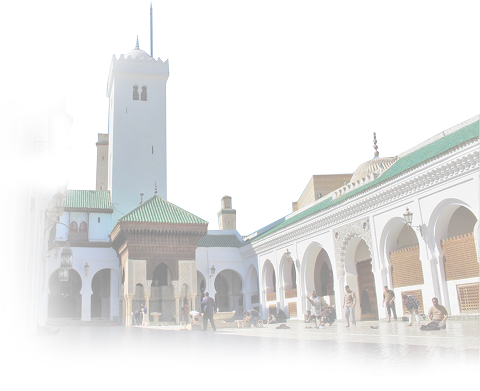
World’s first & oldest continually operating university, Al Qarawiyyin founded by a Muslim woman, Fatima al-Fihri
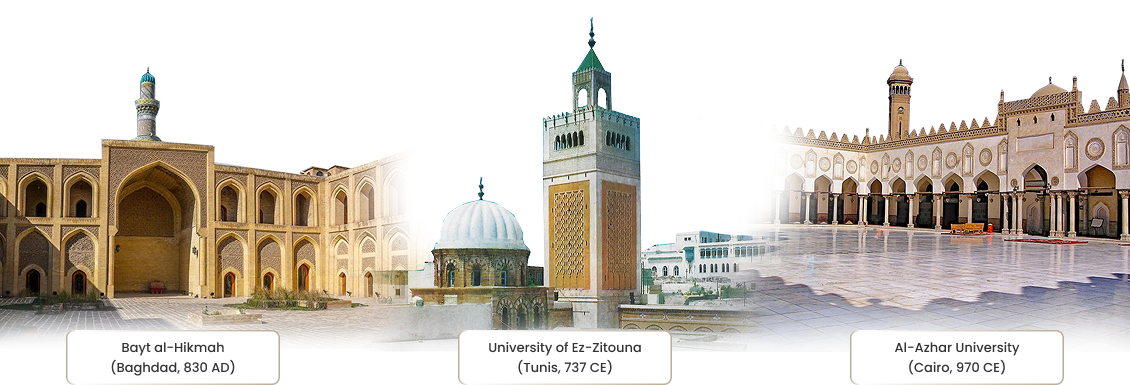
In Baghdad, the Bayt al-Hikmah (the House of Wisdom) gathered scholars from across faiths to
translate, debate, and discover.
In Cordoba alone, 70+ libraries held hundreds of thousands of manuscripts at time when most of Europe
had fewer than a thousand books.

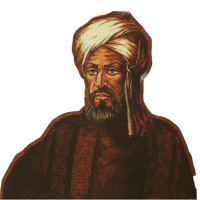
Mathematician and astronomer who laid the foundations for modern mathematics and computation.

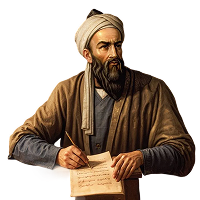
The scientist who
measured Earth with
astonishing accuracy, a
thousand years before
modern tools.
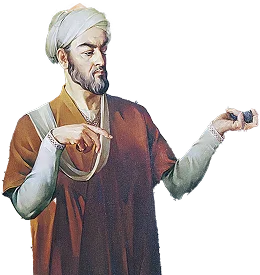

The physician whose book, the ‘Canon of Medicine’ shaped global medical teaching for 600+ years.
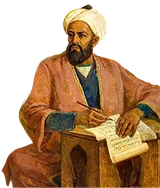
Theologian and philosopher who reshaped Islamic philosophy and bridged faith with reason.

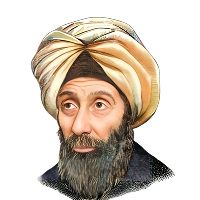
Scientist and mathematician known as the ‘father of optics,’ whose experiments on light and vision influenced modern physics and the scientific method.



Institutions that had always been sustained by the people turned increasingly toward rulers. The collective sense of responsibility, the belief that every believer had a stake in nurturing knowledge, began to fade.
The decline of the Islamic Golden Age came gradually and with the fall of Muslim Spain in 1492, the engine that had once powered a golden age of learning was no longer strong enough to endure.


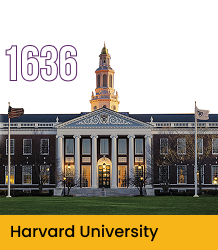
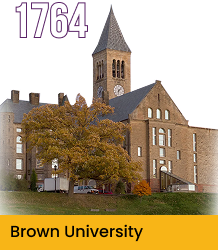
Inspired by the Islamic tradition of community-driven learning, early American Protestants seized this opportunity
for knowledge to establish world-leading universities like Harvard, Rice and others.

If I could have my choice, I should prefer that my name should be immortalized by its
connection with some good deed…by elevating the character and standard of knowledge.

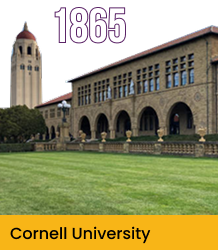
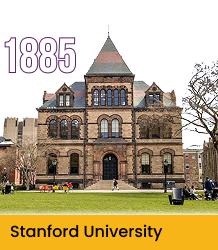


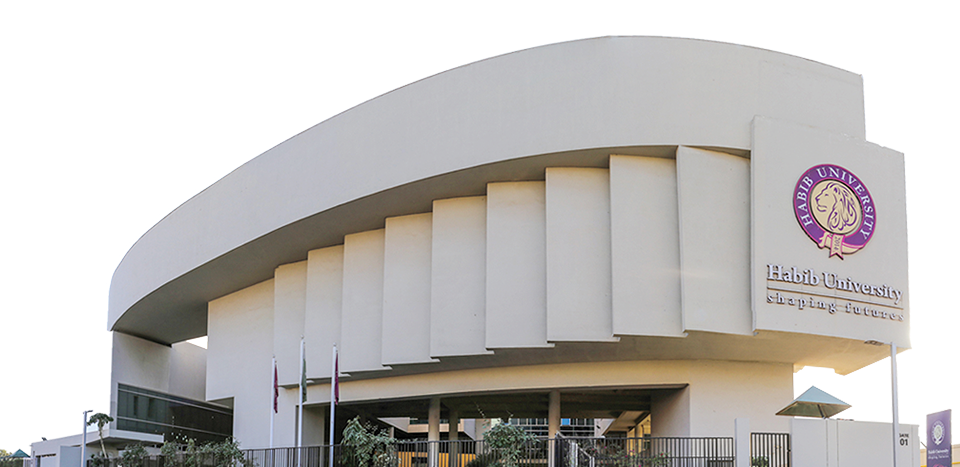
And you are part of this legacy. Habib University stands as Pakistan’s only 100% community-owned higher education model, built on the belief that collective responsibility can drive societal upliftment. As Pakistan’s first Liberal Arts and Sciences university, its mission is to ensure that no capable student is ever denied an education for lack of means.
Through a Shariah-compliant Zakat model, Habib University transforms faith into structure and channeling compassion into education. Every contribution sustains a scholar who will go on to shape communities, institutions, and the nation itself. Habib’s model reclaims the original purpose of Zakat: to elevate, not merely alleviate. And to rebuild the moral and intellectual foundations of our faith.
Through a Shariah-compliant Zakat model, Habib University transforms faith into structure and channeling compassion into education. Every contribution sustains a scholar who will go on to shape communities, institutions, and the nation itself. Habib’s model reclaims the original purpose of Zakat: to elevate, not merely alleviate. And to rebuild the moral and intellectual foundations of our faith.
Thriving Scholars
of Student body from low to middle income households
Supported through Scholarship & Financial Aid
From local examination Board
Disbursed in scholarships & financial aid since inception
Disbursed in Zakat to date
In moments of crisis, our nation has always stepped forward: from the 2010 floods to devastating earthquakes, from free-of-cost healthcare to quality primary education, Pakistanis have consistently lived the principle of Zakat with sincerity and compassion.
It is no surprise that Pakistan now ranks 17th in the World Giving Index 2025, with 73 percent of people giving Zakat in 2024.
Yet despite this remarkable spirit of giving, the sectors that shape long-term national progress, such as higher education, research, and innovation, remain underfunded.
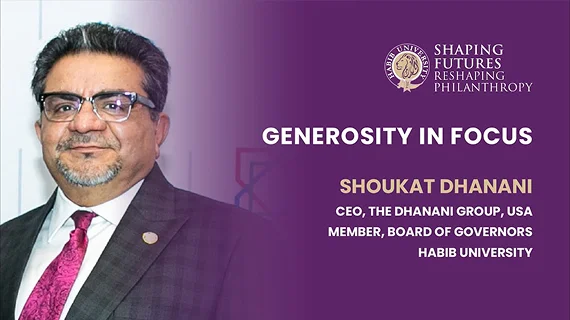
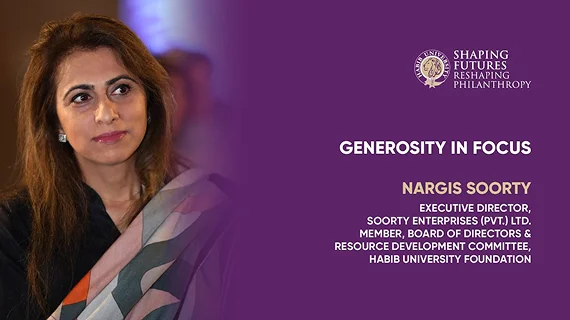
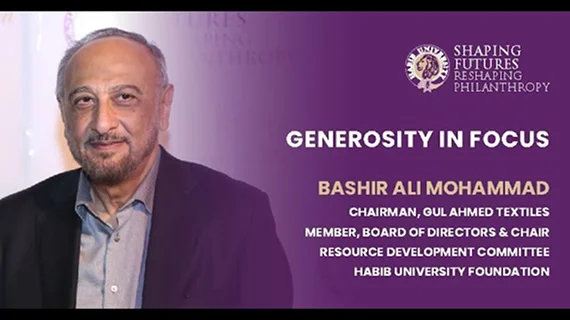
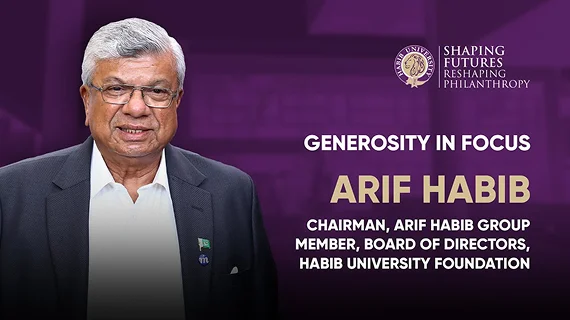
What started ten years ago with 29 visionaries has grown into a movement inspiring over 700 others. Our community stands at the heart of Habib University, strengthening higher education in Pakistan and believing in our vision to offer transformative learning opportunities to high-merit students. Discover the inspiring stories of our supporters and join this collective journey today.
For years, Habib University’s generous community of Mohsineen has helped realize the vision of making world-class education accessible to
deserving students in Pakistan. Through unmatched scholarships and financial aid, these benefactors continue to propel the University
toward its full potential and sustain its position as the most generous institution of higher learning in the country.
An investment in Pakistan’s intellectual and moral future
Support four-year education of deserving and meritorious students
Support one-year education of deserving and meritorious students
Support education of deserving and meritorious students
Yes, zakat can be given to support higher education, if it directly benefits individuals who qualify as zakat recipients, such as deserving or needy students. Historically, the Muslim world has a rich tradition of using charitable giving, including zakat, waqf, and sadaqah, to build universities, libraries, and centers of learning. This tradition nurtured scholars, preserved knowledge, and propelled Muslim societies to global intellectual and scientific leadership.
Yes, Habib University’s zakat collection and disbursement procedures are fully certified by a Shariah advisor. Our Zakat program is guided by qualified religious scholars and adheres to the principles outlined in Islamic jurisprudence. We have:
Habib University Shariah Advisors are:
As per the Shariah protocols and rules for Zakat, 100% of your zakat donations are allocated to Mustahiq student scholarships and financial aid. Mustahiq students are verified through a robust needs-assessment system including income verification and household data.
You will receive an e-receipt once your donation is processed on the email address provided by you on the weblink form. Please check your spam/junk in case the receipt is not received and mark it as not spam/junk so you may receive subsequent receipts in your primary inbox.
Yes. You may choose to support students in STEM, Humanities, or women scholars, within Zakat guidelines.
As per the Shariah protocols and rules, Zakat funds can only be used to support scholarships and financial aid for Mustahiq students.
As per the Shariah protocols and rules, Zakat funds can only be disbursed to eligible Muslim students. Other aid sources are available for non-Muslim students.
Yes. You can give monthly or annually, and we can help you set up a recurring donation.
Yes. We provide documentation and can issue a certificate upon request.
Yes, through our Donor Engagement program, you can connect meaningfully, subject to student consent.